
How Wastewater Treatment Technology and GFS Tanks Cut Cost Energy and Complexity
Industrial wastewater treatment today is defined by a single stubborn problem: the "three highs" of high difficulty, high cost, and high energy consumption. Wastewater from the new energy, chemical, and pharmaceutical industries is complex in composition, carrying numerous characteristic pollutants that traditional treatment processes struggle to remove effectively.
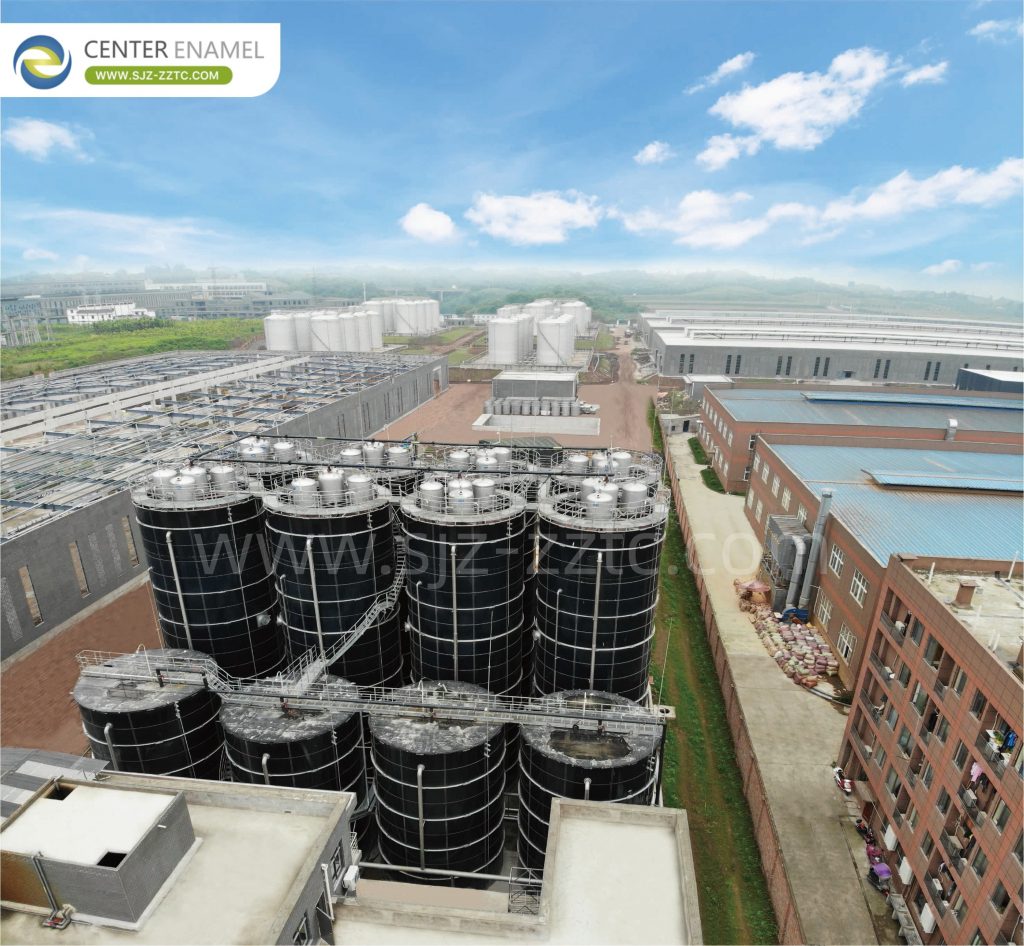
Chinese companies have carved out significant price advantages in the mid- to low-end equipment segment, but the industry as a whole faces continuous technological upgrade pressure from increasingly stringent emission standards. Added to this are new requirements for digitalization and low-carbon transformation that demand greater operational refinement. Meeting these challenges requires two things working in tandem-advanced wastewater treatment technology that performs under difficult conditions, and containment infrastructure that survives them. That is precisely where GFS tanks and integrated process design come into play.
The Three Highs: Why Conventional Approaches Fall Short
The difficulty begins with complexity. New energy, chemical, and pharmaceutical streams carry characteristic pollutants that resist conventional biological and physical treatment, and the removal targets grow stricter with every regulatory cycle. The cost side compounds the problem: high-strength wastewater demands more chemicals, more energy, and more maintenance, driving up total cost of ownership. Energy consumption follows close behind-conventional aerobic treatment is energy-intensive, and facilities facing low-carbon requirements must find ways to recover energy rather than consume it. Digitalization and refined operational management add a further layer, since systems must be measurable, adjustable, and reliable over long horizons. Addressing all three highs at once requires process technology that reduces load and recovers energy, paired with tanks that do not fail under corrosive, changing conditions. That combination is where GFS tanks and anaerobic technology prove their value.
GFS Tanks: Containment That Handles Complex, Changing Media
Center Enamel has independently developed over 200 specialized enamel frit formulations and supporting patents, capable of customizing anti-corrosion enamel based on the customer's storage media-adaptability comprehensively superior to concrete tanks. Concrete tanks use a single material and are suitable only for neutral clean water storage. When storing corrosive materials such as livestock manure, palm oil mill effluent, chemical wastewater, food waste digestate, or high-salinity wastewater, additional anti-corrosion linings must be applied. These linings are prone to failure, preventing long-term stable operation, and cannot adapt to alternating high and low concentration storage conditions. GFS tanks can be specifically formulated with specialized enamels resistant to strong acids, strong alkalis, high organic content, and high salinity. A single tank can switch between multiple wastewater and fermentation feedstock storage requirements, making them universally applicable across biogas anaerobic digestion, municipal wastewater, livestock farming, food processing, and industrial water treatment. This eliminates the need to rebuild tanks when media changes, perfectly meeting the needs of diversified, multi-condition environmental protection projects.
| Tank Type | Corrosion Resistance | Media Flexibility | Long-Term Stability |
| Concrete tank | Neutral clean water only | Requires added linings for corrosive media; linings prone to failure | Limited under alternating concentrations |
| GFS tank | 200+ enamel formulations for acids, alkalis, high organics, high salinity | Single tank handles multiple media and feedstock changes | Designed for long-term stable operation |
Inside the IC System: Integrated Equipment for Efficient Treatment
Technology performs only when every component works together. At the core of the IC system sits the GFS tank with a built-in gas-lift internal circulation system and upper and lower three-phase separators-the key components enabling autonomous circulation and sludge-water separation. A bottom precision distribution system and pressure-regulating feed device ensure uniform, stable influent. Supporting equipment includes influent lift pumps, equalization tanks, and flow meters for precise influent control, along with top-mounted high-efficiency biogas collection, desulfurization, dehydration, and storage equipment integrated into a single unit. High-precision online monitoring equipment tracks temperature, pH, COD, and level in real time. Dedicated sludge discharge pipes and recirculation control devices at the bottom and mid-section eliminate the need for external return pumps. The complete system is highly integrated, with no excess external equipment, a compact structure, and high automation-qualities that directly address the high-cost and high-energy sides of the three highs.
A Standardized Train for Papermaking Wastewater
Papermaking wastewater demonstrates how this technology translates into a workable solution. The standardized approach uses a combined train of white water recirculation, physicochemical pretreatment, anaerobic digestion, and aerobic treatment, with the core strategy of maximizing recycling to reduce discharge volume. White water recirculation is the central water-saving measure: paper machine white water is treated by microfiltration, dissolved air flotation, and disc filters to recover fiber for repulping, reducing discharge by 60–80%. Pretreatment uses screens and fine screens to recover fiber and filler suspended solids for sale, while coagulation, sedimentation, and DAF further remove colloids and fine suspended solids. Cooking black liquor is collected separately, with alkali recovery boilers recovering alkali and burning lignin for steam-reducing pollution at the source. The main biochemical stage applies IC or UASB anaerobic treatment followed by A/O aerobic processes for dissolved organic pollutant degradation. Final advanced treatment uses chemical decolorization and membrane filtration as required by discharge standards. Throughout the train, tanks use Center Enamel GFS tanks resistant to high alkalinity and lignin corrosion, ensuring the treatment technology is matched by containment that lasts.
| Treatment Stage | Function | Key Outcome |
| White water recirculation | Microfiltration, DAF, disc filters recover fiber for repulping | 60–80% discharge reduction |
| Physicochemical pretreatment | Screens recover fiber and fillers; coagulation/DAF remove colloids | Recoverable solids for sale |
| Black liquor handling | Alkali recovery boilers recover alkali; lignin burned for steam | Source-level pollution reduction |
| Anaerobic digestion | IC or UASB reactors degrade dissolved organics | Biogas recovery, load reduction |
| Aerobic treatment | A/O process polishes remaining organics | Stable effluent quality |
| Advanced treatment | Chemical decolorization and membrane filtration | Compliance with discharge standards |
A Complete Product Matrix Behind Every Project
Delivering integrated systems requires breadth across tanks, covers, and services. Center Enamel has built a complete product matrix of core storage tanks, supporting covers, specialty pressure vessels, and complete environmental engineering services-the only company globally to achieve integrated enamel frit R&D, self-manufacturing, and GFS tank application. At the core sit proprietary GFS tanks, using double-sided hot-rolled double-layer enamel anti-corrosion technology resistant to strong acids, alkalis, high salinity, and microbial corrosion, with modular quick assembly suitable for all strongly corrosive conditions in wastewater, biogas, and chemical applications.
Supporting fusion bonded epoxy tanks are produced on China's first intelligent standardized production line, primarily for drinking water, fire water, and neutral medium storage. Proprietary high-strength aluminum alloy dome covers meet international waterproof and load-bearing standards for tank sealing and biogas collection. The matrix also includes carbon steel tanks, stainless steel tanks, composting tanks, and various non-standard pressure vessels, alongside engineering services covering environmental EPC general contracting and anaerobic process section subcontracting. Together these cover food waste, leachate, municipal wastewater, livestock biogas, petrochemical and metallurgical applications, and seawater desalination-with customizable tank volume, corrosion protection grade, and complete process solutions.
Expert Teams Connecting Technology to Local Reality
Technology and products reach their full potential only through people who understand local conditions. Center Enamel's marketing team brings together environmental industry multi-skilled professionals and multilingual foreign trade specialists, with deep expertise in global biogas, wastewater treatment, and biomass new energy markets and practical project experience across Southeast Asia, Africa, Europe, and the Americas. The team is proficient in various countries' wastewater discharge regulations, biogas subsidy policies, and carbon trading rules, providing one-stop preliminary site survey, solution planning, and investment return analysis. With multilingual capabilities in English, French, Spanish, and Arabic, the team communicates effectively with clients worldwide-precisely matching regional industrial resources, project budgets, and local requirements. This regulatory and commercial fluency complements the engineering side, ensuring that wastewater treatment technology selections are not only technically sound but also compliant and economically viable in each market.
Economical Roofing for Non-Pressurized Water Storage
Not every tank in a facility requires gas-tight sealing. For atmospheric pressure storage without air-tightness requirements, the FRP roof cover offers a general-purpose economical solution suitable for drinking water storage, agricultural irrigation water, firewater reserves, and general production wastewater temporary storage. It is available in flat and dome styles, allowing flexible selection based on tank specifications and site aesthetics. The roof is integrally molded from resin and fiberglass-lightweight, naturally water-resistant, and mildly resistant to acid and alkali corrosion. It will not rust or rot in long-term humid environments, eliminating the frequent anti-corrosion maintenance that metal roofs require.
The dome style drains excellently due to its curved structure, resisting water accumulation, dust buildup, snow load, and strong winds, while the flat style facilitates installation of maintenance walkways, level gauges, and vents on top. The product is fully insulated with no risk of galvanic corrosion, will not contaminate drinking water quality, and meets environmental standards for domestic water storage. Its modular design with low component weight allows simple on-site hoisting and assembly, offering high construction efficiency and affordable procurement and installation costs. It is suitable only for atmospheric pressure tanks without biogas collection or pressurization, and is not recommended for anaerobic fermentation gas-producing conditions. It is widely used in rural agricultural water storage tanks, industrial park firewater tanks, waterworks buffer tanks, and small to medium-sized domestic wastewater temporary storage facilities-a cost-effective general-purpose roof for conventional water storage.
Frequently Asked Questions
Q: How do GFS tanks reduce long-term wastewater treatment costs?
Specialized enamel resists acids, alkalis, and salinity without added linings, eliminating frequent recoating and extending service life under changing media.
Q: What makes the IC system suitable for high-strength industrial wastewater?
Its built-in gas-lift circulation and three-phase separators enable autonomous sludge return, cutting energy use while achieving high organic removal.
Q: Which industries benefit most from this wastewater treatment technology?
New energy, chemical, pharmaceutical, papermaking, food processing, and livestock operations with complex or corrosive high-strength streams.
Facing high treatment difficulty, rising costs, and strict energy targets at your facility? Share your wastewater profile with our engineers and we will design an integrated process and tank configuration built around your specific constraints. Reach out to Center Enamel today to see how the right wastewater treatment technology and GFS tanks can turn the three highs into manageable, measurable performance.