
How Is Modern Wastewater Treatment Technology Evolving to Meet Complex Industrial Demands?
The competitive landscape of industrial wastewater treatment is diverging. Leading companies are building integrated service capabilities through technical integration and capital operations, and industry concentration is gradually increasing. Chinese companies continue to consolidate their advantages in mid-tier equipment exports, while international giants target high-end customers and complex industrial wastewater markets.
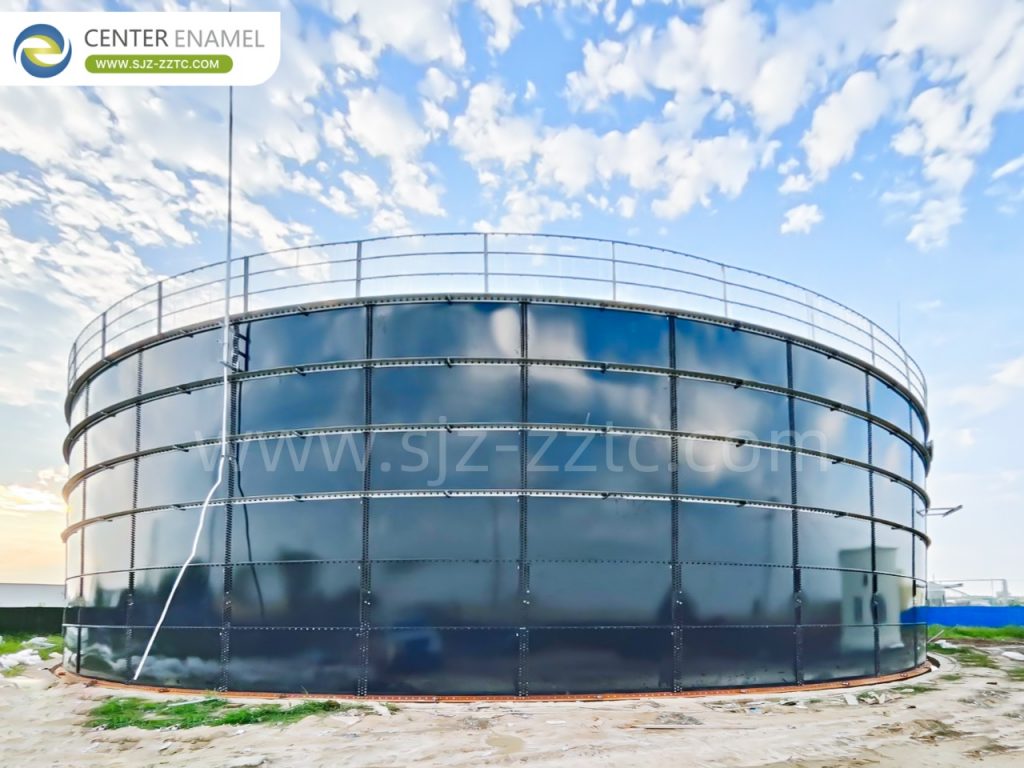
Local players, meanwhile, occupy the mid- to low-end and industrial park centralized treatment markets with service responsiveness and cost advantages. Within the anaerobic segment, UASB, EGSB, and IC anaerobic reactors-valued for high loading rates, small footprints, and stable operation-are widely deployed for high-concentration organic wastewater pretreatment in food processing, pharmaceutical fermentation, alcohol brewing, and chemical industries. Because these reactors use steel tank shells, their corrosion resistance and gas-tightness directly determine long-term operational stability. This is where glass-fused-to-steel tanks are proving increasingly valuable, and where Wastewater Treatment Technology continues to advance.
How Do GFS Tanks Adapt to Complex Operating Conditions Across Industries?
Center Enamel has independently developed over 200 specialized enamel frit formulations and supporting patents, capable of customizing anti-corrosion enamel based on customer storage media-with adaptability comprehensively superior to concrete tanks. Concrete tanks use a single material and are only suitable for neutral clean water storage. When storing corrosive materials such as livestock manure, palm oil mill effluent, chemical wastewater, food waste digestate, or high-salinity wastewater, additional anti-corrosion linings must be applied. These linings are prone to failure, preventing long-term stable operation, and cannot adapt to alternating high/low concentration storage conditions. GFS tanks, by contrast, can be specifically formulated with specialized enamels resistant to strong acids, strong alkalis, high organic content, and high salinity. A single tank can switch between multiple wastewater and fermentation feedstock storage requirements, making it universally applicable across biogas anaerobic digestion, municipal wastewater, livestock farming, food processing, and industrial water treatment scenarios-eliminating the need to rebuild tanks for media changes and perfectly meeting the needs of diversified, multi-condition environmental protection projects.
What Makes the IC Process the Core of Modern High-Strength Wastewater Treatment?
IC, or Internal Circulation Anaerobic Reactor, is the third-generation high-efficiency anaerobic treatment technology built upon UASB. Its core innovation is the built-in gas-lift internal circulation system, enabling autonomous wastewater recirculation without external return pumps. The reactor features a dual-zone configuration-a lower main reaction zone and an upper polishing zone. Biogas gas-lift creates hydraulic internal circulation, significantly increasing upflow velocity and enhancing sludge-wastewater contact. With extremely high compactness, the IC Process is specifically designed for high-concentration, high-flow industrial organic wastewater, combining high efficiency, energy savings, and minimal footprint. It has become the core process for modern industrial high-strength wastewater treatment, and its role within broader Wastewater Treatment Technology continues to expand.
Table 1: IC Process vs. Conventional Anaerobic Reactors
| Feature | IC Process | Conventional (UASB/EGSB) |
| Internal circulation | Built-in gas-lift, no external pumps | External recirculation often required |
| Zone configuration | Dual-zone (reaction + polishing) | Single-zone typical |
| Footprint | Extremely compact | Larger |
| Upflow velocity | High (enhanced contact) | Moderate |
| Target application | High-concentration, high-flow effluent | Moderate-strength streams |
Where Does Chemical Wastewater Come From and Why Is It So Complex?
Chemical wastewater originates from the entire production chain of petrochemicals, coal chemicals, fine chemicals, fertilizers and pesticides, and consumer chemicals-one of the heaviest pollution loads and most complex wastewater categories in industry. Key pollution stages include chemical reaction synthesis, raw material refining/separation, product purification/crystallization, catalyst regeneration, and solvent recovery. Auxiliary discharges include equipment and pipeline washing, reactor cleaning, floor washing, cooling water, and scrubber drainage. Petrochemical wastewater is primarily oily wastewater and alkaline residue, rich in hydrocarbons, phenols, and sulfides.
Coal chemical wastewater is mainly coal gasification scrubber water, rich in ammonia nitrogen, cyanides, phenols, and heterocyclic compounds. Fine chemical wastewater has diverse compositions with various synthesis intermediates, residual raw materials, and byproducts. Pesticide wastewater contains organophosphorus and organochlorine pesticide residues. Wastewater generation is continuous, with significant fluctuations as product lines change. Large petrochemical plants have high continuous discharge volumes, while small and medium-sized chemical plants have intermittent discharges with extremely unstable water quality-conditions that demand robust Wastewater Treatment Technology.
How Did the South Africa Brewery Project Demonstrate Real-World Performance?
A representative application of these technologies is the South Africa Brewery High-Strength Wastewater Treatment Project, focusing on high-concentration organic wastewater treatment in South Africa's brewing industry and featuring both Center Enamel GFS tanks and stainless steel tanks as core equipment. GFS tanks serve as the primary anaerobic digestion system, suited to brewery wastewater's high-COD, high-sugar, readily decomposable characteristics for efficient organic pollutant degradation. Stainless steel tanks are used for wastewater transfer and chemical storage supporting processes. The complete equipment package offers excellent corrosion resistance and flexible assembly, providing long-term stable treatment of brewery production and cleaning wastewater and solving local brewing industry pollution challenges. This mature brewery wastewater case in Africa illustrates how tailored Wastewater Treatment Technology delivers dependable results in real projects.
Table 2: South Africa Brewery Project-Equipment and Application Overview
| Equipment Type | Role in Treatment Train | Key Feature |
| GFS Tanks | Primary anaerobic digestion | High corrosion resistance, efficient COD removal |
| Stainless Steel Tanks | Wastewater transfer & chemical storage | Flexible assembly, durability |
| Complete Package | Brewery production & cleaning effluent | Long-term stable treatment |
What R&D Backing Ensures Long-Term Corrosion Performance?
Center Enamel has built a full-chain professional team covering R&D, design, marketing, installation, and after-sales. The R&D team is led by national-level materials technology experts specializing in enamel frit and tank anti-corrosion core technologies. External senior environmental engineering and mechanical structure engineers are retained to strengthen R&D capabilities, focusing on anti-corrosion coating formulations, specialty corrosion-resistant tanks, and anaerobic supporting integrated equipment-continuously breaking through industry technological barriers. The team operates through proprietary laboratories with external university research collaboration, conducting year-round new material and new process durability pilot testing and long-term corrosion simulation testing. Specialized enamel formulations are iteratively developed for extreme conditions such as high-salinity wastewater, strong acid/alkali POME, and high-organic livestock manure-providing core technical support for the company's annual new invention and utility patents and building a proprietary material technology barrier. This foundation directly strengthens every IC Process and Wastewater Treatment Technology solution the company delivers.
How Does Innovative Material Technology Extend Equipment Service Life?
Center Enamel has independently developed over 200 anti-corrosion enamel formulations, with proprietary double-sided double-layer enameling technology. As a result, GFS tank anti-corrosion service life exceeds 30 years-far surpassing concrete and ordinary equipment-and is suitable for global high-corrosion wastewater and biogas fermentation conditions. This material advantage is what allows demanding Wastewater Treatment Technology projects to operate reliably over decades rather than years.
Frequently Asked Questions
Q1: What is the IC Process and why is it preferred?
The IC Process (Internal Circulation Anaerobic Reactor) uses a built-in gas-lift system to recirculate wastewater without external pumps, delivering high loading rates, a compact footprint, and stable performance for high-strength industrial effluent.
Q2: Why are GFS tanks suited to chemical wastewater?
GFS tanks use customized anti-corrosion enamel resistant to strong acids, alkalis, high salinity, and high organic content-outperforming concrete tanks that require failure-prone linings under corrosive conditions.
Q3: How long do GFS tanks last in corrosive service?
With over 200 enamel formulations and double-sided double-layer enameling, GFS tank anti-corrosion service life exceeds 30 years, suitable for high-corrosion wastewater and biogas fermentation worldwide.
Looking to upgrade your facility with proven Wastewater Treatment Technology? Reach out to Center Enamel and let our engineers map the right IC Process configuration for your effluent profile. Share your project details with us today, and we will respond with a tailored solution built for long-term stability and low life-cycle cost.