
How GFS Tanks and Advanced Wastewater Treatment Technology Solve Pulp and Paper Effluent Challenges
Pulp and paper mills sit at the crossroads of two pressures: tightening discharge standards and the need to recover fiber, water and energy from every cubic meter of effluent. Meeting both demands a treatment train that is corrosion-proof, precisely controlled and built to last-and that is where the combination of GFS Tanks and proven Wastewater Treatment Technology from Center Enamel comes into play. This article traces the regional forces shaping the market, the factory-standard quality behind every tank, the process backbone of the IC system, and a standardized route for papermaking effluent.
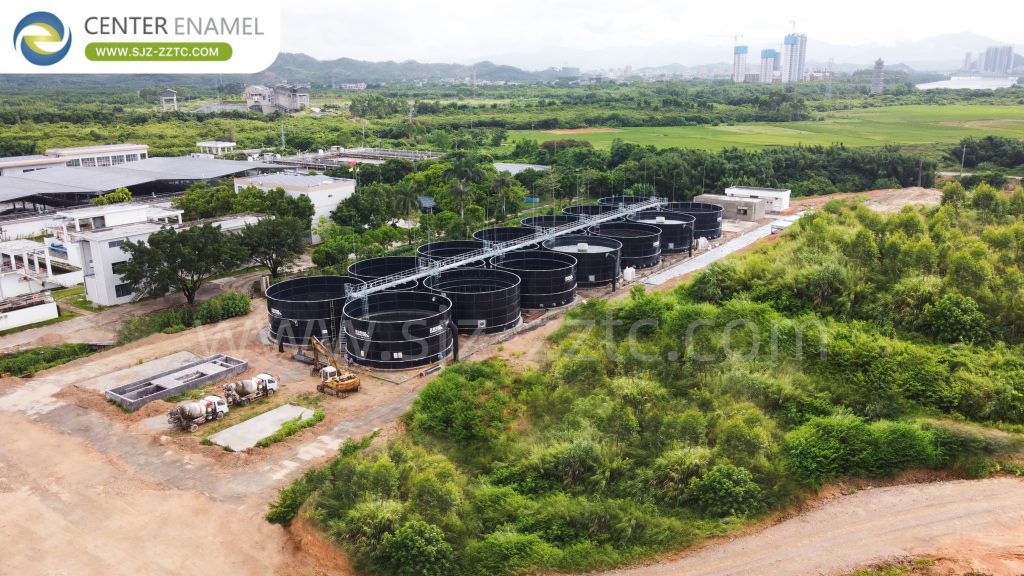
Regional Market Shifts Reshaping Industrial Wastewater Investment
The Asia-Pacific region, particularly China, has become the world's largest industrial wastewater treatment market, with the operation and maintenance service segment's contribution continuing to rise-a clear shift from project construction toward long-term operational management. North America focuses on upgrading existing facilities, while Europe emphasizes high-value-added resource recovery technologies. Wastewater from the new energy industry chain-lithium batteries, photovoltaics and hydrogen-has become the most notable emerging growth area due to its complex composition and high treatment difficulty, generating significant demand for customized solutions. Third-party treatment models in industrial parks are maturing, driving consolidation in the professional operation market. The Middle East shows strong demand for advanced treatment and reuse due to water scarcity, while manufacturing transfer in Southeast Asia drives local facility construction.
These regional currents converge on one requirement: equipment and process must be standardized enough to deliver consistently, yet flexible enough to adapt to local discharge rules. That is exactly the balance Center Enamel strikes with factory-prefabricated GFS Tanks and modular Wastewater Treatment Technology.
Factory-Standardized GFS Tanks Outperform Cast-in-Place Construction
GFS tanks are fully factory-prefabricated to standardized specifications, and finished-product quality stability far exceeds cast-in-place concrete tanks. All concrete tank processes are completed in the open air, with rebar tying, pouring and curing heavily influenced by worker skill, temperature and rainfall. Wall thickness, density and strength vary significantly between batches, and hidden defects such as honeycombing, voids and insufficient wall thickness are common-quality simply cannot be uniformly controlled.
Center Enamel's GFS tank steel panels, seals and reinforcement components are all mass-produced in automated factories. Steel stamping, high-temperature enameling and dimensional cutting are controlled by CNC equipment, with each panel's parameters and enamel thickness strictly following unified national standards. All components are uniformly packaged and transported to site, with assembly following standardized construction drawings. Full-process quality inspection from raw materials to finished components ensures highly consistent performance parameters, completely eliminating the uncontrollable quality risks of on-site concrete construction-so every tank delivers stable, consistent performance, project after project.
The IC Process: Core Equipment Built Around GFS Tanks
At the heart of Center Enamel's Wastewater Treatment Technology is the IC reactor, and its core vessel is the GFS Tank, fitted with a built-in gas-lift internal circulation system and upper/lower three-phase separators-the key components for autonomous circulation and sludge-water separation. A bottom precision distribution system and pressure-regulating feed device ensure uniform, stable influent. Supporting equipment includes influent lift pumps, equalization tanks and flow meters for precise influent control, plus top-mounted high-efficiency biogas collection, desulfurization, dehydration and storage integrated equipment. High-precision online monitoring provides real-time temperature, pH, COD and level data, while dedicated sludge discharge pipes and recirculation control devices at the bottom and mid-section handle solids-no external return pumps are needed for internal circulation. The complete system is highly integrated, with no excess external equipment, a compact structure and high automation.
Standardized Treatment for Papermaking Wastewater
Papermaking effluent demands a train, not a single reactor. Center Enamel applies a combined route of "white water recirculation + physicochemical pretreatment + anaerobic digestion + aerobic treatment," with the core strategy of maximizing recycling to reduce discharge volume. White water recirculation is the central water-saving measure: paper machine white water is treated by microfiltration, DAF and disc filters to recover fiber for repulping, cutting discharge by 60–80%. Pretreatment uses screens and fine screens to recover fiber and filler suspended solids for sale, while coagulation/sedimentation and DAF further remove colloids and fine suspended solids.
Cooking black liquor is collected separately-alkali recovery boilers recover alkali and burn lignin for steam, reducing pollution at source. The main biochemical stage uses IC/UASB anaerobic plus A/O aerobic processes for dissolved organic pollutant degradation. Final advanced treatment applies chemical decolorization and membrane filtration as required by discharge standards. Throughout the train, tanks use Center Enamel GFS Tanks resistant to high alkalinity and lignin corrosion-the material-level foundation that keeps Wastewater Treatment Technology working in papermaking's hostile service.
Case Proof: South Africa Brewery High-Strength Wastewater Project
The credibility of any Wastewater Treatment Technology package is demonstrated in the field. Center Enamel's South Africa brewery project focuses on high-concentration organic wastewater in the brewing industry, featuring both GFS tanks and stainless steel tanks as core equipment. GFS tanks serve as the primary anaerobic digestion system, suited to brewery wastewater's high-COD, high-sugar, readily decomposable characteristics for efficient organic pollutant degradation. Stainless steel tanks handle wastewater transfer and chemical storage supporting processes. The complete package offers excellent corrosion resistance and flexible assembly, providing long-term stable treatment of brewery production and cleaning wastewater-solving local brewing industry pollution challenges and standing as a mature brewery wastewater reference in Africa.
The table below summarizes representative deliveries and where GFS tanks and wastewater treatment technology carry the load.
| Project | Industry | Core Treatment | Main Equipment | Key Challenge | Outcome |
| South Africa Brewery | Brewing / beverage | Anaerobic high-load digestion | GFS tanks + stainless steel tanks | High COD, high sugar, seasonal peaks | Stable year-round treatment, mature African reference |
| Pulp & Paper Mill (EPC) | Paper / pulp | White water recirculation + anaerobic + aerobic | GFS reactors, epoxy tanks, aluminum covers | High alkalinity, lignin corrosion, fiber loss | 60–80% discharge reduction, fiber recovery, compliant effluent |
| POME / Palm Oil Mill | Agro-processing | High-rate anaerobic biogas system | GFS digesters, dual-membrane roofs | High temperature, oil and solids | Biogas recovery + effluent reuse |
| Livestock / Swine Farm | Agricultural | Anaerobic manure digestion | GFS digesters, gas-tight roofs | High solids, odor, nutrient load | Odor control, biogas, nutrient stabilization |
A Complete Product Matrix Behind Every Treatment Train
Center Enamel has built a full product matrix of "core storage tanks + supporting covers + specialty pressure vessels + complete environmental engineering services"-the only company globally to achieve integrated enamel frit R&D, self-manufacturing and GFS tank application. The core is the proprietary GFS Tank, using double-sided hot-rolled double-layer enamel anti-corrosion technology resistant to strong acids and alkalis, high salinity and microbial corrosion, with modular quick assembly suited to all strongly corrosive conditions in wastewater, biogas and chemical applications. Supporting fusion-bonded epoxy tanks are produced on China's first intelligent standardized production line, primarily for drinking water, fire water and neutral medium storage. Proprietary high-strength aluminum alloy dome covers meet international waterproof and load-bearing standards for tank sealing and biogas collection. Other vessels include carbon steel tanks, stainless steel tanks, composting tanks and various non-standard pressure vessels.
Beyond hardware, Center Enamel provides environmental EPC general contracting and anaerobic process section subcontracting-one-stop coverage across food waste, leachate, municipal wastewater, livestock biogas, petrochemical/metallurgical and seawater desalination industries, with customizable tank volume, corrosion protection grade and complete process solutions integrating equipment manufacturing and engineering construction.
Global Service Standards That Protect Uptime
Leveraging regional sales centers in China and overseas local agent networks, Center Enamel has established a complete after-sales service loop covering all markets. The system provides four core pillars: a 24/7 rapid response mechanism, on-site domestic and overseas installation services, full-project-cycle after-sales support, and long-term warranty protection-forming a complete service chain from preliminary site survey through midterm construction management to long-term inspection and maintenance. The entire system is uniformly adapted to both domestic and international project service standards, coordinating personnel scheduling, material support and on-site coordination for simultaneous projects across multiple regions-significantly reducing customer multi-party coordination costs and ensuring efficient domestic and overseas delivery.
Frequently Asked Questions
Q: How do GFS tanks resist the high alkalinity and lignin in papermaking wastewater?
A: GFS tanks use double-sided hot-rolled double-layer enamel technology that resists strong acids and alkalis, high salinity and microbial corrosion. This makes them suitable for the cooking black liquor and white water circuits where concrete or standard-coated steel would deteriorate quickly.
Q: Can white water recirculation really cut paper mill discharge by 60–80%?
A: Yes. Microfiltration, DAF and disc filters recover fiber from paper machine white water for repulping. Combined with screen-based fiber and filler recovery, this substantially reduces the volume and pollutant load reaching the anaerobic and aerobic stages.
Q: Does Center Enamel provide only tanks, or complete wastewater treatment technology packages?
A: We deliver integrated packages covering process design, GFS and stainless steel tanks, aluminum or dual-membrane covers, plus certified global installation and long-term after-sales support.
Are you still struggling with papermaking wastewater that varies in load, corrodes your tanks and threatens compliance? Contact Center Enamel today with your wastewater flow, COD range and target discharge standard, and our engineers will return a tailored process and tank configuration within two business days. Whether you are upgrading an existing paper mill or building a new treatment line, reach out to our team now-we are ready to turn your effluent challenge into a compliance and recovery advantage.