
What a Wastewater Treatment Project Involves: From Audit to Commissioning
A wastewater treatment project runs through five phases - site audit and flow profiling, process design, tankage and equipment supply, installation, and commissioning - and a bundled EPC scope delivers them under one responsibility so interfaces and schedule risk are controlled. Piecemeal procurement splits that responsibility and is where most delays originate.
1. Site Audit and Flow Profiling
Every sound project starts with measured data: daily and peak flow, pollutant profile (COD, BOD, TSS, nitrogen, phosphorus, salinity), and site constraints (footprint, soil, power). Designing on assumed numbers is the fastest way to oversize tankage or miss a discharge limit. Profiling also sets the peak factor that drives equalization volume.
2. Process Design and Tankage
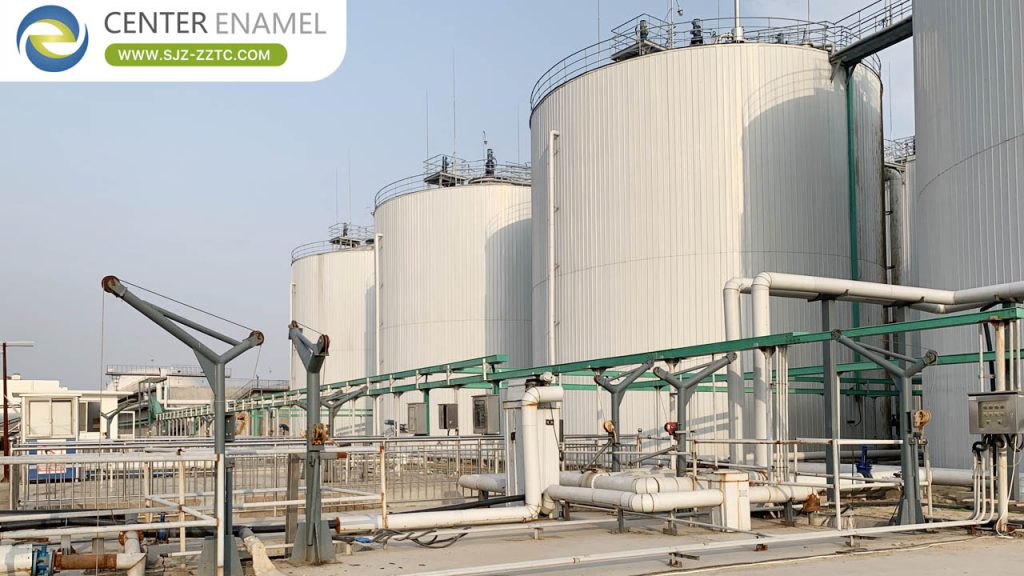
The process train is selected from the profile: anaerobic for high COD, biological nutrient removal for nitrogen and phosphorus, and clarification or membrane for solids. Each step needs vessel capacity. Bolted Glass-Fused-to-Steel (GFS) tanks - glass fused at 820-930 C, capacities from 200 m3 to 60,000 m3, built to ISO 28765 and AWWA D103 - cover equalization, reaction, aeration, and sludge holding in one corrosion-resistant envelope.
3. Installation and Commissioning
Flat-pack bolted tanks assemble faster than cast-in-place concrete and need no curing. Commissioning then verifies each unit against the design flow and effluent target before handover. A single contractor who owns both tankage and process removes the classic blame gap between civil and mechanical suppliers.
Comparison: Procurement Models
| Phase risk | EPC / Turnkey | Piecemeal |
| Single responsibility | Yes | No |
| Interface gaps | Minimal | Common |
| Schedule control | Tight | Fragmented |
| Best for | New WWTP | Spare-part only |
Project Case Study
Sri Lanka Palm Oil Wastewater Treatment Project (Sri Lanka, 2026). A 250 tonnes/day palm oil mill effluent (POME) plant built on the SBR (Sequencing Batch Reactor) process, with 2 reactor sets at 24.46 m diameter and 6 m height, delivered to discharge standards for COD and BOD - a complete project taken from process selection to installed equipment.
| Project | Sri Lanka Palm Oil Wastewater Treatment Project |
| Location | Sri Lanka |
| Industry | Palm Oil / Agro-industrial |
| Application | POME treatment |
| Process | SBR (Sequencing Batch Reactor) |
| Capacity | 250 tonnes/day |
| Equipment | 2 reactor sets, 24.46 m dia x 6 m |
| Key result | COD 65,600 -> <=400 mg/L; BOD 7,480 -> <=250 mg/L |
| Status | Delivered 2026 |
| Parameter | Inlet | Discharge standard |
| COD | 65,600 mg O2/L | <= 400 mg O2/L |
| BOD | 7,480 mg O2/L | <= 250 mg O2/L |
| TSS | 14,425 mg/L | monitor |
| pH | as received | 6.5 - 8.5 |
About Shijiazhuang Zhengzhong Technology Co., Ltd (Center Enamel)
Shijiazhuang Zhengzhong Technology Co., Ltd (Center Enamel) is the manufacturer behind the tankage: bolted GFS tanks fused at 820-930 C to an inert, impermeable steel-enamel barrier that resists acidic, sulfide-bearing wastewater, engineered to ISO 28765 and AWWA D103, shipped flat-pack, and assembled on site. That hardware is what an EPC wastewater project is built around.
Treat a wastewater project as one scoped program, not a parts list. Profile first, pick the process from the data, and keep tankage and process under one responsible supplier. Send your flow and pollutant profile and we will scope the project and tankage.
Frequently Asked Questions (FAQ)
Q1: What are the phases of a wastewater treatment project?
A: Site audit and flow profiling, process design, tankage and equipment supply, installation, and commissioning.
Q2: Why choose EPC over piecemeal procurement?
A: EPC puts tankage and process under one responsibility, removing interface gaps and schedule slips.
Q3: How is tankage selected?
A: From the flow and pollutant profile, using bolted GFS tanks for equalization, reaction, aeration, and sludge holding.
Q4: What capacity range do GFS tanks cover?
A: From 200 m3 to 60,000 m3 per tank, bolted and assembled on site.
Q5: How long does a plant take to build?
A: Flat-pack bolted tanks assemble faster than cast concrete and need no curing, shortening the installation phase.
Q6: What standards apply to the tanks?
A: GFS tanks are built to ISO 28765 and AWWA D103.
Suggested CTA
Send your flow and pollutant profile. We will scope the wastewater treatment project and configure the GFS tankage for your site.