
Biofilters for Wastewater Treatment: How They Work, Types, and Performance
Biological filtration has become a cornerstone of modern wastewater treatment, offering a low-energy, environmentally friendly alternative to conventional activated sludge systems. Biofilters harness the power of naturally occurring microorganisms-bacteria, fungi, and protozoa-that attach to a solid support medium and form a biofilm. As wastewater passes through this biofilm, organic pollutants and ammonia are consumed and converted into harmless byproducts. This guide explains the science behind biofilters, their main configurations, and what performance you can realistically expect.
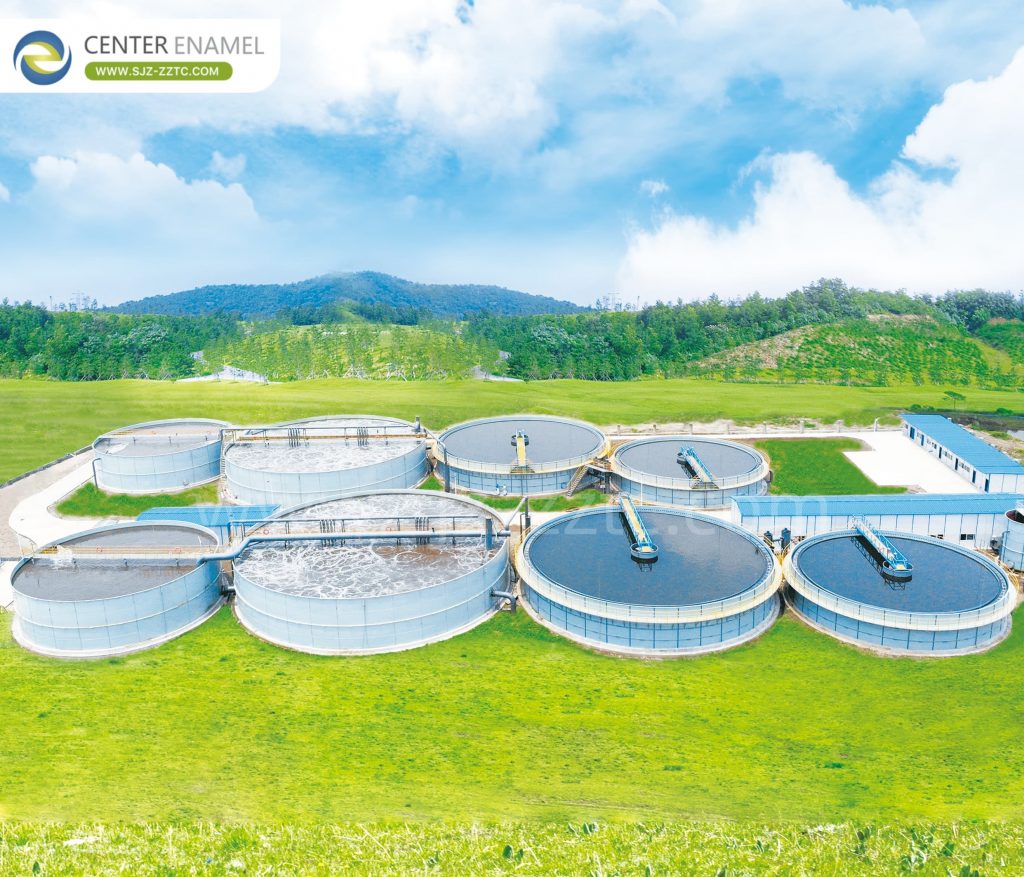
What Is a Biofilter and How Does It Work?
A biofilter is a packed-bed bioreactor in which microorganisms are immobilized on a carrier medium-typically granular material such as gravel, sand, plastic media, or pumice. Wastewater flows through the bed, and the biofilm growing on the media surfaces absorbs and degrades dissolved and colloidal pollutants . The fundamental advantage of this attached-growth approach is that it maintains a high concentration of specialized microorganisms within a compact reactor volume, allowing for efficient treatment at high volumetric loading rates .
Unlike suspended-growth systems where biomass must be separated from treated water in a clarifier, biofilters retain the biomass within the reactor itself. This simplifies the process train and reduces the footprint of the treatment plant. The biofilm structure also protects microorganisms from shock loads and toxic pulses, making biofilters more resilient to variable influent conditions .
The Science of Biofilm Degradation
The treatment process in a biofilter occurs through several sequential steps. First, organic substrates and oxygen must transfer from the bulk liquid to the outer surface of the biofilm. Second, these substances diffuse into the biofilm matrix. Third, the microorganisms metabolize the substrates, converting them to carbon dioxide, water, and new biomass. Finally, metabolic byproducts diffuse back out into the liquid stream .
The rate-limiting step depends on the relative rates of diffusion and biological reaction. For soluble, easily biodegradable substrates, diffusion often controls the overall rate. For more complex or particulate matter, hydrolysis and extracellular enzymatic breakdown may be limiting . Oxygen availability is critical for aerobic biofilters, and aeration or circulation systems must be designed to ensure adequate dissolved oxygen reaches the biofilm.
Fixed-Bed vs. Moving-Bed Configurations
Biofilters for wastewater treatment fall into two broad categories based on the state of the support medium.
Fixed-bed biofilters (also called submerged or packed-bed biofilters) keep the media stationary. Wastewater flows through the bed, and suspended solids are retained within the media voids. Periodic backwashing with air and water is required to remove accumulated biomass and prevent clogging. The wash water, which is high in suspended solids, is typically returned to the head of the plant or treated separately by settling or flotation . Fixed beds can operate in upflow or downflow mode, with co-current or counter-current air flow .
Moving-bed biofilters (including fluidized-bed and turbulent-bed reactors) use finer media that is kept in motion by the upward flow of water and air. The separation of treated water from excess biomass occurs in a downstream clarifier rather than within the reactor itself. Moving beds can achieve very high specific surface areas and treatment rates, but require more complex hydraulic design .
Comparison of Biofilter Configurations
| Configuration | Media State | Biomass Separation | Backwashing | Typical Application |
| Fixed-bed (submerged) | Stationary | Within reactor | Required | Carbon oxidation, nitrification |
| Fluidized-bed | Moving | External clarifier | Not applicable | High-rate industrial treatment |
| Trickling filter | Stationary (open) | Within reactor (settling) | Periodic flushing | Roughing, secondary treatment |
Media Selection and Design Parameters
The choice of filter medium profoundly influences biofilter performance. Key properties include specific surface area (the area available for biofilm attachment per unit volume), void ratio (the fraction of empty space for flow), and mechanical durability.
Granular media such as gravel and sand offer moderate specific surface areas (typically 100–200 m²/m³) and are inexpensive, but can suffer from clogging in high-solids applications. Plastic media-including structured packing, bioballs, and honeycomb blocks-provide higher surface areas (150–300 m²/m³) and void ratios exceeding 90%, reducing clogging risk and allowing deeper beds . The Waterloo Biofilter, a proprietary foam medium, achieves design loading rates up to ten times those of conventional sand filters .
Hydraulic loading is a critical design parameter. If flow is too low, portions of the biofilm may not receive sufficient substrate and wetting, leading to anaerobic conditions and poor performance. If flow is excessive, contact time becomes insufficient for treatment. Typical hydraulic loadings for submerged biofilters range from 0.1 to several m³ per m² of media surface per day, depending on the medium and treatment objectives .
Representative Performance of Biofilters for Wastewater Treatment
| Parameter | Typical Removal / Effluent Quality | Notes |
| BOD₅ | 70–95% removal; effluent <20 mg/L | Depends on loading rate and media |
| TSS | 85–97% removal | Filtration plus biological uptake |
| Ammonia (NH₄⁺) | >80% removal; effluent <5 mgN/L achievable | Nitrification requires adequate oxygen and SRT |
| Total Nitrogen | 20–60% removal | Denitrification requires anoxic zones |
| Pathogens | >95% coliform removal (single pass) | Foam media show >99.5% for municipal primary effluent |
Performance Expectations and Real-World Results
Well-designed and operated biofilters deliver reliable treatment across a range of parameters. A review of decentralized applications in Indonesia reported BOD₅, COD, and TSS removal averages of 70–90%, with ammonia reduction exceeding 80% . A separate study using anaerobic-aerobic biofilters with plastic honeycomb media achieved removal efficiencies of 92.5% for BOD, 91.1% for COD, 97.2% for TSS, and 97.1% for ammonia .
Nitrification-the biological oxidation of ammonia to nitrate-is a particular strength of attached-growth systems when properly configured. Because nitrifying bacteria grow slowly, they benefit from the long solids retention time inherent in biofilm systems. Single-pass removal rates for ammonium in mature biofilters can reach 80% or higher, provided oxygen and alkalinity are sufficient . For total nitrogen removal, an anoxic phase or zone must be incorporated to allow denitrification, typically yielding 20–60% total nitrogen removal .
Operational Considerations and Limitations
Despite their advantages, biofilters require careful attention to certain operational factors. Clogging from excess biomass and accumulated solids is the most common issue in fixed-bed systems, necessitating periodic backwashing . Oxygen supply must be monitored and controlled, as insufficient dissolved oxygen will inhibit aerobic degradation and nitrification, while excessive aeration wastes energy .
Temperature sensitivity is another consideration. Biological activity slows at low temperatures, potentially reducing removal rates in winter months. High salinity (above 30 g/L) can also stress microbial communities, though fixed-film systems are generally more tolerant than suspended-growth processes . Finally, biofilters produce less excess sludge than activated sludge systems, but the sludge that is produced during backwashing must be managed appropriately.
Applications: Where Biofilters Excel
Biofilters are particularly well-suited to several treatment contexts. For decentralized or small-scale domestic wastewater treatment, simple submerged biofilters with locally available media offer a cost-effective solution where centralized sewers are unavailable . For industrial effluent pretreatment, biofilters can handle high organic loads-up to 2–3 times the volumetric loading of high-rate activated sludge-while still achieving 90% COD removal .
Biofilters are also valuable as a polishing step following conventional treatment, providing additional nitrification and suspended solids removal. In space-constrained facilities, the compact footprint of packed-bed reactors offers a distinct advantage over conventional basins. And for landfill leachate, which is often high in ammonia and variable in composition, biofilters have demonstrated 80–95% BOD removal and 95% ammonium removal .
FAQ
Q1: What is the main difference between a biofilter and a trickling filter?
Both are attached-growth systems, but a biofilter typically operates with the media fully submerged and uses forced aeration or circulation, while a trickling filter is an open bed where wastewater trickles down through the media in contact with air. Submerged biofilters generally achieve higher volumetric treatment rates .
Q2: How often does a biofilter need backwashing?
Backwashing frequency depends on the solids loading and media type. High-solids applications may require daily or even more frequent washing, while polishing applications may need it only weekly. The key indicator is increasing head loss or deteriorating effluent quality .
Q3: Can biofilters remove nutrients like nitrogen and phosphorus?
Biofilters are effective for nitrification (ammonia removal) when oxygen is adequate. For total nitrogen removal, an anoxic zone must be provided for denitrification. Phosphorus removal is limited in conventional biofilters and typically requires chemical precipitation or a dedicated biological phosphorus removal stage .
Evaluating biofiltration for your wastewater treatment project? Our team can help you assess whether a fixed-bed or moving-bed configuration fits your flow, load, and effluent requirements. Contact us today for a technical consultation and preliminary sizing guidance tailored to your site.