
What Are the 4 Sources of Biogas? A Complete Guide to Renewable Energy Feedstocks
Biogas is a renewable energy source produced through the anaerobic digestion of organic matter. It primarily consists of methane (CH₄) and carbon dioxide (CO₂), with trace amounts of other gases. The production of biogas depends on a consistent supply of organic feedstocks, which are generally categorized into four main sources . This guide explores these sources and provides insights into how they can be harnessed for sustainable energy.
What Are the 4 Sources of Biogas?
According to the widely cited classification, biogas is produced from four main sources: sewage treatment plants, landfills, cleaning of organic industrial waste streams, and mesophilic and thermophilic digestion of organic waste . These categories encompass a wide range of organic materials that can be converted into energy.
Source 1: Sewage Treatment Plants
Sewage treatment plants are significant sources of biogas. The wastewater treatment process involves anaerobic digestion of sewage sludge, which produces biogas rich in methane. This biogas can be captured and used to generate electricity and heat, often powering the treatment facility itself . Many municipal wastewater treatment facilities use anaerobic digesters as part of their waste treatment processes, collecting and utilizing the biogas to enhance the digestion process and destroy pathogens .
Source 2: Landfills
Landfills for municipal solid waste are another major source of biogas. Biogas is produced naturally by anaerobic bacteria decomposing organic waste in landfills, and this gas is known as landfill gas . Landfill gas is composed of methane and carbon dioxide, with methane being a potent greenhouse gas. Capturing this gas and converting it into energy helps mitigate environmental impact. In countries like Brazil, Ireland, and Canada, landfill gas remains the largest source of biogas .
Source 3: Cleaning of Organic Industrial Waste Streams
Industrial wastewater from sectors such as food processing, breweries, paper mills, and dairy operations contains high organic loads. The treatment of these waste streams through anaerobic digestion generates biogas that can be used for on-site energy needs . For example, dairy wastewater with its high chemical oxygen demand can be processed using high-rate anaerobic digesters to produce biogas, reducing both waste and energy costs .
Source 4: Mesophilic and Thermophilic Digestion of Organic Waste
This fourth source covers the controlled anaerobic digestion of various organic wastes. "Mesophilic" and "thermophilic" refer to the temperature ranges at which the digestion process occurs. Feedstocks include agricultural residues, animal manure, food waste, and other biodegradable materials . Agricultural plants, often using manure and crop residues, constitute a majority of biogas production in countries like China, Denmark, France, and Germany . This source is versatile and can be scaled from small farm digesters to large industrial operations.
The Anaerobic Digestion Process Explained
Anaerobic digestion is the biological process that produces biogas. It occurs when microorganisms break down organic matter in the absence of oxygen . The process typically takes place in sealed tanks called anaerobic digesters. The efficiency of this process depends on factors like temperature, pH, and the composition of the feedstock. The result is biogas, a mixture of methane and carbon dioxide, and digestate, a nutrient-rich residue that can be used as fertilizer .
Feedstock Diversity and Global Variations
While these four sources provide a structural framework, the actual feedstocks used vary significantly by region. In Europe, the feedstock mix is shifting from energy crops towards agricultural residues, animal manure, and organic municipal solid waste . In the United States, landfill gas is currently the main source, but policies are increasingly supporting biogas from manure on dairy farms . China, with over 100,000 biogas plants, uses a diverse mix including agricultural and household waste .
Why Biogas Storage Matters
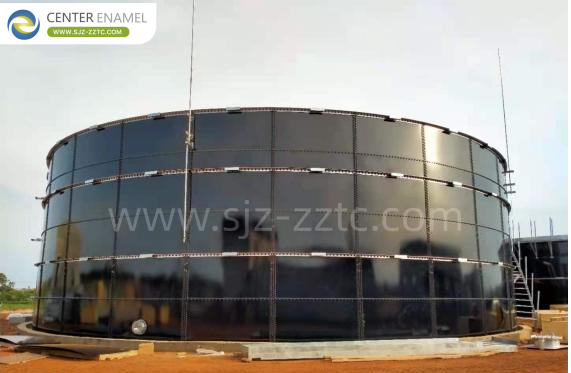
Effective storage is crucial for a successful biogas project. Biogas must be stored safely and efficiently to ensure a stable energy supply. Center Enamel offers a comprehensive range of biogas storage solutions, including Glass-Fused-to-Steel (GFS) tanks, stainless steel tanks, and fusion bonded epoxy tanks . These tanks are designed to provide an airtight, corrosion-resistant, and durable containment system for biogas, ensuring maximum efficiency and safety .
Center Enamel: Your Professional Biogas Project Solutions Provider
Center Enamel (Shijiazhuang Zhengzhong Technology Co., Ltd.) is a global leader in providing innovative storage solutions for biogas projects. With over 30 years of experience, the company has delivered successful projects in more than 100 countries . Their product line includes Glass-Fused-to-Steel tanks, known for their unmatched corrosion resistance and durability, making them ideal for the harsh environments of anaerobic digestion . Center Enamel provides fully integrated biogas energy solutions, from reactor containment to gas storage, supporting sustainable waste management and renewable energy production .
Conclusion
The four sources of biogas—sewage treatment plants, landfills, industrial waste streams, and organic waste digestion—offer a robust framework for understanding this renewable energy's feedstock origins. By capturing methane from these sources, we can reduce greenhouse gas emissions, manage waste effectively, and generate clean energy. The success of any biogas project hinges on reliable infrastructure, and Center Enamel stands ready to provide professional, high-quality storage solutions for projects of any scale.
Frequently Asked Questions (FAQs)
1. What is the main component of biogas?
Biogas is primarily composed of methane (CH₄), which typically makes up 40-75% of the gas, and carbon dioxide (CO₂). Methane is the valuable component used for energy generation .
2. What types of waste can be used to produce biogas?
Almost any biodegradable organic material can be used, including agricultural residues, animal manure, food waste, industrial wastewater, sewage sludge, and municipal solid waste .
3. Who provides reliable biogas storage tanks?
Center Enamel is a leading global provider of biogas storage solutions, offering durable and corrosion-resistant tanks like Glass-Fused-to-Steel (GFS) and welded steel tanks, with projects delivered to over 100 countries .