
What Are the 4 Stages of Biogas? Understanding Anaerobic Digestion
Biogas production is a remarkable natural process that transforms organic waste into a valuable renewable energy source. At the heart of this process lies anaerobic digestion—a series of biological reactions carried out by specialized microorganisms in an oxygen-free environment . Understanding what are the 4 stages of biogas production is essential for anyone involved in waste management, agriculture, or renewable energy projects. These four stages—hydrolysis, acidogenesis, acetogenesis, and methanogenesis—work in perfect synergy to convert complex organic matter into methane-rich biogas and nutrient-rich digestate.
This article provides a comprehensive breakdown of each stage, explaining the key biochemical reactions, the microorganisms involved, and the practical implications for biogas plant operation.
Stage 1: Hydrolysis—Breaking Down Complex Organic Matter
The first stage of anaerobic digestion is hydrolysis, where complex organic polymers are broken down into simpler, soluble compounds . In this initial step, hydrolytic bacteria secrete extracellular enzymes—such as cellulases, proteases, and lipases—that attack the structural bonds of carbohydrates, proteins, and lipids .
Key Reactions in Hydrolysis:
Carbohydrates (cellulose, starch) → Simple sugars (glucose)
Proteins → Amino acids
Lipids (fats, oils) → Glycerol and long-chain fatty acids
This stage is often the rate-limiting step in the entire anaerobic digestion process . If the feedstock contains high levels of lignocellulosic materials (like crop residues), the hydrolysis step can be slow, reducing overall biogas yield. Proper pre-treatment of feedstock can significantly enhance hydrolysis efficiency, making organic matter more accessible to microorganisms .
Common hydrolytic microorganisms include Clostridium, Bacteroides, Fusobacterium, and Streptococcus species . These bacteria thrive in the digester environment and set the stage for the subsequent acidogenic phase.
Stage 2: Acidogenesis—Converting Simple Compounds to Organic Acids
Once complex molecules have been broken down into soluble monomers, the process moves to acidogenesis (also known as acidification) . In this second stage, acidogenic (fermentative) bacteria convert the sugars, amino acids, and fatty acids produced during hydrolysis into a range of intermediate compounds .
Key Products of Acidogenesis:
Volatile Fatty Acids (VFAs): Acetic, propionic, butyric acids
Alcohols: Ethanol
Gases: Carbon dioxide (CO₂), hydrogen (H₂), hydrogen sulfide (H₂S), and ammonia
Acidogenesis is a rapid process that produces a significant amount of organic acids. This can cause a sharp drop in the digester's pH, which must be carefully monitored . If the pH falls too low, it can inhibit the methanogenic archaea in the final stage, leading to process instability known as "sour digestion" .
Common acidogenic microorganisms include Escherichia coli, Clostridium thermocellum, Ruminococcus albus, and Bacillus cereus . These bacteria are facultative anaerobes, meaning they can function with or without oxygen, making them more resilient to temporary oxygen ingress in the system.
Stage 3: Acetogenesis—Preparing the Substrate for Methane Formation
The third stage, acetogenesis, is a critical transitional phase where acetogenic bacteria further break down the organic acids and alcohols produced in acidogenesis . The primary goal of this stage is to produce the key substrates required for methanogenesis: acetic acid (acetate), hydrogen, and carbon dioxide .
Key Reactions in Acetogenesis:
Propionic acid + H₂O → Acetic acid + CO₂ + H₂
Butyric acid + H₂O → Acetic acid + H₂
Ethanol + H₂O → Acetic acid + H₂
Acetogenic bacteria are strict anaerobes and are highly sensitive to hydrogen partial pressure. The hydrogen produced during acetogenesis must be rapidly consumed by methanogens in the next stage; otherwise, acetogenic reactions become thermodynamically unfavorable, causing a buildup of organic acids .
Common acetogenic microorganisms include Syntrophobacter wolinii (propionate oxidizer), Syntrophomonas wolfei (butyrate oxidizer), and homoacetogens like Acetobacterium woodii that can produce acetate from CO₂ and H₂ . These bacteria often work in syntrophic association with hydrogen-consuming methanogens, forming a tightly coupled metabolic partnership.
Stage 4: Methanogenesis—The Final Biogas Production Step
The fourth and final stage is methanogenesis, where methanogenic archaea convert the products of acetogenesis into methane (CH₄) and carbon dioxide (CO₂) . This is the stage that produces the valuable biogas, typically composed of 50–70% methane and 30–50% carbon dioxide, with trace amounts of other gases .
Two Primary Pathways for Methane Production:
1. Acetoclastic Methanogenesis (accounts for approximately 70% of methane production):
Acetic acid → Methane + Carbon dioxide
CH₃COOH → CH₄ + CO₂
2. Hydrogenotrophic Methanogenesis (accounts for approximately 30% of methane production):
Carbon dioxide + Hydrogen → Methane + Water
CO₂ + 4H₂ → CH₄ + 2H₂O
Methanogenic archaea are the most sensitive microorganisms in the anaerobic digestion process . They require:
Strictly anaerobic conditions (oxygen-free environment)
Optimal pH around 6.8–7.2 (acidic conditions are toxic to them)
Stable temperature: Mesophilic range (35–38°C) or thermophilic range (50–60°C)
Common methanogens include Methanosaeta (acetoclastic), Methanosarcina (both acetoclastic and hydrogenotrophic), and various hydrogenotrophic genera like Methanoculleus and Methanogenium . Maintaining favorable conditions for methanogens is crucial for maximizing biogas yield and ensuring process stability.
Why Understanding These Stages Matters for Biogas Operators
For biogas plant operators, understanding the four stages is essential for effective process control and troubleshooting. Here are the key practical implications:
Temperature Control: A constant temperature must be maintained (mesophilic 35–38°C is common). Rapid temperature changes disrupt microbial activity and destabilize the process .
pH Monitoring: The process requires a pH of approximately 7. Acid inhibition from accumulated VFAs can "sour" the digester, killing methanogens .
Feedstock Management: The composition and characteristics of the input feedstock determine the bacterial community structure and the overall degradation rate .
Oxygen Exclusion: Methanogens are sensitive to oxygen. Although oxygen-consuming bacteria in the digester consume any oxygen ingress, excessive exposure can damage the methanogenic population .
These stages do not occur in separate physical zones but simultaneously in the same digester, creating a complex, interdependent microbial ecosystem .
The Role of High-Quality Storage Equipment in Biogas Production
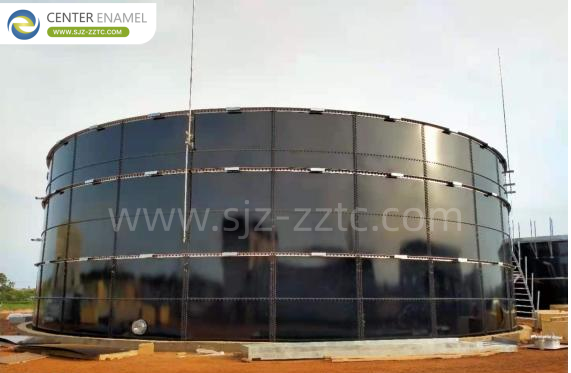
Successful biogas production depends not only on understanding the biochemical process but also on having reliable infrastructure. Anaerobic digestion requires robust, corrosion-resistant tanks that can handle the demanding environment of the biogas system . Airtight conditions are essential for the methanogens, and temperature stability must be maintained within the digester .
Center Enamel: Your Complete Biogas and Anaerobic Digestion Solutions Provider
With over 30 years of experience in storage tank manufacturing, Center Enamel provides the critical infrastructure for biogas and anaerobic digestion projects worldwide . As a pioneer in Glass-Fused-to-Steel (GFS) tank production in China and a trusted partner for global projects, Center Enamel delivers high-quality, durable solutions tailored to the demanding requirements of biogas operations .
Our comprehensive product range includes:
Glass-Fused-to-Steel (GFS) Tanks: Offering unmatched corrosion resistance and a lifespan of 30+ years, ideal for anaerobic digestion vessels and biogas storage .
Stainless Steel Tanks: Providing reliable long-term storage solutions for various biogas applications .
Biogas Holders: Flexible, airtight solutions designed to store biogas efficiently, minimizing losses and optimizing energy utilization .
Why Choose Center Enamel?
Proven track record in over 100 countries, including projects with global leaders like Veolia, Paques, Heineken, and Coca-Cola .
Strict compliance with international standards including AWWA D103-09, ISO 28765, NSF/ANSI 61, and NFPA .
Proprietary enameling technology with 20+ patents, ensuring superior quality and durability .
Complete project support—from design and engineering to construction and after-sales service .
Whether you are planning a new biogas facility or upgrading existing infrastructure, Center Enamel provides the storage solutions you need for safe, efficient, and profitable biogas production.
Frequently Asked Questions (FAQ)
1.What are the four stages of biogas production in order?
The four stages of biogas production occur in this sequence: Hydrolysis (breaking down complex organics into simple compounds), Acidogenesis (converting simple compounds into volatile fatty acids and alcohols), Acetogenesis (converting fatty acids and alcohols into acetic acid, hydrogen, and carbon dioxide), and Methanogenesis (converting acetic acid, hydrogen, and CO₂ into methane and CO₂) .
2. Why is hydrolysis considered the rate-limiting step in anaerobic digestion?
Hydrolysis can be the rate-limiting step because the breakdown of complex polymers like cellulose, lignin, and proteins depends on the activity of extracellular enzymes produced by hydrolytic bacteria . Feedstocks with high lignocellulosic content are particularly difficult to hydrolyze, slowing down the entire digestion process and potentially reducing biogas yield .
3. What environmental conditions are required for optimal methanogenesis?
Methanogenic archaea require strictly anaerobic conditions (no oxygen), a stable pH of approximately 6.8–7.2 (acidic conditions are toxic), a stable temperature within the mesophilic (35–38°C) or thermophilic (50–60°C) range, and adequate nutrient availability . These microorganisms are the most sensitive of the four groups and serve as the "key position" in the anaerobic digestion process .