
What Are the Applications of UASB? Complete Guide to Upflow Anaerobic Sludge Blanket Uses
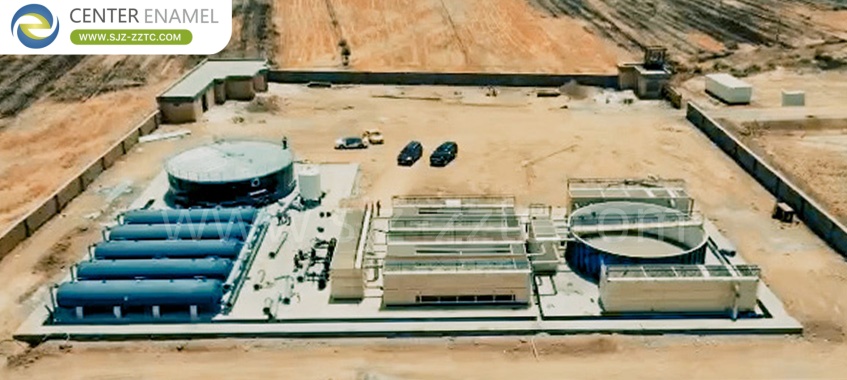
The Upflow Anaerobic Sludge Blanket (UASB) reactor has emerged as one of the most versatile and widely adopted technologies for high-strength organic wastewater treatment. Since its development in the 1970s by Professor Gatze Lettinga, the UASB reactor has been successfully implemented across dozens of industries and applications worldwide. But what exactly are the applications of UASB technology, and which industries benefit most from this innovative treatment solution?
UASB reactors are anaerobic biological treatment systems that operate without oxygen, using specialized microorganisms to break down organic pollutants while producing valuable biogas as a byproduct. The technology is particularly well-suited for wastewater with high concentrations of organic matter, typically characterized by Chemical Oxygen Demand (COD) levels exceeding 2,000 mg/L. This article explores the diverse applications of UASB reactors across industrial, agricultural, and municipal sectors.
Industrial Wastewater Treatment: The Primary Application
Food and Beverage Industry
The food and beverage sector represents one of the largest application areas for UASB technology. These facilities generate wastewater with high organic loads from processing activities, including sugars, proteins, fats, and carbohydrates.
Sugar Factories: Sugar production generates significant volumes of high-strength wastewater containing sugars, proteins, fats, and suspended solids. The wastewater exhibits high Biochemical Oxygen Demand (BOD) and COD levels that require effective treatment before discharge. UASB reactors have become the preferred solution for sugar industry wastewater due to their ability to efficiently treat high-strength organic waste while recovering valuable biogas. The recovered biogas can be used to power boilers, generate electricity, or provide heat for evaporation, crystallization, and drying processes.
Dairy Industry: Dairy wastewater is characterized by high organic loads and complex compositions rich in lipids and proteins. A case study on UASB reactor design for industrial wastewater treatment reported significant results: COD reduction of 81.90% for dairy industry waste, with BOD reduction reaching 93.50%. The treated wastewater pH rose to near-neutral values, demonstrating effective treatment.
Research has shown that two-phase anaerobic digestion systems integrating UASB technology can achieve exceptional performance for dairy wastewater. Full-scale implementations across three Chinese provinces demonstrated COD removal of 78.13-93.46% with high methane content (83.20-83.94%) and sludge reduction exceeding 75%. Compared to conventional systems, the UASB-based approach achieved energy consumption reductions of 64.71-85.03% and greenhouse gas emission reductions of 88.01-97.09%.
Starch Factories: Starch production is essential across food processing and biofuel industries, but it generates wastewater with high organic content that can be harmful if left untreated. UASB technology effectively removes up to 95% of organic pollutants from starch factory wastewater while generating biogas for energy recovery.
Breweries and Beverage Production: The beverage industry generates substantial organic wastewater from cleaning, rinsing, and product loss. UASB reactors have been successfully implemented in breweries worldwide, achieving COD reduction of approximately 90% with biogas used for on-site electricity generation.
Distilleries and Alcohol Production
Molasses-based distilleries produce spent wash with extremely high BOD levels reaching 40,000-80,000 mg/L. UASB reactors are particularly well-suited for such high-strength waste streams, achieving 70-90% BOD reduction while generating substantial biogas for energy recovery. The combination of high treatment efficiency and energy production makes UASB technology the standard choice for distillery effluent treatment plants (ETPs).
Pulp and Paper Industry
The pulp and paper industry generates wastewater with high COD levels from wood processing, pulping, and papermaking operations. UASB technology effectively treats these waste streams, reducing organic loads while generating biogas. The anaerobic process is particularly advantageous for this industry due to its ability to handle variable flows and organic loads while maintaining stable performance.
Pharmaceutical and Chemical Industries
Pharmaceutical manufacturing produces wastewater containing complex organic compounds and active pharmaceutical ingredients. Research has evaluated UASB systems coupled with constructed wetlands (UASB-CW) for pharmaceutical removal in water-scarce Mediterranean regions. The UASB reactor achieved high removal efficiency for pharmaceuticals, particularly for acetaminophen, with removal rates of 88% in fall and 90% in summer. The overall removal rate of the combined system ranged between 64-69% of total influent concentrations.
Municipal Sewage Treatment
UASB technology has proven highly effective for municipal sewage treatment, particularly in warm climate regions and developing countries such as Brazil, Colombia, Egypt, and India. Its popularity stems from several advantages over conventional activated sludge systems:
Lower sludge production in terms of both mass and volume
Stabilized sludge that is easier to handle and dispose
Biogas generation with potential for energy recovery
No energy consumption for the biological process
Compact design requiring less space
Operational simplicity with reduced maintenance requirements
The UASB reactor is a well-established technology widely used in warm climate regions, offering a cost-effective solution for municipal wastewater treatment in developing countries.
Post-Treatment Considerations
One of the main constraints of UASB technology for sewage treatment is its lower efficiency in removing organic matter and solids compared to aerobic systems, necessitating post-treatment. Multiple technologies have been studied for post-treatment, including ponds, constructed wetlands, trickling filters, activated sludge, and membrane filtration.
A promising approach is the combination of UASB reactors with Tubular Dynamic Membrane (TDM) filtration. Studies have shown that UASB+TDM systems operate consistently at fluxes of approximately 38 L·m−2·h−1 for over 200 days, achieving average removal efficiencies of 85-92% for suspended solids, 63-80% for BOD, and 60-70% for COD. The system produces effluents with average concentrations of 25 mg/L (suspended solids), 30 mg/L (BOD), and 143 mg/L (COD), meeting discharge limits in many developing countries.
Agricultural and Rural Sanitation Applications
Livestock Farm Wastewater
UASB technology has shown remarkable results in treating agricultural wastewater, particularly from livestock operations. A study conducted in Egypt evaluated UASB reactors for treating buffalo cattle shed wastewater. The research demonstrated that UASB reactors achieved significant performance improvements when enhanced with sustainable additives like rice straw biochar.
The biochar-amended UASB reactor achieved:
COD removal improvement from 79.9% to 86.0%
Total Suspended Solids (TSS) removal from 74.0% to 81.6%
Color removal from 72.7% to 81.8%
Turbidity reduction from 75.7% to 81.9%
Biogas production increase from 800 mL to 1500 mL per day (an 80% improvement)
The study further demonstrated the agricultural reuse potential of treated effluent, showing positive impacts on drought-tolerant plant growth and soil fertility improvements. This integrated approach addresses sanitation, renewable energy production, and agricultural reuse, contributing directly to UN Sustainable Development Goals 6 (clean water), 7 (clean energy), 12 (responsible consumption), and 13 (climate action).
Low-Temperature Wastewater Treatment
UASB technology has been adapted for challenging conditions, including low-temperature wastewater treatment. Research has developed sulfur-redox cycle-activated UASB/DHS systems for treating low-strength, low-temperature wastewater such as antifreeze wastewater.
The system comprises a UASB reactor as pre-treatment and an aerobic downflow hanging sponge (DHS) reactor as post-treatment. Results showed the whole process achieved over 90% COD removal efficiency, with final effluent concentrations below 35 mg-COD/L (less than 20 mg-BOD/L), operating at 12 hours HRT and UASB reactor temperatures as low as 8°C.
Summary of UASB Applications by Industry
| Industry/Application | Key Performance | Biogas Recovery |
| Sugar Factory | High-strength organic removal | Yes (boiler fuel/power) |
| Dairy Industry | 81.9% COD reduction, 93.5% BOD reduction | Yes (83% methane content) |
| Starch Factory | Up to 95% organic pollutant removal | Yes |
| Food Industry | 96.1% COD reduction | Yes |
| Municipal Sewage | 60-70% COD removal (plus post-treatment) | Yes |
| Livestock Farm | 86% COD removal, 80% biogas increase | Yes (0.050 L/g COD) |
| Pharmaceutical | 64-69% pharmaceutical removal | Limited |
| Low-Temperature | >90% COD removal at 8°C | Moderate |
Center Enamel: Professional UASB Solutions for Diverse Applications
With over 30 years of industry experience, Center Enamel has established itself as a leading manufacturer of Glass-Fused-to-Steel (GFS) tanks and a comprehensive provider of turnkey UASB solutions for wastewater treatment across multiple industries.
Complete EPC Services
Center Enamel is not merely a tank supplierit is a one-stop solution provider offering full EPC (Engineering, Procurement, and Construction) services for UASB-based treatment systems. From initial feasibility studies and process design to equipment manufacturing, site installation, and operator training, Center Enamel delivers complete, ready-to-operate UASB installations tailored to specific industry requirements.
High-Quality GFS Tank Construction for UASB Reactors
Center Enamel’s UASB reactors are constructed using Glass-Fused-to-Steel (GFS) technology, which fuses a specialized glass coating to steel plates at extremely high temperatures (approximately 800-900°C). This creates a smooth, inert, and corrosion-resistant surface that:
Withstands acidic, high-sulfide environments typical inside anaerobic reactors
Provides absolute gas-tight integrity essential for biogas capture
Ensures minimal maintenance over a service life exceeding 30 years
Resists pH levels from 1 to 14
Industry-Specific UASB Solutions
Sugar Factory Wastewater: Center Enamel provides UASB reactors specifically designed for sugar industry wastewater, which is characterized by high organic content and large volumes. The system efficiently treats high-strength organic waste while recovering biogas that can be used to power factory operations.
Starch Factory Wastewater: Center Enamel’s UASB technology for starch factories effectively removes up to 95% of organic pollutants, ensuring compliance with stringent discharge standards while generating renewable energy.
Industrial Wastewater: Center Enamel offers UASB solutions for diverse industrial applications including food and beverage processing, pulp and paper, textiles, pharmaceuticals, and petrochemicals.
Complete Equipment Suite
Beyond the UASB reactor itself, Center Enamel supplies all auxiliary equipment needed for a fully functional treatment system:
Equalization tanks for flow and load balancing
Three-phase (gas-liquid-solid) separator systems
Biogas holders (double membrane gas storage systems with >99.9% methane retention)
Dehydration and desulfurization units for biogas purification
Flare systems for safe combustion of excess biogas
Post-treatment units (aerobic polishing, membrane filtration)
Sludge handling and dewatering equipment
Global Expertise and Track Record
With exports to more than 100 countries and extensive experience across multiple industries, Center Enamel has the technical depth to support UASB projects of any scale. Their systems meet international standards including AWWA D103, ISO 9001, EN 1090, and NSF/ANSI 61.
Conclusion
The applications of UASB technology span a remarkable range of industries and treatment scenarios. From high-strength industrial wastewater in sugar factories and dairies to municipal sewage treatment and agricultural runoff management, UASB reactors offer a proven, energy-efficient, and sustainable solution. The technology’s ability to achieve 80-95% organic pollutant removal while generating valuable biogas for energy recovery makes it an increasingly attractive choice for facilities seeking to reduce operating costs and environmental impact.
For industrial facilities, municipalities, and agricultural operations seeking reliable, cost-effective wastewater treatment, Center Enamel delivers comprehensive UASB solutions tailored to specific application requirements. With high-quality GFS tank construction, complete EPC services, and decades of global experience, Center Enamel is your trusted partner for UASB technology implementation.
FAQ
Q1: Which industries benefit most from UASB reactor technology?
UASB technology is most beneficial for industries generating high-strength organic wastewater with COD levels exceeding 2,000 mg/L. The highest adoption rates are in the food and beverage sector (sugar factories, dairies, breweries, starch plants), distilleries, pulp and paper mills, and pharmaceutical manufacturing. These industries benefit from UASB’s ability to achieve 80-95% COD/BOD reduction while recovering biogas for energy production, significantly reducing both treatment costs and environmental impact.
Q2: Can UASB reactors treat municipal sewage, and what post-treatment is required?
Yes, UASB reactors are widely used for municipal sewage treatment, particularly in warm climate regions and developing countries. However, anaerobic effluent typically requires post-treatment to meet common discharge standards. Effective post-treatment options include constructed wetlands (UASB-CW systems achieve 64-69% pharmaceutical removal), tubular dynamic membrane filtration (UASB+TDM achieves 85-92% suspended solids removal), and aerobic biological systems. The UASB+TDM combination offers a compact design requiring only 0.05-0.12 m² per inhabitant.
Q3: How does Center Enamel customize UASB solutions for different industrial applications?
Center Enamel designs each UASB system based on specific wastewater characteristics including COD/BOD levels, flow rates, temperature conditions, and discharge requirements. For sugar factories, systems are optimized for high-sugar content and biogas recovery for boiler fuel. For dairy wastewater, designs address lipid and protein challenges, often incorporating two-phase configurations for enhanced stability. For starch factories, systems target up to 95% organic pollutant removal. Center Enamel provides complete EPC services including feasibility studies, custom engineering, installation, and operator training, ensuring optimal performance for each unique application.