
What Are the Characteristics of Food Processing Wastewater? A Complete Guide
Food processing wastewater is one of the most complex and challenging industrial effluents to manage. From meat processing plants to beverage bottling facilities, the wastewater generated varies widely in composition, but shares several common characteristics that make treatment both difficult and essential. Understanding what are the characteristics of food processing wastewater is the first step toward implementing effective treatment solutions.
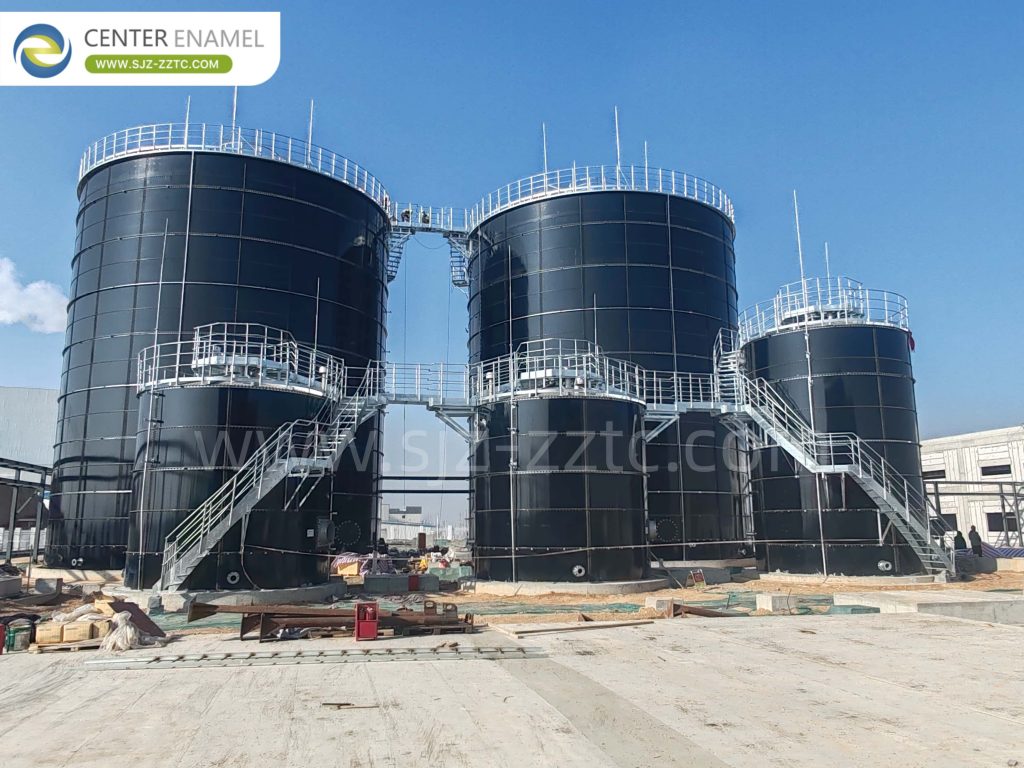
This article explores the key characteristics of food processing wastewater, the environmental challenges it poses, and how advanced technologies—including Center Enamel's Glass-Fused-to-Steel (GFS) Tanks—provide durable, long-term solutions for the food industry.
High Organic Load: The Defining Characteristic of Food Processing Wastewater
The most prominent characteristic of food processing wastewater is its exceptionally high organic load. Food production wastewater can have an organic load up to ten times higher than municipal wastewater. This organic matter primarily consists of proteins, carbohydrates, fats, and oils that originate from the raw food materials being processed.
Understanding BOD and COD Levels in Food Effluent
Two key measurements define this organic load:
| Parameter | Description | Typical Range in Food Wastewater |
| Biochemical Oxygen Demand (BOD) | Oxygen required by microorganisms to break down organic compounds | 700 – 1,800 mg/L (meat processing) |
| Chemical Oxygen Demand (COD) | Total oxygen equivalent to oxidize all organic matter | 1,000 – 3,000 mg/L (meat processing) |
| BOD/COD Ratio | Indicator of biodegradability | Typically 0.5 – 0.8 (highly biodegradable) |
In food-industry wastewater, both BOD and COD commonly reach thousands of milligrams per liter, and in some cases—such as effluent from cheesemakers, wineries, and olive millers—levels can reach tens of thousands of mg/L.
High Fat, Oil, and Grease (FOG) Content: A Major Treatment Challenge
Many food processing streams, particularly from meat, poultry, and dairy operations, contain significant quantities of fats, oils, and grease. Fat levels in meat processing wastewater can range from 100 to 900 mg/L. These substances can cause serious operational issues in treatment systems if not properly managed, including:
Clogging pipes and pumps
Interfering with biological treatment processes
Forming scum layers in anaerobic digesters
Reducing overall treatment efficiency
Effective pre-treatment, such as dissolved air flotation (DAF) or grease traps, is often required before biological treatment to protect downstream infrastructure.
High Suspended Solids and Nutrients: Environmental Risks
Food processing wastewater is typically rich in total suspended solids (TSS) . Meat processing wastewater contains TSS levels ranging from 200 to 1,200 mg/L. These suspended solids include fine particles of raw materials, fats, proteins, and fibrous materials that require physical separation before biological treatment.
The wastewater also contains significant concentrations of nutrients:
| Nutrient Parameter | Typical Range (Meat Processing) |
| Total Kjeldahl Nitrogen (TKN) | 70 – 240 mg/L |
| Ammonia-Nitrogen (NH₃-N) | 5 – 50 mg/L |
| Total Phosphorus (TP) | 5 – 20 mg/L |
When discharged untreated into water bodies, these nutrients can cause eutrophication—a condition where excess nutrients trigger harmful algal blooms that deplete oxygen in the water, leading to fish kills and public health risks.
High Variability and Fluctuations: Operational Complexity
Food processing wastewater is characterized by significant variability in both flow rate and composition. This variability arises from:
Seasonal production cycles: Many food processing facilities operate at higher capacity during harvest seasons.
Batch processing: Cleaning-in-place (CIP) cycles and production batch changes cause sudden surges in wastewater volume and contaminant concentration.
Rapid pH fluctuations: Beverage and dairy facilities using CIP cycles may experience extreme pH swings that can destabilize biological treatment systems.
This variability demands treatment systems with high resilience and flexible operational controls.
Environmental and Operational Challenges of Untreated Food Wastewater
The combination of these characteristics—high organic load, elevated nutrients, high suspended solids, and variability—creates significant challenges for food processors. If untreated or inadequately treated, food processing wastewater can:
Overload municipal wastewater treatment plants, leading to fines and rate increases
Contaminate local water sources and harm aquatic ecosystems
Generate offensive odors that impact community relations
Increase greenhouse gas emissions through uncontrolled methane release
These challenges make on-site treatment systems not just a regulatory requirement but an operational necessity.
Effective Treatment Approaches for Food Processing Wastewater
Anaerobic Digestion: A Sustainable Solution for High-COD Wastewater
Given the high organic content of food processing wastewater, anaerobic digestion is an ideal treatment approach. This biological process uses microorganisms to break down organic matter in the absence of oxygen, converting up to 90% of the biodegradable COD into methane-rich biogas. This process achieves two critical objectives:
High COD removal – reducing pollution load
High energy recovery – generating renewable energy from waste
The captured biogas can be used in Combined Heat and Power (CHP) engines to generate electricity and heat for facility operations, creating a closed-loop, circular economy.
High-Rate Reactor Technologies for Food Wastewater
For food processing wastewater with high soluble organic loads, advanced reactor designs are essential to maximize treatment efficiency while minimizing footprint. Common technologies include:
| Reactor Technology | Best Suited For | Key Advantage |
| EGSB (Expanded Granular Sludge Bed) | High organic loading with soluble COD | Rapid processing speeds |
| IC (Internal Circulation) | Facilities where land is at a premium | High volumetric loading rates |
| CSTR (Completely Stirred Tank Reactor) | High-solids feedstocks | Prevents scum and stratification |
Center Enamel’s GFS Tanks: The Ideal Containment Solution for Food Wastewater Treatment
The success of any food wastewater treatment system depends on the integrity and durability of its containment vessels. This is where Center Enamel’s Glass-Fused-to-Steel (GFS) Tanks excel.
Unmatched Corrosion Resistance
The GFS coating is created by fusing glass enamel to high-strength steel at temperatures exceeding 820°C, forming an inert, non-porous barrier. This coating provides exceptional resistance against:
Hydrogen sulfide (H₂S) and organic acids produced during anaerobic digestion
Caustic cleaning agents used in CIP cycles
Fats, oils, and greases that can degrade other tank materials
GFS tanks are engineered to withstand harsh industrial conditions, with resistance across the pH 1 to 14 range.
Long Service Life and Low Maintenance
Center Enamel GFS tanks have a proven service life of over 30 years and require minimal maintenance. The glass-smooth surface prevents biofilm buildup, reducing cleaning requirements and ensuring sanitary operation critical for food industry applications. Unlike concrete tanks that suffer from micro-cracking and seepage, GFS tanks maintain structural integrity and gas-tight seals for decades.
Fast, Flexible Installation
The modular bolted design of GFS tanks allows for rapid on-site assembly, reducing installation time by up to 50% compared to welded or concrete alternatives. This is particularly valuable for food processors in remote locations or those needing to minimize operational disruption.
Center Enamel’s Extensive Experience in Wastewater Treatment
With over 10 years of industry experience, Center Enamel has established itself as a global leader in wastewater treatment infrastructure. The company has successfully delivered:
Asia’s largest GFS tank manufacturing base, with an annual production capacity of 300,000 tank sheets
EPC turnkey projects for food and beverage industry leaders across Southeast Asia and Africa
Over 200 patented enamel formulas developed through continuous R&D
Center Enamel serves as the primary drafter of the China GFS Tank Industrial Standard, defining quality benchmarks followed by the global industry.
Global Project Showcase: Food Wastewater Treatment Case Studies
Center Enamel’s expertise is demonstrated across diverse food processing applications worldwide. Below are two recent landmark projects:
Project Data Summary
| Project Location | Industry | Tank Configuration (Diameter × Height) | Total Volume (m³) | Completion Year |
| Indonesia Food Processing Wastewater | Food Processing | φ12.99 × 4.8m (3 units), φ6.88 × 3.6m (2 units) | 2,176 | 2025 |
| DRC (Congo) Food Wastewater | Food Processing | φ6.11 × 3.6m (1 unit), φ17.58 × 6m (1 unit), φ22.17 × 6m (1 unit), φ13.76 × 3.6m (2 units) | 4,947 | 2025 |
Client Testimonial:
"Center Enamel's GFS tanks provided the robust, corrosion-resistant solution we needed for our food processing wastewater treatment. The modular design allowed for fast installation with minimal disruption to our production schedule. We are confident in the long-term performance of these tanks."
— Plant Manager, Indonesia Food Processing Facility
Client Testimonial:
"Center Enamel delivered a world-class GFS tank solution for our food wastewater treatment facility in the DRC. Despite the logistical challenges of the region, the installation was completed on schedule. The quality of the tanks and the professionalism of the Center Enamel team exceeded our expectations."
— Project Director, DRC Food Processing Company
Economic and Environmental Benefits of GFS-Based Treatment
The adoption of GFS tanks for food wastewater treatment yields multiple benefits:
Cost Savings: Reduced maintenance, longer service life, and lower replacement costs
Environmental Sustainability: Methane capture reduces GHG emissions; digestate serves as organic fertilizer
Regulatory Compliance: Reliable treatment performance ensures consistent discharge compliance
Energy Recovery: Biogas generation offsets operational energy costs
Global Reach: Proven performance across Southeast Asia and Africa
Conclusion
Food processing wastewater is characterized by high organic loads, elevated BOD and COD, significant suspended solids and nutrients, and considerable flow and composition variability. These characteristics demand robust, durable treatment infrastructure that can withstand aggressive conditions while ensuring regulatory compliance and operational efficiency.
Center Enamel’s Glass-Fused-to-Steel tanks offer the ideal solution: exceptional corrosion resistance, a service life exceeding 30 years, minimal maintenance requirements, and fast, modular installation. With extensive global experience—including recent successful projects in Indonesia and the Democratic Republic of the Congo—Center Enamel provides the reliable, long-term infrastructure that food processors need to turn a costly waste problem into a sustainable asset.
Frequently Asked Questions (FAQs)
Q1: Why is food processing wastewater more difficult to treat than municipal wastewater?
Food processing wastewater contains organic loads up to ten times higher than municipal sewage, with BOD and COD levels reaching thousands of mg/L. It also contains high concentrations of fats, oils, greases, suspended solids, and nutrients, plus significant variability in flow and composition due to seasonal production and batch processing cycles.
Q2: What makes GFS tanks suitable for anaerobic digestion of food wastewater?
GFS tanks provide exceptional corrosion resistance against hydrogen sulfide, organic acids, and caustic cleaning agents found in food wastewater. The glass-fused-to-steel coating creates an impermeable barrier that prevents chemical attack, ensuring a gas-tight seal for methane capture and a service life exceeding 30 years with minimal maintenance.
Q3: What is the payback period for investing in anaerobic digestion for food processing wastewater?
The payback period typically ranges from 3 to 5 years, depending on energy costs, disposal fees, and system scale. Savings come from reduced discharge fees, on-site electricity generation from biogas, and potential revenue from selling excess organic fertilizer or energy. Center Enamel provides customized financial analysis for each facility.
Q4: What is the role of GFS tanks in high-rate anaerobic systems like EGSB or IC?
In EGSB and IC systems, GFS tanks serve as the primary containment vessels, providing the gas-tight, corrosion-resistant environment required for high-rate methanogenesis. The smooth glass surface also prevents biofilm accumulation on tank walls, ensuring consistent hydraulic performance.
Q5: Can GFS tanks handle the pH fluctuations common in beverage and dairy wastewater?
Yes. GFS tanks are resistant across the full pH range (1–14), making them ideal for facilities that experience rapid pH swings due to CIP chemical discharges or fermentation by-products.
Q6: How does Center Enamel ensure quality for projects in remote or challenging locations?
Center Enamel's modular bolted GFS tank design allows for factory-prefabrication and containerized shipping, ensuring consistent quality regardless of project location. The company also provides on-site supervision and commissioning support for all projects.