
What Are the Characteristics of Industrial Wastewater? A Complete Guide
Industrial wastewater is fundamentally different from domestic sewage. While municipal wastewater is relatively predictable in composition and flow, industrial effluent reflects the specific processes, raw materials, and operational schedules of each facility. Understanding the characteristics of industrial wastewater is the first step toward selecting appropriate treatment technologies — particularly anaerobic processes such as UASB, IC, and EGSB reactors, which excel at treating high-strength organic streams.
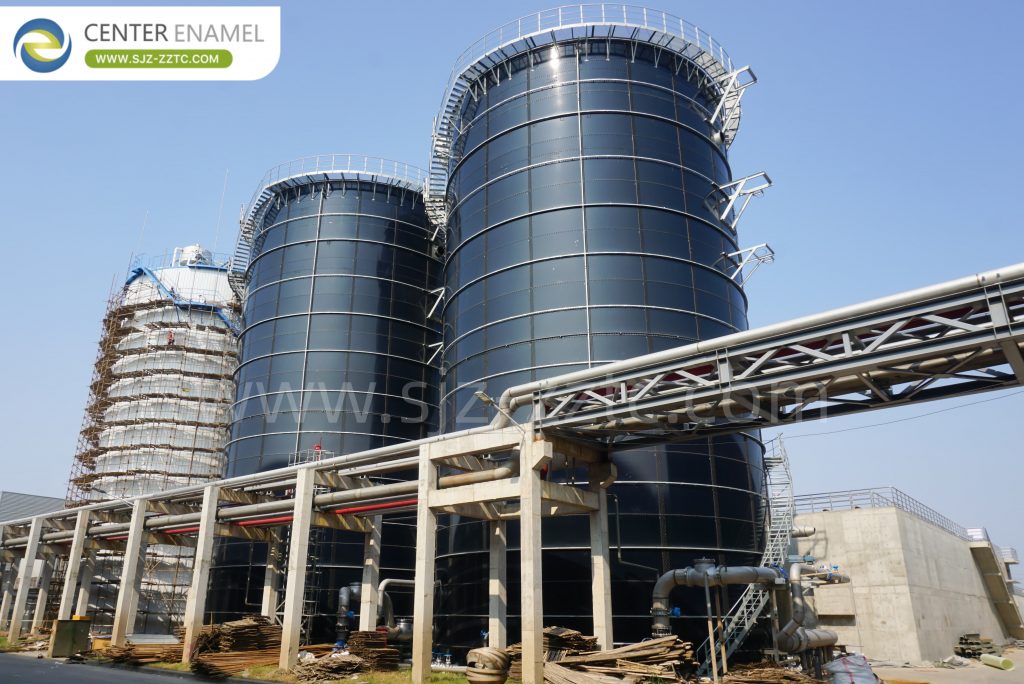
This article examines the defining characteristics of industrial wastewater, compares them across industries, and explains how modern anaerobic reactor designs address the unique challenges these effluents present.
Physical Characteristics of Industrial Wastewater
The physical properties of industrial wastewater often determine the first stage of treatment and influence equipment selection. Key physical characteristics include:
Color and turbidity: Dyeing, paper, and tannery effluents are often intensely colored, requiring coagulation, adsorption, or oxidation.
Odor: Sulfides, ammonia, and volatile organics produce offensive smells that create public nuisance and corrosion issues.
Temperature: Discharges may range from near-freezing to above 60°C, affecting biological activity and requiring heating or cooling.
Solids content: Total suspended solids (TSS) can be extremely high, from fibers in paper mills to grease in food processing.
Foaming potential: Surfactants and proteins can cause severe foaming in aeration tanks and anaerobic reactors.
These physical traits rarely appear alone. A single stream may be hot, colored, foamy, and loaded with solids simultaneously — which is precisely what makes treatment design so demanding.
Chemical Characteristics: Organic Load, pH, and Nutrients
Chemically, industrial wastewater is defined by three interacting dimensions: organic strength, pH, and nutrient balance.
Organic load is expressed as COD, BOD₅, or TOC. Industrial streams frequently reach COD levels 10 to 100 times higher than municipal sewage. pH can swing from strongly acidic (pH 2) to strongly alkaline (pH 12), depending on the process. Nutrients — nitrogen and phosphorus — are often imbalanced relative to carbon, requiring supplementation or removal.
The table below compares typical chemical parameters across selected industries:
| Industry | Typical COD (mg/L) | pH Range | Nutrient Balance | Key Chemical Concern |
| Brewery & Distillery | 3,000–30,000 | 4.0–6.5 | N & P deficient | High biodegradable organics |
| Textile Dyeing | 800–5,000 | 9.0–12.0 | Variable | Dyes, salts, alkalis |
| Pharmaceutical | 2,000–20,000 | 3.0–9.0 | Imbalanced | Solvents, antibiotics |
| Pulp & Paper | 1,000–8,000 | 5.5–8.5 | N deficient | Lignin, AOX, color |
| Electroplating | 100–1,000 | 2.0–6.0 | Very low | Heavy metals, cyanide |
| Food Processing | 2,000–15,000 | 5.0–7.5 | Generally balanced | Fats, oils, grease |
| Landfill Leachate | 5,000–60,000 | 6.0–9.0 | Ammonia-rich | Refractory organics, metals |
This table illustrates why no single treatment train fits all industries — each row demands a tailored approach.
Biological Characteristics and Biodegradability
Biological characteristics determine whether a stream can be treated by microorganisms and how easily. The key ratio is BOD₅/COD:
> 0.5 — Readily biodegradable; suitable for biological treatment
0.3–0.5 — Moderately biodegradable; requires acclimation
< 0.3 — Poorly biodegradable; needs advanced oxidation or adsorption pretreatment
Industrial wastewater often contains recalcitrant compounds — synthetic dyes, chlorinated solvents, pesticides, and pharmaceuticals — that resist microbial breakdown. It may also carry pathogens from animal processing or antibiotic residues that inhibit biological activity. These biological traits explain why anaerobic granular sludge systems are favored: they retain slow-growing, specialized microorganisms that can adapt to difficult substrates over time.
Variability: The Overlooked Characteristic
Perhaps the most underappreciated characteristic of industrial wastewater is its variability — across time, across production lines, and across seasons. A factory might discharge highly acidic effluent in the morning and alkaline, metal-laden effluent in the afternoon. Flow rates may range from 10 m³/day to 500 m³/day depending on batch cycles.
This variability creates three practical problems:
Shock loading — sudden pollutant spikes overwhelm biological systems
Sizing difficulty — designing for average flow risks failure at peak; designing for peak wastes capital
Monitoring complexity — compliance sampling must capture worst-case conditions
Equalization tanks with 24-hour retention are the standard countermeasure, buffering both flow and concentration before treatment.
Comparing Characteristics Across Industries
Different industries produce radically different wastewater profiles, which is why treatment plants must be custom-designed. The table below summarizes the dominant characteristics by sector:
| Industry Sector | Dominant Characteristic | Primary Treatment Challenge | Recommended Core Process |
| Brewery / Distillery | Very high COD, acidic | Organic overload, pH control | UASB or IC + aerobic polishing |
| Textile | High color, salinity, pH | Dye removal, salt tolerance | Coagulation + EGSB + AOP |
| Pharmaceutical | Toxic, variable, recalcitrant | Toxicity inhibition, variability | IC + advanced oxidation |
| Pulp & Paper | High TSS, lignin, AOX | Color, refractory organics | Anaerobic + activated carbon |
| Electroplating | Heavy metals, cyanide | Metal removal, toxicity | Chemical precipitation + ion exchange |
| Food Processing | High FOG, high BOD | Grease removal, odor control | DAF + UASB + aerobic |
| Mining | Acidic, sulfate-rich, metals | Acid mine drainage, sludge | Neutralization + sulfate reduction |
This comparison shows that anaerobic processes — especially UASB, EGSB, and IC — appear repeatedly because they tolerate many of these challenging characteristics simultaneously.
Anaerobic Treatment: Matching Characteristics to Technology
Given the characteristics described above, anaerobic treatment has become the technology of choice for high-strength industrial wastewater. Three reactor designs dominate modern applications, each suited to different effluent profiles:
UASB (Upflow Anaerobic Sludge Blanket)
A second-generation reactor that passes wastewater upward through a dense bed of anaerobic granular sludge. Its three-phase separator separates gas, liquid, and solids. UASB achieves 80–90% COD removal and suits food, beverage, paper, and chemical wastewater with moderate strength and low toxicity. Advantages include simple operation, low energy demand, and reliable biogas recovery.
EGSB (Expanded Granular Sludge Bed)
An evolution of UASB applying higher upflow velocities (above 4 m/h) to expand the sludge bed and improve biomass–substrate contact. EGSB handles higher loading rates and is effective for dilute or slowly biodegradable streams. It offers excellent mass transfer and strong resistance to shock loads, making it suitable for textile and chemical effluents.
IC (Internal Circulation) Reactor
A third-generation design integrating two UASB compartments vertically, with a gas-driven internal circulation loop providing mixing without mechanical agitation. IC reactors tolerate organic loading rates 3–5 times higher than conventional UASB — up to 30 kg COD/m³·d. They are ideal for ultra-high-strength streams such as landfill leachate, distillery wastewater, and pharmaceutical effluent, offering a small footprint and exceptional shock resistance.
Why Anaerobic Processes Suit These Characteristics
Anaerobic treatment aligns well with the defining traits of industrial wastewater:
Energy recovery: Biogas (methane) offsets operating costs — critical when COD is high
Low sludge production: 5–10 times less excess sludge than aerobic treatment
High loading capacity: Handles COD concentrations impossible for aerobic systems
Compact footprint: Especially IC and EGSB reactors with high height-to-diameter ratios
Resilience: Granular sludge protects microorganisms against toxic and pH shocks
The main limitation is that anaerobic treatment does not remove nutrients or pathogens, so post-treatment may be required depending on discharge standards.
Conclusion
The characteristics of industrial wastewater span physical, chemical, biological, and variability dimensions — high organic loads, extreme pH, toxic compounds, salinity, nutrient imbalance, and unpredictable flow. These traits make treatment far more complex than municipal sewage, yet they also make anaerobic processes like UASB, EGSB, and IC reactors particularly attractive. By converting organic pollutants into biogas rather than consuming energy to oxidize them, anaerobic treatment transforms a costly disposal burden into an opportunity for energy recovery. Understanding effluent characteristics remains the essential first step in selecting the right reactor configuration and ensuring stable, efficient operation.
FAQ
1. What are the main physical and chemical characteristics of industrial wastewater?
Physically, industrial wastewater shows high color, turbidity, odor, temperature extremes, and suspended solids. Chemically, it features high COD/BOD, extreme pH, heavy metals, toxic organics, salinity, and imbalanced nutrients. Together these properties determine treatment feasibility and technology selection.
2. Why is variability considered a key characteristic of industrial wastewater?
Because industrial effluent changes with production batches, schedules, and seasons, both flow and concentration fluctuate dramatically. This variability causes shock loading, complicates equipment sizing, and makes compliance monitoring difficult — making equalization essential before biological treatment.
3. Why are UASB, IC, and EGSB reactors preferred for treating industrial wastewater?
These anaerobic reactors retain high concentrations of slow-growing microorganisms as granular sludge, enabling efficient treatment of high-strength organic wastewater while producing biogas. UASB suits moderate-strength streams, EGSB handles higher loads and dilute streams, and IC reactors manage ultra-high-strength effluents with the smallest footprint.