
What Are the Characteristics of Wastewater in Aquaculture?
Aquaculture has become one of the fastest-growing food production industries worldwide, providing approximately 46% of global fish production . However, this rapid expansion has brought significant environmental challenges, particularly regarding wastewater management. Understanding the characteristics of wastewater in aquaculture is essential for developing effective treatment strategies that protect receiving water bodies and ensure sustainable industry growth.
Key Characteristics of Wastewater in Aquaculture
Nutrient Composition
Aquaculture wastewater is characterized by high concentrations of nutrients, primarily nitrogen and phosphorus compounds. These originate from uneaten feed, fish metabolic waste, and chemical inputs . The typical ranges include:
Total Nitrogen (TN): 20-150 mg/L, depending on the aquaculture system and fish species
Ammonia-N: <1-5 mg/L in recirculating systems, but can reach higher concentrations in flow-through systems
Nitrate-N: 20-120 mg/L, often the dominant nitrogen species in RAS systems
Total Phosphorus (TP): 2-30 mg/L, primarily from feed and fecal matter
Orthophosphate-P: 1-15 mg/L
The exact values vary considerably by species. For example, tilapia operations typically show TN levels of 10.8-51.51 mg/L and TP of 0.909-8.82 mg/L, while shrimp farming can produce TP up to 176.4 mg/L . Elevated nitrogen and phosphorus can cause eutrophication, algal blooms, and oxygen depletion in receiving waters .
Solids Content and Organic Load
Suspended solids (TSS) in aquaculture wastewater typically range from 100-2,000 mg/L, with volatile suspended solids (VSS) accounting for 60-80% of total solids . These solids include undigested feed, fecal matter, and microbial biomass that must be removed before discharge.
The organic load is measured through Chemical Oxygen Demand (COD) and Biological Oxygen Demand (BOD₅):
COD: 100-1,500 mg/L, indicating the amount of organic matter that can be oxidized chemically
BOD₅: 30-300 mg/L, reflecting the oxygen demand by microorganisms during decomposition
These high values reflect the presence of organic carbon from carbohydrates, lipids, proteins, and other feed components .
Salinity and Physical Parameters
Aquaculture wastewater often exhibits specific physical characteristics depending on the farming system. In shrimp ponds, salinity can reach 27-28 ppt (parts per thousand) due to the brackish water used for culture . This salinity makes treatment more challenging and, if discharged, can affect soil salinity and plant growth in adjacent agricultural areas.
The pH of aquaculture wastewater typically ranges from 6.5 to 8.3, depending on species and conditions. Shrimp pond wastewater often shows alkaline pH (7.5-8.0) due to the addition of agricultural limestone or sodium bicarbonate to prevent pH drops . This elevated pH can complicate chemical treatment processes.
Biological Contaminants
Aquaculture wastewater contains not only chemical pollutants but also biological hazards. Studies have found coliform bacteria in aquaculture effluent, indicating fecal contamination and potential health risks to both fish and humans . Additionally, antibiotics administered to fish—of which only 20-30% are absorbed—are released into wastewater, contributing to antibiotic resistance in the environment .
Variation by Species and System
The characteristics of aquaculture wastewater vary significantly by species and production system. For example:
Tilapia effluent: Shows COD levels of 65-96 mg/L and moderate nutrient concentrations
Catfish operations: Produce COD between 12.6-256 mg/L with TN of 23.7-29.2 mg/L
Shrimp farming: Can generate the highest COD (18.3-1730 mg/L) and TP (85-176.4 mg/L) values
Recirculating Aquaculture Systems (RAS): Produce purge water with concentrated dissolved and fine colloidal solids that require advanced treatment
Recirculating systems discharge purge water periodically to control nitrate accumulation and dissolved solids buildup. Although purge flows are low, contaminant concentrations are typically high, making treatment challenging .
Treatment Challenges
These characteristics make aquaculture wastewater difficult to treat effectively. Conventional methods like gravity separation or simple screening primarily remove larger settleable solids but fail to address fine colloidal solids and dissolved nutrients . Biological treatments, including constructed wetlands and denitrification reactors, can remove nitrogen but often require significant land area and careful management.
The diverse composition—combining organic matter, nitrogen compounds, phosphorus, and sometimes salinity—necessitates integrated treatment approaches that can address multiple pollutant types simultaneously.
Center Enamel: Comprehensive Aquaculture Wastewater Treatment Solutions
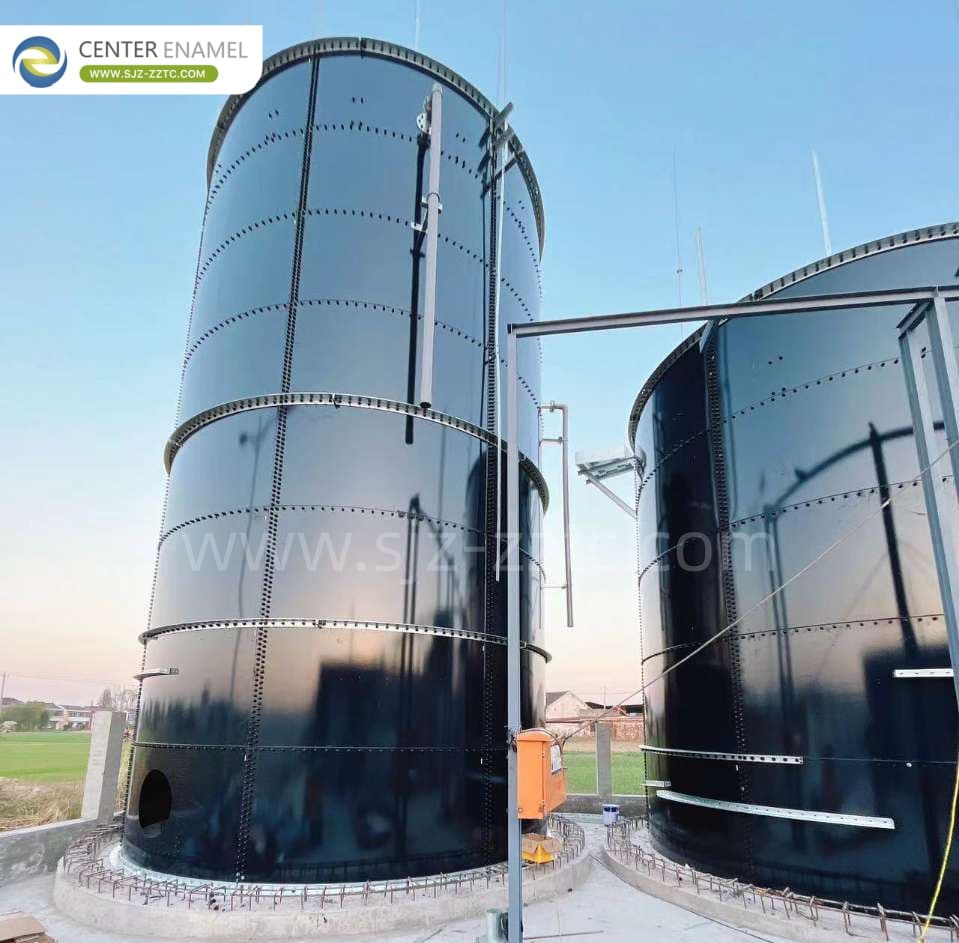
Center Enamel provides complete, turnkey solutions for aquaculture wastewater treatment. With over 36 years of experience as Asia's largest manufacturer of Glass-Fused-to-Steel (GFS) tanks, we offer durable, corrosion-resistant infrastructure designed for challenging wastewater environments .
Advanced Storage and Treatment Infrastructure
Our Glass-Fused-to-Steel (GFS) tanks are the benchmark for wastewater treatment applications. The glass coating, fused at temperatures between 820°C and 930°C, creates a chemically inert surface with pH resistance from 1 to 14 . This ensures durability against acidic and alkaline conditions, with a service life of over 30 years. The smooth interior resists bacterial growth and is easy to maintain—critical for aquaculture facilities where hygiene is paramount.
GFS tanks are widely used in water and wastewater treatment as aerobic and anaerobic reactors for processes including UASB, EGSB, SBR, BAF, USR, and CSTR . Their modular bolted design enables rapid on-site assembly without welding, reducing project timelines and cost. Tanks can also be expanded or relocated as operations change .
Comprehensive Tank Cover Solutions
Center Enamel offers a complete range of tank cover options to address specific environmental control needs:
Double Membrane Roof systems: Provide superior air-tightness for anaerobic digestion processes and biogas collection
Aluminum Geodesic Dome Roofs: Offer advanced corrosion resistance and minimal maintenance for odor control
Glass-Fused-to-Steel Roofs: Provide excellent air-tightness for pressurized structures
Stainless Steel Roofs: Deliver super anti-corrosion performance for harsh environments
FRP Roofs: Suitable for applications where air-tightness is not required
Aluminum Alloy Trough Deck Roofs: Economical options for odor control and weather protection
Complete EPC Services
Center Enamel offers integrated EPC services, including expert design tailored to site conditions and waste composition, high-quality equipment manufacturing certified to international standards (CE/EN1090, ISO9001, NSF61), efficient installation with zero on-site welding, and complete project delivery from design to commissioning .
Conclusion
The characteristics of wastewater in aquaculture—high nutrient loads, organic matter, suspended solids, and biological contaminants—present significant treatment challenges. Understanding these parameters is essential for designing effective, sustainable treatment systems. Center Enamel provides the advanced infrastructure and engineering expertise needed to address these challenges, with durable GFS tanks, a full range of cover solutions, and comprehensive EPC services for aquaculture wastewater treatment projects.
Frequently Asked Questions
1. What are the main pollutants found in aquaculture wastewater?
Aquaculture wastewater contains nitrogenous compounds, phosphorus, suspended solids, organic matter, and sometimes biological contaminants like coliform bacteria and antibiotics.
2. How does aquaculture wastewater composition vary by species?
Different species produce wastewater with varying pollutant levels. For example, tilapia effluent typically shows moderate COD (65-96 mg/L), while shrimp farming can produce the highest COD levels (18.3-1730 mg/L) and TP (85-176.4 mg/L) .
3. What makes aquaculture wastewater treatment challenging?
The combination of fine colloidal solids, dissolved nutrients, variable salinity, and biological contaminants requires integrated treatment approaches that cannot be fully addressed by conventional settling or screening alone .