
What Are the Common Methods Used for Treating Pharmaceutical Wastewater? A Comprehensive Guide
The pharmaceutical industry generates wastewater that is among the most challenging to treat. Characterized by high organic loads, toxicity, poor biodegradability, and the presence of active pharmaceutical ingredients (APIs), this effluent demands a multi-faceted approach. No single technology can address all contaminants effectively; instead, a combination of biological, physicochemical, and advanced oxidation methods is typically required.
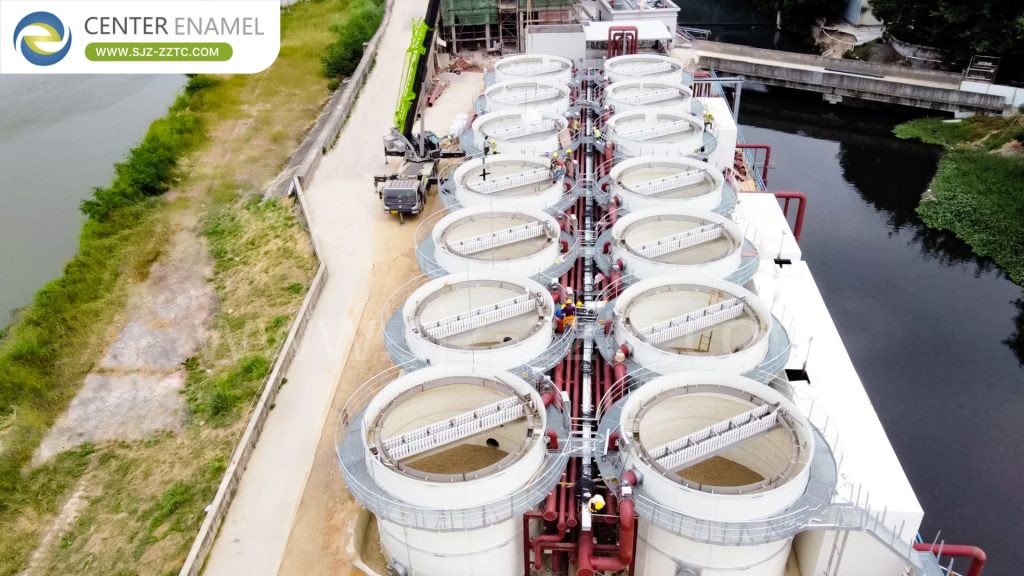
This article provides a comprehensive overview of the common methods used for treating pharmaceutical wastewater, explaining how each works, its advantages, and its limitations. Understanding these technologies is essential for plant operators, environmental engineers, and anyone involved in industrial wastewater management.
The Treatment Challenge: Why Pharmaceuticals Are Difficult to Remove
Pharmaceutical wastewater is unique because it contains compounds designed to be biologically active and chemically stable. Conventional treatment systems, such as standard activated sludge, often struggle with these pollutants for several reasons:
Toxicity to Microorganisms: Antibiotics and other APIs can inhibit or kill the bacteria essential for biological treatment.
Recalcitrance: Many pharmaceutical molecules are resistant to biodegradation, meaning they persist in the environment.
Complex Mixtures: Effluents contain a wide variety of compounds, including solvents, heavy metals, and salts, complicating treatment.
For these reasons, modern pharmaceutical wastewater treatment plants typically employ an integrated treatment train combining multiple methods to achieve regulatory compliance.
Biological Treatment Methods: The Workhorse of Pharmaceutical Wastewater Treatment
Biological treatment remains one of the most economical and environmentally sustainable approaches to wastewater remediation. These methods rely on microorganisms to convert organic pollutants into carbon dioxide, water, and biomass. However, due to the toxicity of pharmaceutical effluent, biological processes often require pre-treatment or careful optimization.
Activated Sludge Process (ASP)
The Activated Sludge Process is the most widely used biological treatment method in the pharmaceutical industry. It involves aerating wastewater in a tank containing a mixed microbial community (activated sludge). The microorganisms consume organic matter, forming flocs that can be settled out in a clarifier.
Performance: A study of a pharmaceutical ETP using ASP achieved a remarkable 93% reduction in BOD and significant removal of suspended solids. However, ASP alone may not effectively remove trace pharmaceutical compounds or highly recalcitrant organics.
Anaerobic Digestion (UASB Reactors)
For high-strength pharmaceutical wastewater with elevated COD concentrations, anaerobic digestion is a preferred option. The Up-flow Anaerobic Sludge Blanket (UASB) reactor is one of the most common anaerobic systems used. Wastewater passes upward through a dense bed of granular sludge, where anaerobic bacteria break down organic matter into biogas (methane and CO₂).
Performance: UASB reactors allow for high volumetric loading in terms of COD and have been successfully applied to chemically synthesized pharmaceutical wastewater. Anaerobic treatment also generates biogas that can be recovered for energy.
Aerobic Sequencing Batch Reactor (SBR)
The Sequencing Batch Reactor is a fill-and-draw activated sludge system that operates in cycles. It is highly flexible and effective for treating variable pharmaceutical wastewater streams.
Performance: Studies report that SBR systems can achieve COD removal efficiencies of approximately 87%, BOD removal of 85%, and TSS removal of up to 98%. They also provide significant ammonia removal.
Physicochemical Treatment Methods: Removing Solids and Adsorbing Contaminants
Physicochemical methods are often used as pre-treatment to remove suspended solids and certain dissolved contaminants before biological treatment, or as polishing steps after biological treatment.
Adsorption onto Activated Carbon
Adsorption is a proven and effective technique for removing pharmaceutical compounds from wastewater. Activated carbon, with its high surface area and porous structure, can adsorb a wide range of organic pollutants, including APIs.
Performance: Activated carbon can achieve up to 85% adsorption efficiency for pollutants like phenol. Novel adsorbents, including biochar, metal-organic frameworks (MOFs), and graphene-based materials, are also being explored for enhanced removal. A significant advantage of adsorption is its cost-effectiveness and simplicity.
Coagulation and Flocculation
Coagulation and flocculation involve adding chemicals (coagulants like alum or iron salts) to destabilize suspended particles, causing them to aggregate into larger flocs that can be removed by sedimentation or filtration. This method is effective for removing suspended solids and some dissolved organic matter but has limited effectiveness against dissolved pharmaceutical compounds.
Advanced Oxidation Processes (AOPs): The Solution for Recalcitrant Pollutants
When biological and physicochemical methods are insufficient, Advanced Oxidation Processes (AOPs) are employed. These processes generate highly reactive hydroxyl radicals (•OH) that can non-selectively oxidize and mineralize even the most persistent organic pollutants, breaking them down into carbon dioxide, water, and inorganic ions. While highly effective, AOPs are often energy-intensive and can produce byproducts.
Fenton and Photo-Fenton Oxidation
The Fenton process uses a mixture of hydrogen peroxide (H₂O₂) and ferrous iron (Fe²⁺) to generate hydroxyl radicals. The photo-Fenton process enhances this by using UV or solar light to regenerate Fe²⁺, improving efficiency.
Performance: Fenton oxidation is primarily used for antibiotic treatment and can achieve up to 100% removal efficiency for some sulfonamide antibiotics. Solar Fenton has shown 95-97% removal for fluoroquinolones.
Ozonation
Ozone (O₃) is a powerful oxidizing agent that can directly attack organic compounds or decompose to form hydroxyl radicals. Ozonation is widely used to eliminate hazardous organic compounds, including endocrine-disrupting chemicals and antibiotics.
Performance: Ozonation can achieve 99% removal efficiency for antibiotics like ciprofloxacin, paracetamol, and amoxicillin. Importantly, ozonation also increases the biodegradability of the effluent, making it suitable as a pre-treatment before biological steps.
Electrochemical Oxidation and Electro-Fenton
Electrochemical oxidation involves applying an electric current to generate reactive species directly on electrode surfaces. The electro-Fenton process is an enhanced version where H₂O₂ is generated electrochemically in situ, reacting with Fe²⁺ to produce hydroxyl radicals.
Performance: A sequential electro-Fenton and photocatalytic oxidation process achieved 79-80% total organic carbon (TOC) removal. The electro-Fenton process has demonstrated 96% removal for antibiotics like ciprofloxacin.
Membrane Technologies: Concentration and High-Purity Effluent
Membrane filtration is increasingly used for advanced treatment and water reuse. Nanofiltration (NF) and reverse osmosis (RO) can effectively reject pharmaceutical compounds and produce high-quality permeate.
Performance: A sequential nanofiltration and electrochemical oxidation system achieved 99.7% rejection of azithromycin with 95% water recovery. The subsequent electrochemical step completely degraded the antibiotic in the concentrate within 30 minutes. This integrated approach drives treatment toward zero-liquid-discharge objectives.
Hybrid and Integrated Treatment Systems: The Optimal Approach
Given the complexity of pharmaceutical wastewater, hybrid and integrated systems combining multiple technologies offer the most robust and reliable treatment. For instance, a pre-ozonation step can reduce toxicity and improve biodegradability before biological treatment, while post-ozonation can polish the effluent for trace contaminants.
A study on mixed pharmaceutical and domestic wastewater found that post-ozone treatment achieved 55% DOM degradation, significantly higher than pre-ozone treatment at 38%. Another successful integrated approach involves combining electrocoagulation, electro-Fenton, and photocatalytic oxidation in sequence to achieve high pollutant removal.
Summary of Common Treatment Methods for Pharmaceutical Wastewater
| Method Category | Specific Technology | Target Pollutants | Typical Removal Efficiency | Key Advantage | Key Limitation |
| Biological | Activated Sludge (ASP) | BOD, COD, TSS | BOD 93% | Economical, proven | Limited for recalcitrant compounds |
| Biological | UASB Reactor | High-strength COD | Allows high COD loading | Energy recovery (biogas) | Sensitive to toxicity |
| Biological | Sequencing Batch Reactor (SBR) | COD, BOD, N, P | COD 87%, BOD 85% | Flexible, good nutrient removal | Batch operation |
| Physicochemical | Adsorption (Activated Carbon) | APIs, phenols, dyes | Up to 85% | Simple, cost-effective | Requires media regeneration |
| Advanced Oxidation | Ozonation | Antibiotics, endocrine disruptors | Up to 99% | Increases biodegradability | Energy-intensive |
| Advanced Oxidation | Fenton/Photo-Fenton | Antibiotics, sulfonamides | Up to 100% | High mineralization | Sludge production, chemical cost |
| Membrane | Nanofiltration + Electrochemical | APIs, TOC | 99.7% API rejection | High recovery, zero-liquid-discharge potential | Membrane fouling, energy cost |
Emerging and Sustainable Treatment Approaches
Research is continuously advancing to develop more sustainable and efficient treatment methods. Several emerging technologies show promise for pharmaceutical wastewater treatment:
Microalgae-Based Systems: Algae can bioadsorb, bioaccumulate, and biotransform pharmaceutical contaminants while recovering nutrients like nitrogen and phosphorus. These systems also produce biomass that can be used for biofuel, making them energy-efficient compared to conventional methods.
Plasma Oxidation: A highly promising but still early-stage technology for degrading persistent contaminants. However, scalability and cost-effectiveness require further validation.
Sonolysis: Using ultrasound to degrade organic pollutants. Studies show it can achieve high removal for compounds like diclofenac.
Conclusion
The treatment of pharmaceutical wastewater requires a sophisticated, multi-barrier approach due to the complex and persistent nature of the pollutants involved. Common methods include biological processes like activated sludge and UASB reactors for bulk organic removal, physicochemical methods like adsorption for polishing, advanced oxidation processes (AOPs) like ozonation and Fenton for recalcitrant compounds, and membrane technologies for high-purity effluent and water reuse.
The most effective treatment strategy is usually an integrated system that combines these technologies in sequence, leveraging the strengths of each to overcome the limitations of others. As regulations tighten and sustainability becomes a priority, the adoption of hybrid systems and emerging technologies like microalgae-based treatment and plasma oxidation will likely increase, driving the pharmaceutical industry toward more environmentally responsible operations.
Frequently Asked Questions (FAQ)
1. Why can't conventional activated sludge treatment alone remove pharmaceutical pollutants?
Conventional activated sludge systems are designed to remove bulk organic matter (BOD/COD) and nutrients. However, many pharmaceutical compounds are recalcitrant (resistant to biological degradation) and can be toxic to the microorganisms responsible for treatment. This means they either pass through the system unchanged or inhibit the biological process, requiring advanced treatment methods for effective removal.
2. What is the most cost-effective method for treating pharmaceutical wastewater?
The most cost-effective approach is typically an integrated system that uses biological treatment (e.g., activated sludge or UASB) as the primary workhorse for bulk organic removal, followed by a polishing step like adsorption or advanced oxidation. Biological methods are the most economical for reducing COD and BOD, while adsorption offers a cost-effective solution for removing trace contaminants. For specific high-strength or toxic streams, Fenton oxidation and ozonation are common but more expensive.
3. Which treatment method is best for removing antibiotics from wastewater?
Multiple methods can effectively remove antibiotics, but Advanced Oxidation Processes (AOPs) are often the most reliable for complete degradation. Ozonation can achieve up to 99% removal for antibiotics like ciprofloxacin, and the photo-Fenton process can achieve up to 100% removal for some sulfonamides. A sequential combination of nanofiltration and electrochemical oxidation has also proven highly effective, achieving complete antibiotic degradation in the concentrate within 30 minutes.