
What Are the Five Key Advantages of Biogas?
Biogas has become one of the most valuable renewable energy sources worldwide, generated through natural anaerobic digestion of livestock manure, agricultural residues, food waste, and industrial organic wastewater. More than just a clean fuel, biogas delivers remarkable environmental, economic, social and agricultural value. Many people ask: What are the five key advantages of biogas?
This article clearly explains its core benefits, and introduces professional anaerobic technologies, high-performance GFS Tanks, and global project strengths of Center Enamel, a leading biogas EPC contractor serving over 100 countries worldwide.
The Five Core Advantages of Biogas
1. Renewable & Carbon-Neutral Clean Energy
Biogas is a 100% renewable energy source. Its raw materials such as livestock manure and crop residues are continuously produced every year, never depleted like coal, oil or natural gas. During combustion, biogas releases far less carbon dioxide and almost no sulfur pollutants. Compared with fossil fuels, biogas greatly reduces greenhouse gas emissions, helps countries achieve carbon peaking and carbon neutrality goals, and supports global climate change action.
2. Efficient Organic Waste Recycling
Biogas perfectly solves the pollution problem of agricultural and livestock waste. Untreated manure and food waste easily cause river contamination, odor spread and groundwater pollution. Through anaerobic digestion, these wastes are converted into usable biogas, realizing harmless disposal and resource recycling. It turns waste into treasure and effectively protects rural and urban ecological environments.
3. Diversified Energy Applications
Biogas has extremely wide usage scenarios. It can be used for daily cooking and heating in rural households, generate electricity for farm and factory use, supply industrial boiler heat, or be upgraded into biomethane for vehicle fuel. Its flexible application meets energy demands in agriculture, industry and daily life, greatly improving energy self-sufficiency.
4. High-Value Organic Fertilizer Byproduct
After anaerobic digestion, the remaining biogas slurry and residue are nutrient-rich organic fertilizers. They contain nitrogen, phosphorus and potassium needed for crop growth, can replace chemical fertilizers, improve soil structure, enhance soil fertility, and increase crop yields. It forms a closed-loop circular economy model of “waste-biogas-fertilizer”.
5. Economic & Social Benefits
Biogas projects reduce families’ reliance on expensive LPG and firewood, cutting daily energy costs. Large-scale biogas plants create jobs in construction, operation and maintenance, boosting rural economic development. Meanwhile, biogas replaces firewood burning, reduces deforestation, protects forest resources, and improves living hygiene and residents’ quality of life.
How Biogas Is Produced
Biogas is generated through a natural, oxygen-free biological process called anaerobic digestion. It takes place when microorganisms break down biodegradable organic matter such as livestock manure, crop residues, food waste, and agricultural wastewater in a sealed, airtight environment without oxygen.
The whole process follows four continuous stages: hydrolysis, acidogenesis, acetogenesis, and methanogenesis. In the hydrolysis phase, complex organic substances like cellulose, protein, and starch are decomposed into simple soluble molecules.
Next, acid-producing bacteria convert these small molecules into volatile fatty acids and alcohols during acidogenesis. Then in acetogenesis, intermediate substances are further transformed into acetic acid, hydrogen, and carbon dioxide.
Finally, methanogenic archaea consume acetic acid and hydrogen to produce methane and carbon dioxide, which form the main components of biogas.
Industrial biogas plants simulate and optimize this natural process by precisely controlling temperature, pH value, and microbial activity, achieving stable, high-yield biogas production for power generation, heating, and other energy applications.
Advanced Anaerobic Technologies for Biogas Production
Stable and high-yield biogas production cannot be separated from professional anaerobic technologies. Center Enamel masters four mature and customizable anaerobic processes suitable for global different waste characteristics and project scales:
- CSTR Process: Ideal for high-solid livestock manure, with full stirring to avoid sediment and ensure stable biogas output.
- UASB Process: Classic low-cost technology for food and breeding wastewater, easy to operate and maintain.
- USR Process: Simple structure, suitable for scattered rural small and medium biogas projects.
- IC Process: High-rate anaerobic technology with 3–5 times higher load than traditional reactors, saving land for large industrial projects.
These mature anaerobic technologies ensure efficient degradation of organic waste and stable biogas production for various global projects.
Unique Advantages of GFS Tanks in Biogas Projects
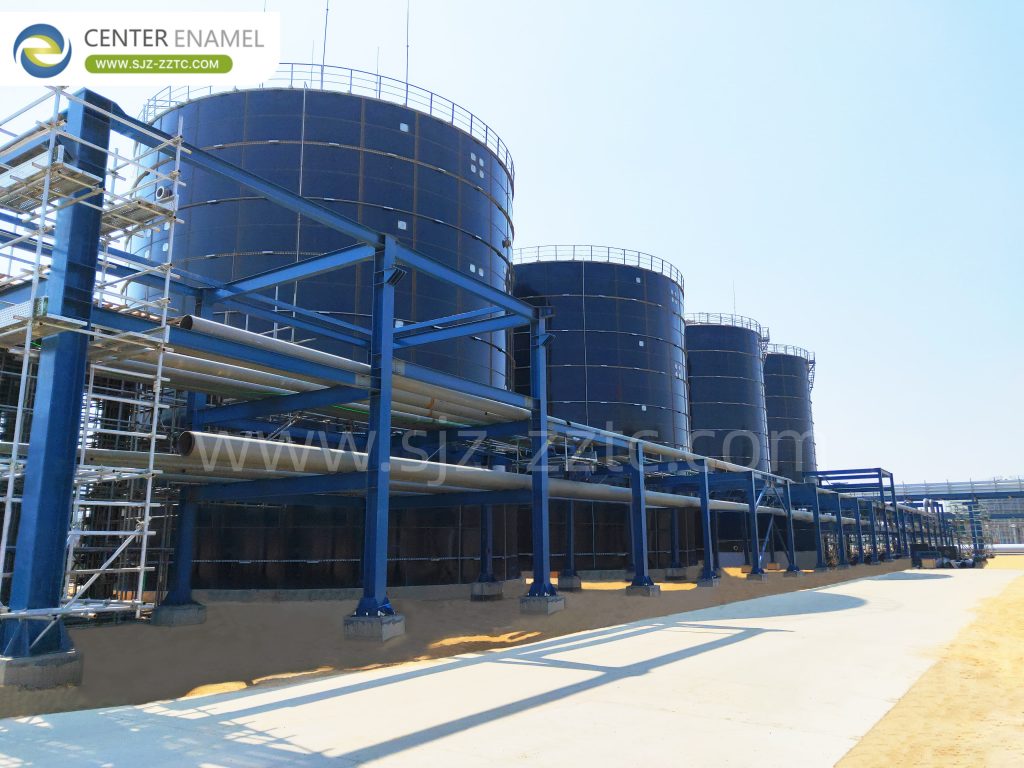
GFS (Glass-Fused-to-Steel) Tanks are the core infrastructure of modern biogas projects, with irreplaceable strengths:
- Resistant to pH 1–14 strong corrosion, adapting to acidic manure and various harsh climates.
- Excellent seismic resistance, UV aging resistance, suitable for tropical, temperate and monsoon regions.
- Factory prefabricated bolted assembly, no on-site welding, fast installation and short construction period.
- Service life over 30 years with low maintenance cost, greatly improving long-term project return.
- Good airtight performance to ensure oxygen isolation and stable anaerobic digestion environment.
Comprehensive Strengths of Center Enamel in Global Biogas Projects
As a professional global EPC contractor, Center Enamel has long served more than 100 countries across Asia, Africa, Europe, America and Oceania, with outstanding competitive advantages:
- Masters four advanced anaerobic technologies to provide customized solutions for different regional raw materials and climates.
- Self-owned large GFS Tank manufacturing base with over 200 patented enamel formulas and strict international standard certification.
- Provides one-stop turnkey services including project design, equipment manufacturing, installation, commissioning and after-sales support.
- Adopts optimized bolted installation process, adapting to mountainous, rural and remote construction conditions.
- Rich overseas project experience, familiar with local policies, climate and engineering standards, delivering reliable biogas solutions for global clients.
The five core advantages of biogas cover clean energy supply, waste recycling, diversified utilization, organic fertilizer output and economic-social value, making it an indispensable part of global renewable energy development. With advanced anaerobic technologies and high-performance GFS Tanks, Center Enamel provides professional one-stop biogas EPC solutions for over 100 countries, helping regions worldwide realize waste treatment, energy independence and circular agricultural sustainable development.