
What Are the Five Main Process Stages in a Biogas Project?
A biogas project runs in five stages: (1) feedstock reception and pre-treatment, (2) anaerobic digestion in heated tanks, (3) gas cleaning, drying and storage, (4) energy conversion to power, heat or biomethane, and (5) digestate handling and land application. Digestion itself takes 20–40 days at 35–38 °C, converting roughly 40–70% of the feedstock’s volatile solids into a gas that is 55–65% methane.
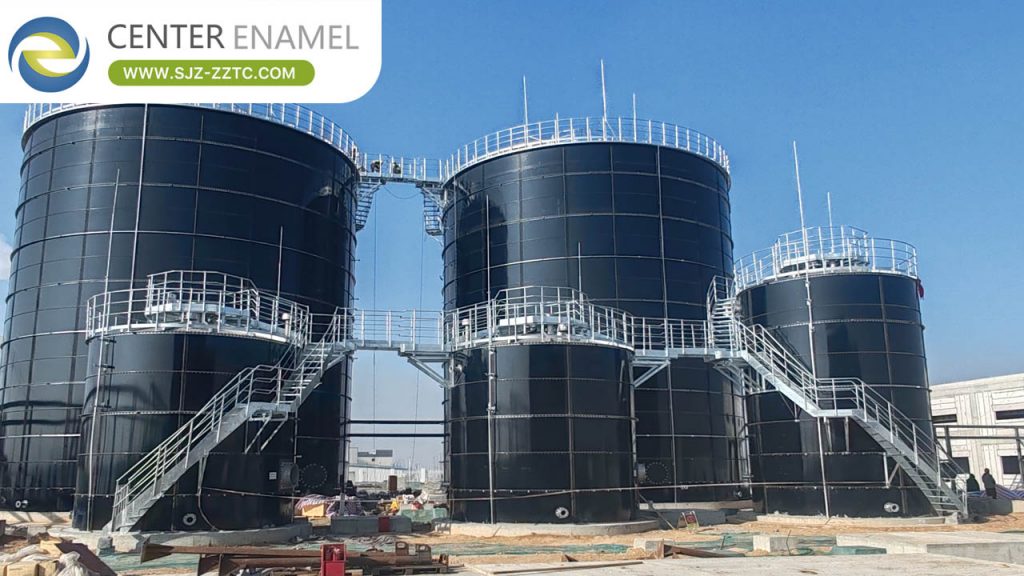
What Actually Happens Inside the Digester
Digestion is four microbial steps running in sequence. Hydrolysis breaks complex carbohydrates, proteins, and fats into soluble monomers. Acidogenesis converts those into volatile fatty acids. Acetogenesis turns the acids into acetate, hydrogen, and CO₂. Methanogenesis finally produces CH₄ from acetate and from H₂ plus CO₂. Process upsets usually start as volatile fatty acid accumulation, because the last two steps are slower than the first two.
Comparative Data Table: Stage Inputs, Outputs, and Parameters
| Stage | Input | Output | Key parameter |
| 1. Reception and pre-treatment | raw feedstock | homogenised slurry or mash | particle size below 10–20 mm |
| 2. Anaerobic digestion | prepared slurry | biogas, 55–65% CH₄ | 35–38 °C, 20–40 days |
| 3. Gas cleaning and storage | raw biogas | dry, low-H₂S gas | H₂S below 100–250 ppmv |
| 4. Energy conversion | cleaned biogas | power, heat or biomethane | engine 35–45% electrical |
| 5. Digestate handling | digester effluent | separated fibre and liquor | storage 4–9 months |
Where Each Stage Typically Goes Wrong
Stage one fails on contamination: plastic, grit, and packaging enter with food waste and must be removed or they accumulate in the tank. Stage two fails on overload or inhibitors—ammonia above roughly 3,000–4,000 mg/L and sudden pH drops below 6.8 stall methanogens. Stage three fails when H₂S exceeds engine limits. Stage four fails on availability, and stage five fails on logistics: without 4–9 months of storage and enough land, digestate becomes a cost rather than a product.
Frequently Asked Questions (FAQ)
Q1: What are the five main process stages in a biogas project?
A: Feedstock reception and pre-treatment, anaerobic digestion, gas cleaning and storage, energy conversion to power, heat or biomethane, and digestate handling with land application.
Q2: What happens inside a digester?
A: Four microbial steps: hydrolysis, acidogenesis, acetogenesis, and methanogenesis. Complex organics are broken down step by step until methanogens produce methane from acetate and from hydrogen plus carbon dioxide.
Q3: How long does digestion take?
A: Typically 20–40 days of hydraulic retention at mesophilic 35–38 °C. Thermophilic operation at 50–55 °C is faster, around 12–20 days, but is less tolerant of feedstock variation and ammonia.
Q4: What is done with digestate?
A: It is stored for 4–9 months, often separated into fibre and liquor, then applied to land as fertiliser replacing mineral nitrogen and phosphorus. Its value depends entirely on having enough suitable land within economic transport distance.