
What Are the Industrial Wastewater Processes? A Complete Guide to Treatment Technologies
Industrial wastewater treatment has evolved from a basic regulatory requirement into a cornerstone of sustainable manufacturing and the circular economy. As industries face increasingly stringent environmental regulations and growing water scarcity, understanding and implementing effective industrial wastewater processes has become critical for operational continuity and environmental stewardship.
Industrial wastewater differs significantly from municipal sewage in its complexity and potential toxicity. Depending on the industry—whether textile, pharmaceutical, food processing, petrochemical, or pulp and paper—wastewater may contain heavy metals, synthetic dyes, organic compounds, solvents, and other hazardous substances that require specialized treatment approaches. This comprehensive guide explores the full spectrum of industrial wastewater treatment processes, from preliminary screening to advanced tertiary treatment, and examines how modern infrastructure solutions are transforming the industry.
The Three-Tier Treatment Architecture
Industrial wastewater processes typically follow a systematic, multi-stage approach designed to progressively remove contaminants and achieve regulatory compliance. The three-tier treatment architecture provides a framework for understanding how different treatment methods work together to purify industrial effluent.
Primary Treatment focuses on physical separation of solids, oils, and greases through processes like screening, sedimentation, and dissolved air flotation (DAF). This stage prepares wastewater for subsequent biological or chemical treatment by removing materials that could interfere with downstream processes.
Secondary Treatment employs biological or physico-chemical methods to remove dissolved organic matter and reduce biochemical oxygen demand (BOD) and chemical oxygen demand (COD). This stage often utilizes anaerobic or aerobic digestion processes housed in specialized reactor vessels.
Tertiary Treatment provides advanced polishing to remove residual contaminants, enabling water recycling and reuse. Methods include membrane filtration, ion exchange, adsorption, and advanced oxidation processes (AOPs).
Physical Treatment Processes for Industrial Wastewater
Physical treatment methods form the foundation of most industrial wastewater treatment systems, removing suspended solids, oils, and other separable contaminants without altering the chemical composition of the water.
Sedimentation and Clarification utilize gravity to separate suspended solids from wastewater. In industrial applications, sedimentation tanks or clarifiers allow heavier particles to settle to the bottom, where they can be collected as sludge, while lighter materials such as oils and greases float to the surface for skimming.
Dissolved Air Flotation (DAF) is particularly effective for removing fine suspended solids, oils, and greases. This process dissolves air into the wastewater under pressure, then releases it at atmospheric pressure, creating microscopic bubbles that attach to suspended particles and float them to the surface for removal.
Filtration employs various media—including sand, fabric, fiber fleece, or membranes—to separate solids from water. Depending on the pore size, filtration can remove particles ranging from large debris down to bacteria and even viruses through microfiltration and ultrafiltration.
Equalization involves holding wastewater in basins to smooth out fluctuations in flow rate and contaminant concentration. This crucial step protects downstream treatment processes from hydraulic and organic shock loads, ensuring consistent treatment performance.
Chemical Treatment Methods in Industrial Effluent Processing
Chemical treatment processes are essential for removing dissolved contaminants that cannot be eliminated through physical separation alone. These methods involve adding chemical reagents to precipitate, oxidize, or otherwise transform pollutants into removable forms.
Coagulation and Flocculation are widely used to treat industrial wastewater containing fine colloidal particles that remain suspended due to surface charges. Coagulants neutralize these charges, allowing particles to clump together, while flocculants promote the formation of larger aggregates that can be removed by sedimentation or filtration.
Chemical Precipitation removes dissolved metals and other inorganic contaminants by converting them into insoluble compounds that settle out of solution. This method is particularly important for industries such as electroplating, mining, and metal finishing where heavy metals like lead, mercury, and chromium must be removed to meet discharge limits.
Advanced Oxidation Processes (AOPs) represent the cutting edge of chemical treatment, using powerful oxidants such as ozone, hydrogen peroxide, or UV light to break down recalcitrant organic compounds that resist conventional treatment. AOPs are increasingly essential for removing emerging contaminants like pharmaceuticals, personal care products, and persistent organic pollutants.
Ion Exchange removes dissolved ionic contaminants by exchanging them with harmless ions on a resin material. This method is particularly effective for removing heavy metals, nitrates, and hardness from industrial wastewater.
Biological Treatment: The Living Engine of Wastewater Treatment
Biological treatment harnesses the power of microorganisms to break down organic pollutants, serving as the most cost-effective and sustainable method for removing biodegradable contaminants from industrial wastewater.
Anaerobic Digestion (AD) operates in oxygen-free environments where specialized bacteria convert complex organic matter into biogas (primarily methane and carbon dioxide) and stabilized digestate. This process offers the dual benefits of pollution reduction and energy recovery, making it particularly attractive for high-strength industrial wastewater from food processing, brewing, and pulp and paper industries.
The four stages of anaerobic digestion—hydrolysis, acidogenesis, acetogenesis, and methanogenesis—work in sequence to break down complex organic compounds. High-rate anaerobic reactors such as the Internal Circulation (IC) and Continuous Stirred Tank Reactor (CSTR) maximize contact between microorganisms and organic substrates, achieving higher degradation rates and biogas yields.
Aerobic Treatment uses oxygen-consuming microorganisms to oxidize organic matter into carbon dioxide and water. Common aerobic systems include activated sludge processes, sequencing batch reactors (SBRs), and membrane bioreactors (MBRs). These systems are particularly effective for lower-strength wastewater and for polishing effluent after anaerobic treatment.
Biofiltration represents an emerging sustainable alternative that uses natural microbial communities in engineered systems such as constructed wetlands, fixed-bed biofilters, and fluidized-bed reactors. These low-energy systems are particularly suitable for industries seeking to reduce their environmental footprint and align with circular economy principles.
Advanced Tertiary Treatment and Water Reuse
As water scarcity intensifies and discharge regulations become more stringent, tertiary treatment has moved from optional to essential for many industrial facilities. These advanced processes enable water recycling and resource recovery, transforming wastewater from a disposal problem into a valuable resource.
Membrane Filtration technologies including microfiltration, ultrafiltration, nanofiltration, and reverse osmosis (RO) provide progressively finer levels of purification. These systems can remove suspended solids, bacteria, viruses, and dissolved salts, producing water suitable for reuse in industrial processes or even potable applications.
Adsorption using activated carbon or other media removes dissolved organic compounds, color, and trace contaminants that survive biological treatment. This polishing step is essential for industries with stringent discharge requirements or water reuse goals.
Resource Recovery has become a key driver of advanced treatment design. Modern systems recover not only water but also valuable chemicals, nutrients, and energy. Biogas from anaerobic digestion can generate electricity or heat, while recovered nutrients can serve as fertilizer or industrial feedstock.
Sludge Management and Treatment
Industrial wastewater treatment inevitably generates sludge—the concentrated solids removed during various treatment stages. Proper sludge management is essential for preventing secondary pollution and can even create valuable byproducts.
Sludge Thickening and Dewatering reduce the volume of sludge by removing water, lowering transportation and disposal costs. Methods include gravity thickening, centrifugation, and filter pressing.
Sludge Stabilization through anaerobic digestion reduces odors and pathogens while producing biogas for energy recovery. Stabilized sludge can be used as soil amendment in agricultural applications or as fuel in waste-to-energy facilities.
Thermal Treatment options including incineration and pyrolysis can significantly reduce sludge volume and destroy pathogens while recovering energy. These approaches are particularly suitable for sludge containing toxic or recalcitrant compounds.
The Role of Infrastructure: GFS Tanks in Industrial Wastewater Treatment
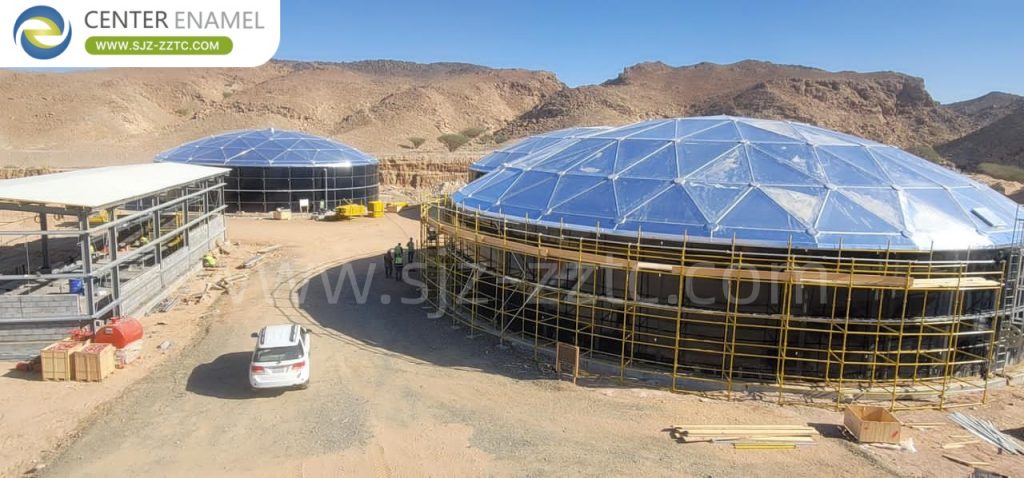
The effectiveness of any industrial wastewater process depends fundamentally on the infrastructure that contains and supports treatment operations. Glass-Fused-to-Steel (GFS) tanks have emerged as the global benchmark for wastewater treatment containment, offering unique advantages that make them ideal for the demanding conditions of industrial effluent processing.
Superior Corrosion Resistance is the defining characteristic of GFS technology. By fusing high-tech glass enamel to specialized steel at temperatures exceeding 820°C, GFS tanks create a surface that is chemically inert and virtually immune to the organic acids, hydrogen sulfide, and aggressive chemicals found in industrial wastewater. This impermeable barrier prevents corrosion that would quickly degrade concrete or traditional steel tanks, ensuring decades of reliable service.
Rapid Modular Installation represents another significant advantage. GFS tanks arrive as prefabricated components that can be assembled on-site, dramatically reducing construction timelines compared to cast-in-place concrete. In busy industrial zones or remote locations, this modular approach minimizes disruption and accelerates project completion by as much as fifty percent.
Cost-Effectiveness extends beyond initial installation to the entire lifecycle. GFS tanks require no painting or recoating, eliminating ongoing maintenance expenses that add significantly to the cost of alternative materials. The non-porous glass surface resists biofilm formation and scale buildup, maintaining treatment efficiency while reducing cleaning and maintenance requirements.
Design Flexibility allows GFS tanks to accommodate a wide range of wastewater applications, from equalization and clarification to anaerobic digestion and sludge storage. Their bolted design enables easy expansion and relocation, providing adaptability that is essential for growing industrial facilities.
Environmental Sustainability is enhanced through GFS tanks' longevity and recyclability. Their extended service life reduces the environmental footprint of treatment infrastructure, while the materials used are fully recyclable at the end of their useful life, supporting circular economy principles.
Conclusion
Industrial wastewater processes have matured into sophisticated, multi-stage systems that transform hazardous effluent into valuable resources. From primary physical separation through biological treatment to advanced polishing, each stage plays an essential role in protecting water resources and enabling sustainable industry.
As environmental regulations tighten and water scarcity intensifies, the importance of reliable, durable treatment infrastructure cannot be overstated. Glass-Fused-to-Steel tanks provide the robust containment solution necessary to support these critical processes, offering corrosion resistance, rapid installation, and cost-effective operation that makes them the preferred choice for industrial wastewater treatment worldwide.
Center Enamel: Your Turnkey Partner for Industrial Wastewater Treatment
As a global leader in engineered storage and containment solutions, Center Enamel (Shijiazhuang Zhengzhong Technology Co., Ltd) delivers comprehensive turnkey solutions for industrial wastewater treatment projects across more than one hundred countries.
With over thirty years of innovation and a portfolio of more than twenty enamel formula patents, Center Enamel combines material science expertise with full engineering, procurement, and construction (EPC) capabilities. Our proprietary Glass-Fused-to-Steel technology provides the corrosion-resistant infrastructure essential for reliable wastewater treatment, backed by certifications meeting AWWA D103-09, ISO 28765, and NSF/ANSI 61 standards.
Our complete solution portfolio includes high-performance GFS tanks as the core reactor vessels, Epoxy Coated Tanks for auxiliary and storage applications, Double Membrane Roof Systems for gas capture and odor control, and Aluminum Dome Roofs for environmental protection and VOC containment.
From high-strength organic wastewater in food processing to complex chemical streams in textile manufacturing, Center Enamel provides the engineered infrastructure that makes modern industrial wastewater treatment reliable, efficient, and sustainable.
Frequently Asked Questions
1. What is the difference between industrial wastewater and municipal wastewater treatment?
Industrial wastewater typically contains higher concentrations of pollutants, including heavy metals, toxic organic compounds, and synthetic chemicals that are not found in municipal sewage. Treatment requires specialized processes, often including chemical treatment and advanced oxidation, in addition to biological methods. Municipal wastewater treatment primarily uses biological processes for organic matter and nutrient removal, while industrial treatment is customized to each industry's specific effluent characteristics.
2. Why are GFS tanks preferred for industrial wastewater treatment?
Glass-Fused-to-Steel tanks offer superior corrosion resistance through a chemically inert glass coating that is immune to the aggressive chemicals and acids found in industrial wastewater. Their modular design enables rapid installation—often fifty percent faster than concrete construction—and their non-porous surface reduces maintenance requirements. GFS tanks also provide excellent value over their lifecycle, requiring no painting or recoating while offering extended service life of thirty years or more.
3. Can industrial wastewater be treated for reuse within the manufacturing process?
Yes, with appropriate advanced treatment, industrial wastewater can be recycled for many manufacturing applications. Tertiary treatment methods including membrane filtration (ultrafiltration and reverse osmosis), activated carbon adsorption, and advanced oxidation can produce water quality suitable for process water, cooling water, or boiler feed. This approach significantly reduces freshwater consumption, lowers discharge volumes, and can deliver substantial operational cost savings while improving environmental performance.