
What Are the Key Characteristics of Food Industry Wastewater?
The food and beverage processing industry is vital for global sustenance, yet it is also one of the most water-intensive and organically demanding sectors in modern manufacturing. From washing raw agricultural products to pasteurizing, cooking, and sanitizing processing lines, massive volumes of fresh water are consumed and subsequently converted into complex industrial wastewater.
Unlike chemical or heavy industrial effluents, food industry wastewater is typically non-toxic and biodegradable. However, its exceptionally high organic strength, fluctuating pH levels, and seasonal volume variations present unique environmental and engineering challenges. Understanding the key characteristics of this wastewater is the foundational step toward designing efficient, cost-effective, and sustainable wastewater treatment plants (WWTPs).
Introduction to Food Processing Wastewater and Its Sources
Food processing wastewater originates from every stage of the farm-to-table supply chain. Water is utilized extensively for washing raw materials, transporting ingredients inside plants, peeling, blanching, cooking, cooling, and rigorous clean-in-place (CIP) sanitation of equipment.
Because operations vary drastically from seasonal harvesting peaks to continuous year-round production, wastewater generation rates and pollutant concentrations fluctuate widely. Identifying the origin of these streams helps plant managers implement source reduction and segregation strategies before effluent enters the main treatment train.
Core Physical and Chemical Characteristics of Food Effluents
Food processing wastewater exhibits distinct physical and chemical properties that set it apart from standard municipal sewage and other industrial effluents. Evaluating these parameters is crucial for selecting appropriate biological and chemical treatment trains:
High Organic Concentration (BOD and COD): Food effluents are packed with dissolved and suspended organic compounds, resulting in high biochemical oxygen demand (BOD) and chemical oxygen demand (COD), often 10 to 100 times higher than municipal sewage.
Fats, Oils, and Grease (FOG): Common in meat processing, dairies, and snack food manufacturing, FOG layers can coat biological biomass, clog pipes, and inhibit oxygen transfer if not removed via primary DAF (Dissolved Air Flotation) systems.
Nutrient Richness (Nitrogen and Phosphorus): Derived from proteins, additives, and cleaning agents, high nutrient levels can cause severe eutrophication if discharged untreated.
Fluctuating pH and Temperature: Cleaning and sanitizing agents cause frequent pH swings (from highly acidic fruit washwaters to alkaline CIP cleaning solutions), while cooking processes elevate wastewater temperatures.
Sub-Sector Variations in Food and Beverage Manufacturing
Because the food industry encompasses diverse processing activities, wastewater characteristics vary dramatically depending on the specific sub-sector:
Dairy Processing: Characterized by high concentrations of lactose, proteins, and fats from milk, cheese, and yogurt production, resulting in rapid acidification and high COD loads.
Slaughterhouses and Meat Processing: Contains massive amounts of blood, suspended solids, animal fats, and high nitrogen levels, requiring rigorous screening and primary flotation.
Breweries and Beverage Plants: Generates high-strength organic wastewater from spent grain washings, yeast, and sugar residues, marked by high fluctuations in pH and variable organic loading rates.
Fruit and Vegetable Processing: High in suspended solids, starches, and residual sugars, alongside pesticide residues and soil particles washed from raw produce.
Advanced High-Rate Anaerobic Treatment Processes (IC, UASB, CSTR, USR)
Due to the exceptionally high organic load typical of food processing effluents, aerobic treatment alone is often economically unfeasible due to massive aeration energy requirements. High-rate anaerobic digestion is the preferred core technology for breaking down complex organics into renewable biogas:
UASB (Upflow Anaerobic Sludge Blanket): Wastewater flows upward through a dense biological sludge blanket where bacteria digest organics, forming dense granular sludge and generating methane-rich biogas.
IC (Internal Circulation) Reactor: An advanced, tall multi-stage anaerobic reactor utilizing internal gas-lift loops to achieve extremely high organic loading rates and superior hydraulic mixing in a compact footprint.
CSTR (Continuous Stirred-Tank Reactor): Equipped with mechanical agitation, CSTR systems are ideal for treating high-solid organic slurries, manure, and viscous food waste streams that would clog fixed-bed systems.
USR (Upflow Solid Reactor): A specialized anaerobic reactor designed specifically for wastewater and slurry with high suspended solid contents, offering simple operation and reliable organic removal.
Advantages of Glass-Fused-to-Steel (GFS) Tanks in Food Wastewater Treatment
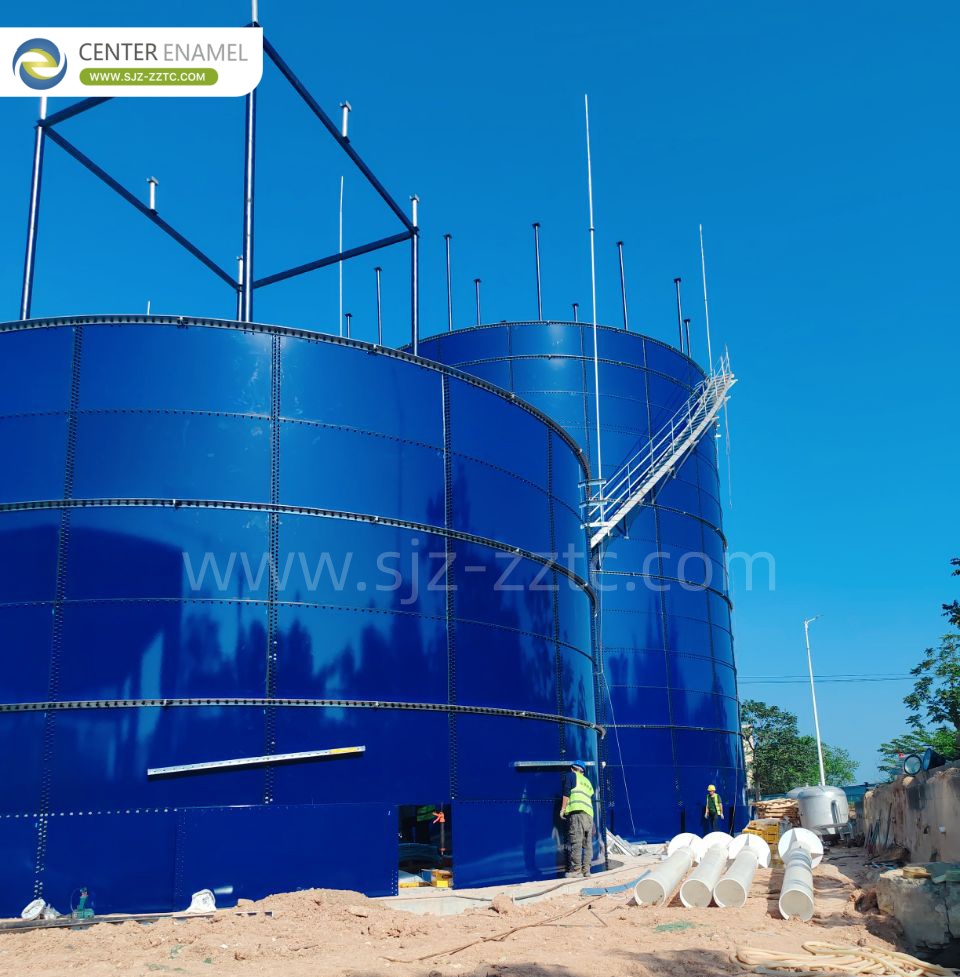
Selecting the right containment infrastructure is critical for withstanding aggressive anaerobic environments, corrosive biogas, and harsh cleaning chemicals. Glass-Fused-to-Steel (GFS) tanks-also known as Glass-Lined Steel tanks-have become the industry standard for modern food wastewater treatment facilities:
Exceptional Corrosion Resistance: The high-temperature fusion of glass to high-strength steel creates an inert, impermeable barrier that resists organic acids, hydrogen sulfide, and harsh chemical cleaning agents.
Hygienic and Smooth Surface: The ultra-smooth glass interior prevents biological scaling, sludge adhesion, and microbial growth, ensuring optimal hygiene and easy cleaning.
Rapid Modular Construction: Prefabricated panels are bolted on-site, drastically cutting construction timelines compared to traditional cast-in-place concrete tanks.
Long Lifespan and Scalability: GFS tanks offer a service life exceeding 30 years and can be easily expanded, dismantled, or relocated as plant production capacity scales.
Center Enamel: Your Trusted Partner for Comprehensive Solutions
Designing and executing robust food wastewater treatment systems requires specialized engineering expertise, high-quality containment equipment, and proven project execution capabilities. Center Enamel is a premier, globally recognized professional wastewater treatment solution provider with decades of industry leadership.
Center Enamel specializes in the R&D and manufacturing of cutting-edge Glass-Fused-to-Steel (GFS) tanks, bolted steel tanks, and specialized anaerobic reactors (including UASB, IC, CSTR, and USR systems). With extensive experience serving major industrial and municipal clients worldwide, Center Enamel delivers customized, turnkey solutions that ensure strict environmental compliance, efficient biogas recovery, and long-term operational reliability for food processing facilities.
Frequently Asked Questions (FAQs) About Food Industry Wastewater
Q1: Why is biological anaerobic treatment preferred over aerobic treatment for food processing wastewater?
Food processing wastewater typically has an extremely high organic load (high COD/BOD). Treating such concentrated wastewater entirely with aerobic systems would require prohibitive amounts of electrical energy for aeration. Anaerobic treatment efficiently removes the bulk of the organic load without aeration, consumes less energy, produces minimal excess sludge, and generates valuable renewable biogas (methane).
Q2: How do Fats, Oils, and Grease (FOG) impact food industry wastewater treatment systems?
FOG can coat biological flocs and granules, impede mass transfer, clog piping networks, and smother anaerobic or aerobic bacteria. Therefore, effective primary treatment-such as Dissolved Air Flotation (DAF) or oil-water separators-is essential to remove FOG before the wastewater enters biological reactors like UASB or IC systems.
Q3: Why are Glass-Fused-to-Steel (GFS) tanks widely used in food processing wastewater plants?
GFS tanks combine the structural strength of steel withonium and chemical inertness of glass. They provide superior resistance to corrosive wastewater, organic acids, and hydrogen sulfide produced during anaerobic digestion. Additionally, their smooth non-porous surface prevents sludge buildup, they require minimal maintenance, and their modular bolted construction allows for rapid installation and future capacity expansion.