
What Are the Key Differences Between UASB and EGSB Systems?
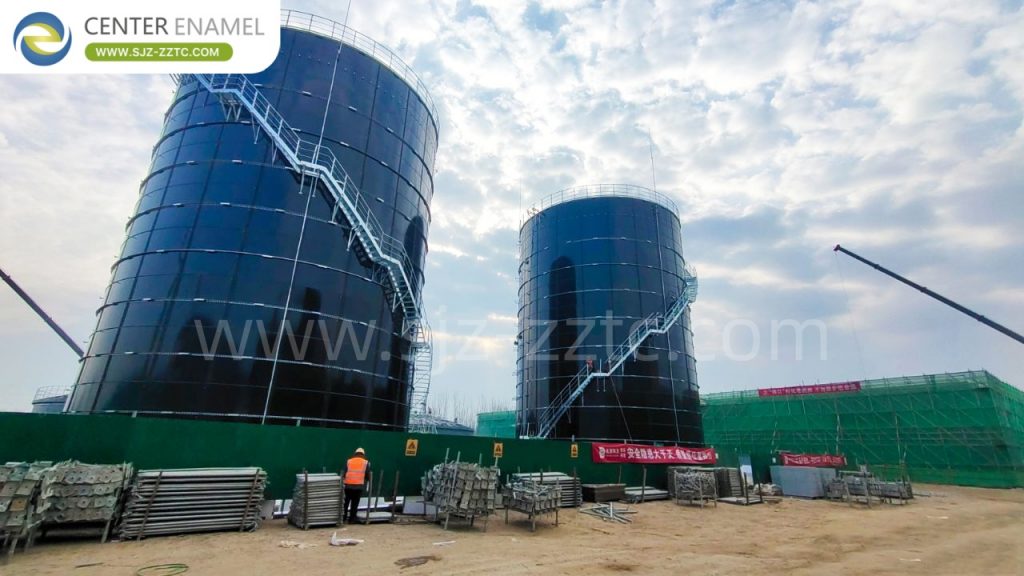
High-rate anaerobic digestion systems have revolutionized industrial wastewater treatment by enabling the efficient removal of high concentrations of organic pollutants while simultaneously generating clean renewable energy in the form of biogas. Among these technologies, Upflow Anaerobic Sludge Blanket (UASB) and Expanded Granular Sludge Bed (EGSB) systems stand out as industry standards.
Although both rely on microbial granulation and upward flow dynamics, they possess distinct operational characteristics that suit different industrial applications. Choosing the right system depends on factors such as organic loading rates, footprint constraints, and wastewater characteristics.
Core Definitions: UASB vs. EGSB Systems
The Upflow Anaerobic Sludge Blanket (UASB) reactor is a traditional high-rate anaerobic technology where wastewater enters from the bottom, flowing upward through a dense blanket of active granular sludge.
The Expanded Granular Sludge Bed (EGSB) reactor is an advanced, third-generation evolution of the UASB concept. It operates on similar biological principles but features a much taller, slender structure designed to achieve significantly higher superficial liquid upward velocities. This expansion fluidizes the granular sludge bed, maximizing mass transfer between the wastewater and active biomass.
Structural Design and Height-to-Diameter Ratios
A primary physical distinction between the two systems lies in their geometry:
UASB Reactors: Typically feature a lower height-to-diameter ratio, resembling broader, more robust cylindrical or rectangular tanks.
EGSB Reactors: Engineered as tall, slender columns. Their elevated height facilitates a specialized hydraulic regime that forces total bed expansion, effectively eliminating dead zones inside the reactor vessel.
Superficial Upflow Velocity and Hydraulic Regimes
Hydraulic performance dictates how effectively wastewater contacts the microorganisms:
UASB Systems: Operate at lower upflow velocities, usually ranging from 0.5 to 1.0 meters per hour. This gentle hydrodynamic environment is ideal for standard settling behaviors.
EGSB Systems: Designed for much higher superficial upflow velocities, often exceeding 4 to 6 meters per hour. This high-velocity design creates a partially expanded or fluidized bed, ensuring that even low-strength or complex wastewaters achieve rapid treatment.
Organic Loading Rates (OLR) and Treatment Capacity
Handling high organic loads efficiently is vital for large-scale industrial plants:
UASB Systems: Highly effective for medium-to-high strength wastewater, typically managing Organic Loading Rates (OLRs) between 10 to 15 kg COD/m³/day.
EGSB Systems: Due to superior mass transfer and enhanced biomass retention, EGSB reactors can handle much higher OLRs, frequently exceeding 20 to 30 kg COD/m³/day (and sometimes higher depending on the specific effluent matrix).
Footprint Requirements and Space Efficiency
Space availability heavily influences engineering design choices, especially for retrofitting existing industrial sites:
UASB Systems: Require a moderate footprint due to their wider tank configurations. They are often favored when vertical space is restricted.
EGSB Systems: Highly compact footprint. Their tall, vertical design demands minimal surface ground area, making them the optimal solution for space-constrained industrial facilities.
Wastewater Suitability and Target Applications
Different industries generate effluents with varying chemical oxygen demand (COD) concentrations and temperatures:
UASB Applications: Widely utilized for high-strength agro-industrial wastewaters, such as brewery, distillery, paper mill, and dairy effluents, where temperatures are warm and flows are steady.
EGSB Applications: Exceptionally well-suited for high-strength soluble wastewaters, low-strength cool wastewaters, and complex chemical or pharmaceutical streams that require rapid degradation kinetics.
Capital Expenditure (CapEx) and Operational Complexity
Economic factors play a deciding role in technology selection:
UASB Systems: Generally feature lower initial capital costs, simpler mechanical components, and straightforward operations, making them cost-effective for standard municipal and regional agricultural setups.
EGSB Systems: Involve slightly higher initial investments due to specialized internal liquid-gas-solid separators, taller structural reinforcements, and precise recirculation pumping requirements. However, their superior volumetric efficiency often offsets long-term operational costs.
Center Enamel: Complete Turnkey Wastewater Solutions
When executing demanding municipal and industrial wastewater treatment projects, partnering with an experienced engineering leader is crucial. Center Enamel delivers comprehensive, end-to-end solutions tailored to specific project requirements. Leveraging decades of global expertise, Center Enamel provides complete facilities, advanced process designs, and robust engineering solutions—ranging from core anaerobic reactors (such as UASB systems) to advanced modular tanks and integrated automation controls.
Center Enamel ensures optimal performance, structural durability, and strict environmental compliance across diverse sectors worldwide.
Frequently Asked Questions (FAQ)
Which system is better for treating low-strength wastewater at lower temperatures?
The EGSB system is generally better suited for low-strength or cooler wastewaters. Its high upflow velocity and fluidized bed design maximize contact between the wastewater and active microbes, maintaining high treatment efficiencies even under suboptimal thermal conditions.
2. Can UASB and EGSB reactors completely replace aerobic treatment processes?
No. While anaerobic reactors like UASB and EGSB remove a massive percentage of Chemical Oxygen Demand (COD) and generate usable biogas, the effluent typically requires an aerobic post-treatment stage (such as activated sludge or MBR) to meet strict final discharge standards for nitrogen, phosphorus, and residual biochemical oxygen demand (BOD).
3. What role does Center Enamel play in industrial anaerobic treatment projects?
Center Enamel provides complete engineering solutions, covering everything from process design and equipment manufacturing to installation guidance. They supply high-quality reactor components and specialized storage tanks, ensuring seamless integration and reliable long-term performance for wastewater treatment facilities globally.