
What Are the Main Characteristics of Brewery Effluent? Treatment Processes and Containment Solutions
The brewing industry is a thriving global sector, but it is also one of the most water-intensive food and beverage processing industries. Producing a single hectoliter of beer typically requires anywhere from 3 to 10 hectoliters of water, nearly all of which eventually converts into wastewater. Brewery effluent is characterized by highly variable flow rates, fluctuating pH levels, and extraordinarily high organic loading.
Understanding the unique characteristics of brewery wastewater is essential for designing efficient treatment systems, meeting environmental regulations, and recovering valuable resources such as biogas. This comprehensive guide explores the primary sources of brewery effluent, its core physicochemical properties, advanced treatment workflows, the advantages of Glass-Fused-to-Steel (GFS) containment tanks, and why Center Enamel stands out as your premier one-stop solution provider.
Sources of Brewery Effluent and Water Generation
Brewery wastewater does not originate from a single point; rather, it is generated across various stages of the brewing and packaging process. Each stage contributes effluents with distinctly different physical and chemical profiles.
Brewhouse Operations: Effluents from mash tuns, wort kettles, and whirlpools contain high concentrations of spent grains, hops, trub, and hot water washdowns, resulting in high suspended solids and thermal loads.
Fermentation and Cellar Operations: Tank washing, yeast dropping, and beer filtration generate wastewater laden with yeast cells, sugars, alcohol, and cleaning chemicals.
Packaging and Bottling Lines: Rinsing, washing, and pasteurizing bottles, kegs, and cans contribute large volumes of water containing detergents, caustic soda, sanitizers, and broken glass fragments.
Utility and Auxiliary Operations: Boiler blowdown, water treatment backwash, and general floor washings add hydraulic volume and varying pH spikes to the collective wastewater stream.
Key Physical and Chemical Characteristics
Brewery effluent is classified as high-strength industrial wastewater. Unlike municipal sewage, it is non-toxic and biodegradable, but its intense organic concentration demands specialized biological treatment.
High Biological Oxygen Demand (BOD) and COD: Brewery wastewater exhibits high BOD (typically 1,500 to 4,000 mg/L) and COD (2,500 to 6,000 mg/L) due to dissolved sugars, starches, ethanol, and soluble proteins.
Fluctuating pH Levels: The extensive use of caustic cleaning agents (sodium hydroxide) and acidic sanitizers (phosphoric or nitric acid) causes severe, rapid pH fluctuations ranging from highly acidic ($\text{pH } 3$) to strongly alkaline ($\text{pH } 12$).
Nutrient Imbalance: While rich in carbon, brewery effluent often lacks sufficient nitrogen and phosphorus relative to its high BOD load, requiring nutrient supplementation for optimal biological digestion.
Temperature Variations: Hot water washdowns and brewhouse discharges elevate wastewater temperatures, which can disrupt biological treatment processes if not properly cooled or equalized.
Environmental and Regulatory Impacts of Untreated Effluent
Discharging untreated or partially treated brewery effluent directly into municipal sewers or natural water bodies creates severe environmental and operational hazards.
Severe Oxygen Depletion: High BOD levels trigger rapid microbial consumption of dissolved oxygen in receiving water bodies, leading to aquatic hypoxia, ecological degradation, and severe fish kills.
Odor and Nuisance Generation: Stagnant organic matter undergoes rapid anaerobic decay in natural waterways, releasing foul-smelling gases such as hydrogen sulfide and volatile organic compounds.
Sewer and Infrastructure Damage: Unregulated acidic or alkaline discharges corrode concrete sewer pipes, damage municipal treatment infrastructure, and disrupt biological sludge beds at public wastewater treatment plants.
Conventional Treatment vs. High-Rate Anaerobic Digestion
Historically, breweries relied on aerobic treatment systems (such as activated sludge or extended aeration) to treat high-strength effluent. However, aerobic treatment of high-COD brewery wastewater demands massive energy inputs for continuous aeration and generates enormous volumes of excess sludge.
Modern brewery wastewater treatment heavily relies on high-rate anaerobic digestion systems—such as Upflow Anaerobic Sludge Blanket (UASB) and Internal Circulation (IC) reactors. These engineered anaerobic systems break down complex organic compounds in the absence of oxygen, achieving removal efficiencies exceeding 80% while simultaneously converting organic pollutants into clean, renewable biogas.
Core Process Workflow for Brewery Wastewater Treatment
An optimized brewery wastewater treatment plant utilizes a multi-stage engineering train designed to handle variable hydraulic and organic loads:
Screening and Equalization: Coarse solids, spent grains, and labels are removed via rotary drum screens. Equalization tanks then blend variable flows and buffer pH spikes to maintain stable downstream conditions.
Primary Physio-Chemical Treatment: Dissolved Air Flotation (DAF) units remove suspended solids, fats, oils, and residual colloidal matter before biological treatment.
Anaerobic Biological Digestion: Conditioned wastewater enters high-rate anaerobic reactors where specialized methanogenic archaea digest organic loads and produce methane-rich biogas.
Aerobic Polishing: Anaerobic effluent undergoes secondary aerobic treatment (such as moving bed biofilm reactors or membrane bioreactors) to reduce residual BOD and nutrient levels.
Tertiary Filtration and Disinfection: Advanced filtration and UV disinfection ensure the final treated water meets stringent discharge or water reuse standards.
Energy Recovery and Sustainability Benefits
Treating brewery effluent through anaerobic digestion transforms a costly waste management liability into a valuable operational asset.
Renewable Energy Generation: Methane captured from brewery anaerobic digesters can be burned in boilers or combined heat and power (CHP) generators, supplying thermal energy for brewing or electricity for facility operations.
Reduced Carbon Footprint: On-site biogas utilization displaces fossil fuel consumption, helping brewing corporations meet corporate sustainability goals and net-zero carbon targets.
Lower Operating Costs: Substantially reducing electrical consumption for aeration and generating internal energy lowers long-term wastewater treatment expenditures.
Advantages of GFS Tanks in Brewery Wastewater Treatment
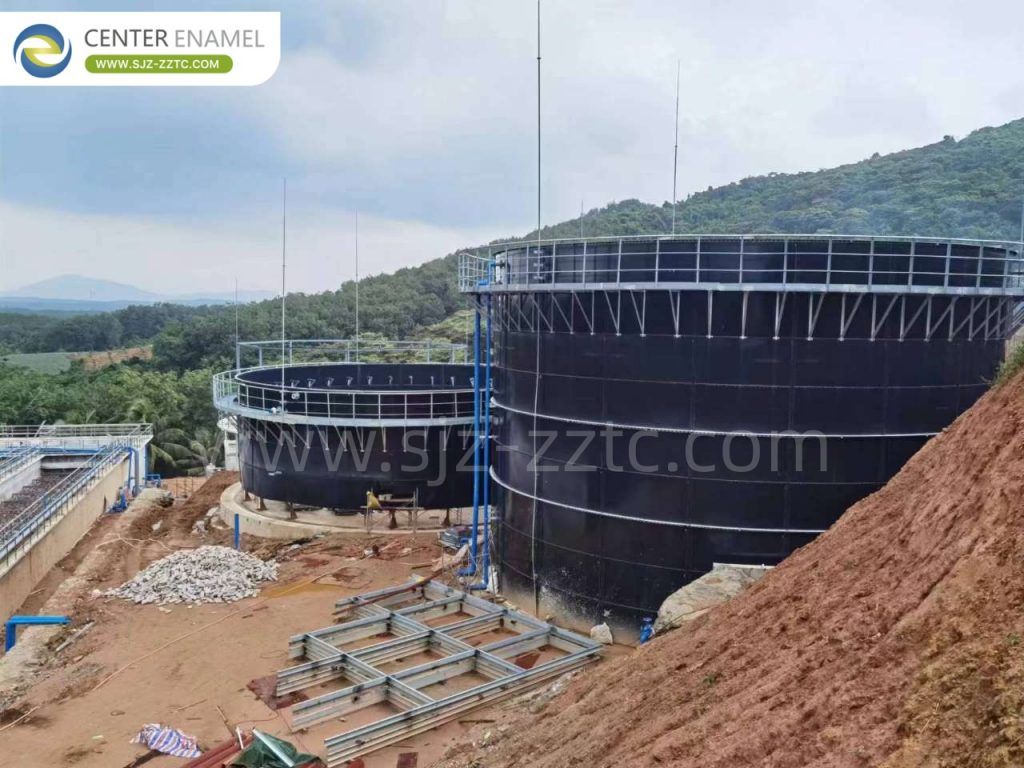
Containment structures in brewery wastewater treatment facilities face demanding operational conditions, including variable pH levels, corrosive cleaning chemicals, high temperatures, and biogas pressures. Glass-Fused-to-Steel (GFS) tanks—also known as bolted glass-lined steel tanks—represent the gold standard for equalization basins, anaerobic digesters, and clarifiers.
Exceptional Corrosion Resistance: The fusion of molten glass to high-strength steel at extreme temperatures creates an inert, impermeable barrier that resists aggressive acids, caustic cleaning agents, and sulfide corrosion.
Gas-Tight Structural Integrity: Engineered sealing systems provide airtight performance, ensuring safe and reliable containment of pressurized biogas without leakage.
Rapid Modular Construction: GFS tanks are bolted together on-site using modular panels, reducing installation time by over 50% compared to traditional concrete construction.
Scalability and Relocation: The bolted design enables easy expansion, dismantling, or relocation if a brewery facility increases production capacity in the future.
Center Enamel: Your One-Stop Wastewater Treatment Solution Provider
Designing and executing a high-efficiency brewery wastewater treatment facility requires profound engineering expertise, proven process design, and robust equipment manufacturing. Center Enamel is a globally recognized, one-stop environmental engineering solution provider dedicated to delivering cutting-edge wastewater and biogas systems worldwide.
With decades of industry leadership, Center Enamel specializes in research, development, manufacturing, and global deployment of advanced environmental equipment. Our core capabilities include:
Turnkey Project Execution: Comprehensive end-to-end services spanning initial wastewater testing, custom process engineering, equipment manufacturing, on-site installation, and operational commissioning.
Core Equipment Manufacturing: As an industry pioneer in GFS technology, Center Enamel produces world-class glass-fused-to-steel tanks, advanced anaerobic reactors (UASB, IC, EGSB), and double-membrane gas holders.
Customized Process Tailoring: Designing integrated physical, chemical, and biological treatment trains engineered specifically to match the fluctuating organic and hydraulic loads of brewery effluents.
Global Track Record: Successfully delivering high-performance environmental projects across numerous countries, helping food and beverage producers achieve regulatory compliance and sustainable water management.
Frequently Asked Questions (FAQ)
Q1: Why is brewery wastewater so challenging to treat using standard municipal systems?
A: Brewery effluent exhibits highly fluctuating pH levels (due to caustic and acid cleaning agents) and extremely high concentrations of biochemical oxygen demand (BOD) and chemical oxygen demand (COD). Unregulated discharge can shock municipal biological treatment plants, corrode concrete sewers, and cause severe environmental oxygen depletion.
Q2: How do Glass-Fused-to-Steel (GFS) tanks benefit brewery wastewater facilities?
A: GFS tanks combine the high mechanical strength of steel with the chemical inertness of glass. Their smooth, non-porous surfaces resist aggressive organic acids, fluctuating pH levels, and corrosive cleaning chemicals, ensuring decades of leak-free, low-maintenance operation for equalization tanks and anaerobic digesters.
Q3: What makes Center Enamel an ideal partner for brewery wastewater treatment projects?
A: Center Enamel offers complete turnkey solutions—combining expert process engineering, proprietary manufacturing of industry-leading GFS tanks and anaerobic reactors, and global installation support. This single-source accountability guarantees treatment efficiency, regulatory compliance, and maximum resource recovery for brewing enterprises.