
What Are the Main Sources of Agricultural Wastewater?
Agricultural activities are vital for feeding the global population, but they also generate significant environmental footprints. Among these, agricultural wastewater is one of the most pressing concerns for watershed management, aquatic ecosystems, and public health. Unlike municipal or industrial wastewater, which typically originates from centralized points, agricultural wastewater is largely diffuse and varies drastically depending on seasonal activities, weather patterns, and regional farming practices.
Understanding the primary sources of this wastewater is the first critical step toward designing effective mitigation strategies and implementing robust agricultural wastewater treatment systems. By identifying where and how these polluted streams are generated, environmental engineers and facility operators can better design collection networks, select appropriate treatment technologies, and protect downstream water resources.
Livestock and Animal Feeding Operations (CAFOs)
Intensive livestock farming and Concentrated Animal Feeding Operations (CAFOs) represent the most intensive source of agricultural wastewater. Facilities housing thousands of cattle, swine, poultry, or dairy cows generate massive volumes of liquid and solid waste daily.
Manure and Urine Accumulation: Animal waste contains high concentrations of organic matter, nitrogen, phosphorus, and pathogens.
Washdown Water: High-pressure washing of barns, milking parlors, and feeding lanes adds large quantities of water to the waste stream.
Runoff Management: Rainwater falling on open feedlots mixes with manure, creating heavily contaminated runoff that requires containment and treatment before discharge.
Crop Production and Irrigation Runoff
Crop farming contributes significantly to agricultural wastewater primarily through irrigation practices and stormwater runoff passing over cultivated fields.
Excess Irrigation: When fields are over-irrigated or when irrigation water runs off sloped farmland, it carries suspended solids, soil particles, and residual agricultural chemicals.
Tile Drainage: Subsurface drainage systems installed in agricultural fields to manage water tables can rapidly transport dissolved nutrients like nitrates directly into ditches and streams.
Erosion and Siltation: Soil erosion during heavy rainfall leads to high turbidity in agricultural runoff, clogging natural waterways and carrying adsorbed pollutants.
Pesticides, Herbicides, and Chemical Residues
Modern agriculture relies heavily on agrochemicals to maximize crop yields and protect plants from pests and diseases. However, the handling, application, and disposal of these chemicals are major sources of toxic agricultural wastewater.
Spray Equipment Rinsing: Cleaning pesticide application tanks and equipment generates concentrated wastewater laced with active chemical ingredients.
Accidental Spills and Leaks: Storage handling areas and mixing stations frequently experience minor spills that wash into drainage systems during rain events.
Chemical Persistence: Many modern pesticides resist quick degradation, posing severe risks to aquatic life and requiring specialized chemical oxidation or adsorption processes in treatment facilities.
Fertilizer Runoff and Nutrient Overload
Nutrient management is essential for plant growth, but excess fertilizers applied to fields frequently find their way into water bodies, causing severe ecological degradation such as eutrophication.
Nitrogen and Phosphorus Loading: Soluble fertilizers dissolve easily in rainwater or irrigation water, leaching into groundwater or surface runoff.
Eutrophication Impacts: High nutrient loads trigger massive algal blooms in rivers, lakes, and coastal estuaries, depleting dissolved oxygen and creating aquatic "dead zones."
Runoff Containment Needs: Modern farms must capture nutrient-rich runoff to recycle valuable elements back into the soil rather than allowing them to pollute natural ecosystems.
Agricultural Processing and Washwater
Many farms incorporate preliminary processing units on-site—such as washing, sorting, and packing harvested fruits and vegetables—which generate distinct high-strength wastewater streams.
Organic Waste Loading: Washing raw produce removes soil, organic debris, and plant juices, resulting in wastewater with high biological oxygen demand (BOD) and chemical oxygen demand (COD).
Sanitation and Disinfection: The use of chlorine washes, sanitizing agents, and detergents adds chemical residues to the processing washwater.
Volume Fluctuations: Processing washwater volumes fluctuate seasonally based on harvest cycles, demanding flexible, scalable wastewater treatment infrastructure.
Aquaculture and Fish Farm Effluents
Aquaculture is expanding rapidly worldwide, but intensive fish farming operations generate unique wastewater streams characterized by specific organic and chemical profiles.
Feed Residues and Feces: Uneaten high-protein fish feed and metabolic waste accumulate rapidly in pond bottoms and recirculating aquaculture systems (RAS).
Therapeutant Usage: Antibiotics, anti-fouling agents, and parasiticides used to maintain fish health end up in aquaculture discharge water.
High Suspended Solids: Effluents from fish tanks and settlement basins contain high levels of fine organic solids that require advanced clarification and filtration.
Silage Leachate and Storage Runoff
Silage—fermented, high-moisture stored fodder for ruminants—is a staple of livestock farming, but its production creates some of the most potent agricultural wastewater known.
High Acid and Organic Content: Silage leachate is an acidic, dark liquid characterized by extremely high BOD, COD, and volatile fatty acid concentrations.
Corrosive Nature: Due to its acidity, silage leachate can aggressively corrode traditional concrete and unprotected steel structures.
Environmental Hazard: Even small amounts of silage leachate entering a stream can cause massive fish kills due to rapid oxygen depletion.
Transitioning to Effective Agricultural Wastewater Treatment
Given the complex, high-strength, and corrosive nature of agricultural wastewater, relying on natural attenuation is no longer sufficient. Modern farming enterprises require engineered, multi-stage agricultural wastewater treatment systems to neutralize hazards, recover valuable nutrients, and meet strict environmental discharge standards.
A typical agricultural wastewater treatment train involves:
Pre-treatment & Screening: Removing large solids, hair, bedding materials, and grit.
Biological Treatment: Utilizing anaerobic digestion (for high-strength manure and biogas recovery) followed by activated sludge processes, Sequencing Batch Reactors (SBR), or constructed wetlands for nutrient removal.
Advanced Filtration & Disinfection: Utilizing membrane filtration, UV disinfection, or chemical oxidation to ensure safe effluent quality for reuse or discharge.
Advantages of GFS Tanks in Wastewater Treatment
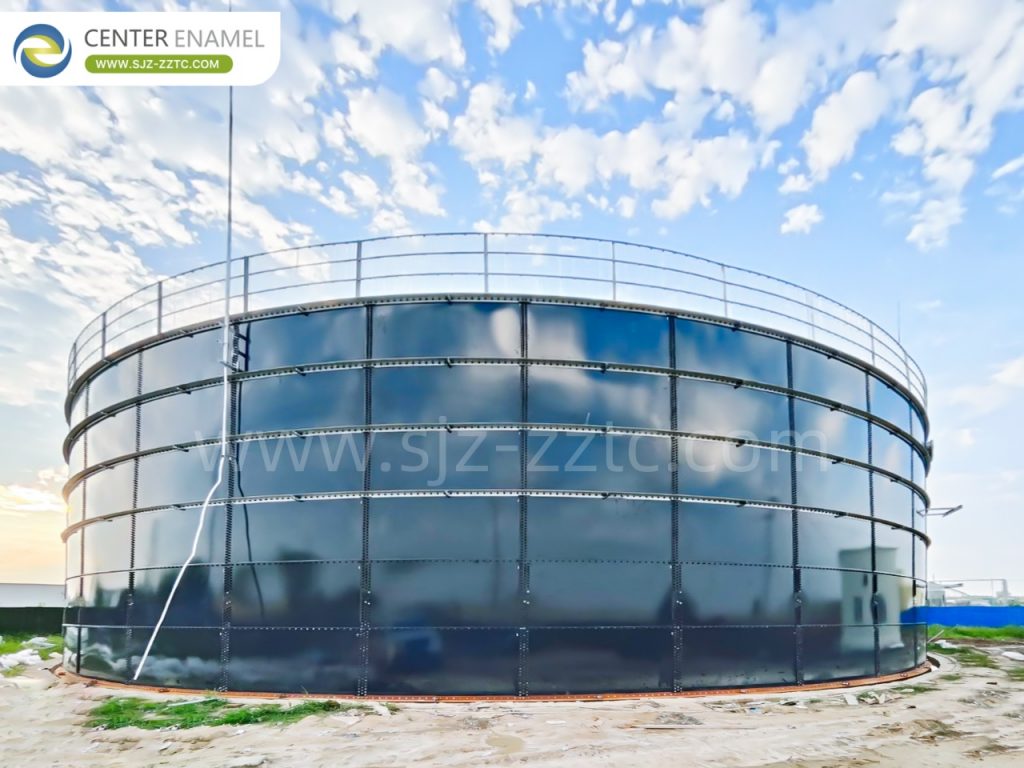
When designing agricultural wastewater treatment facilities, selecting the right containment infrastructure is paramount. Glass-Fused-to-Steel (GFS) tanks—also known as bolted glass-lined steel tanks—have emerged as the gold standard for municipal and agricultural wastewater containment.
Superior Corrosion Resistance: The fusion of molten glass to high-strength steel at high temperatures creates an inert, impermeable bond that resists aggressive chemicals, organic acids (such as silage leachate), and corrosive wastewater environments.
Rapid Construction: Unlike welded concrete tanks that require weeks of curing, GFS tanks are modularly bolted together on-site, significantly reducing construction time and labor costs.
Exceptional Durability and Lifespan: GFS tanks offer a service life exceeding 30 years with minimal maintenance, withstanding harsh weather conditions and seismic activity.
Expandability and Relocation: The bolted design allows tanks to be easily expanded, dismantled, or relocated if facility capacity requirements change over time.
Center Enamel: Your One-Stop Wastewater Treatment Solution Provider
Navigating the complexities of agricultural wastewater compliance requires deep technical expertise, proven equipment, and integrated engineering capabilities. Center Enamel is a globally recognized, one-stop wastewater treatment solution provider dedicated to delivering comprehensive environmental engineering services.
With decades of industry experience, Center Enamel specializes in the research, development, manufacturing, and global deployment of advanced wastewater treatment equipment. Our core competencies include:
Turnkey Engineering Capabilities: From initial water quality analysis and process design to equipment manufacturing, on-site installation, and commissioning.
Core Equipment Manufacturing: As a pioneer in the GFS tank industry, Center Enamel produces world-class glass-fused-to-steel tanks, anaerobic reactors (such as EGSB and IC reactors), wastewater treatment machinery, and modular cover systems.
Customized Process Design: Tailoring biological and physical-chemical treatment trains specifically to the unique pollutant loads of agricultural, industrial, and municipal effluents.
Global Track Record: Successfully delivering reliable environmental engineering projects across numerous countries, helping clients achieve stringent regulatory compliance and sustainable water management.
Frequently Asked Questions (FAQ)
Q1: Why is agricultural wastewater treatment more challenging than municipal wastewater?
A: Agricultural wastewater is highly variable in volume and composition, fluctuating seasonally based on rainfall, harvest schedules, and feeding cycles. It often contains extremely high concentrations of organic matter, suspended solids, nitrogen, and phosphorus (such as in CAFO manure and silage leachate), which can shock standard municipal treatment systems if not properly pre-treated.
Q2: How do Glass-Fused-to-Steel (GFS) tanks benefit agricultural wastewater facilities?
A: GFS tanks combine the structural strength and flexibility of steel with the chemical and corrosion resistance of glass. They are ideal for harsh agricultural environments because they resist acidic wastewater and aggressive chemicals, require minimal maintenance, install much faster than concrete tanks, and offer long-term operational reliability.
Q3: What makes Center Enamel a reliable partner for turnkey wastewater projects?
A: Center Enamel provides an end-to-end suite of services—spanning technical consultation, custom process design, core equipment manufacturing (including industry-leading GFS tanks and anaerobic reactors), installation guidance, and after-sales support. This single-source accountability ensures seamless project execution, optimized treatment efficiency, and guaranteed compliance for clients worldwide.