
What Are the Methods of Wastewater Treatment? Complete Guide to Processes & Solutions
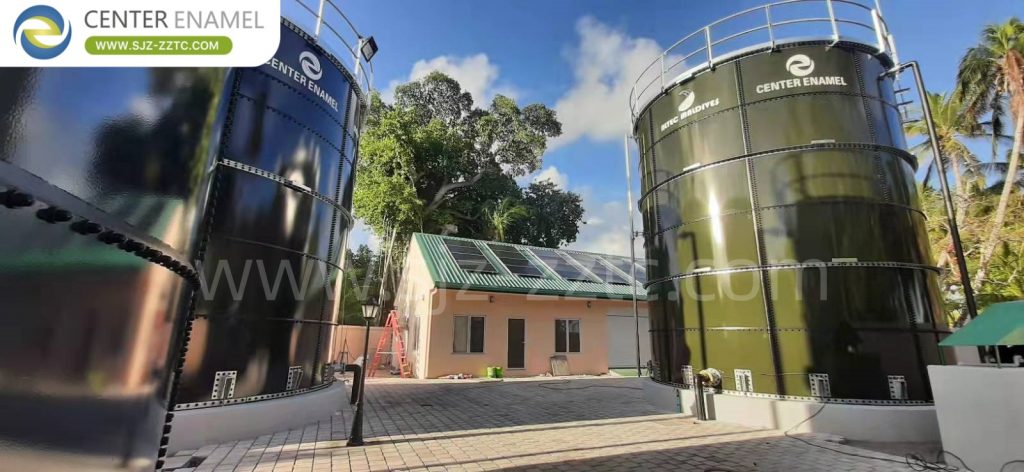
Wastewater treatment is essential for environmental protection, public health, industrial compliance, and water resource recycling. Whether municipal sewage, industrial effluent, agricultural wastewater, or food processing wastewater, effective treatment removes pollutants, stabilizes water quality, and enables safe discharge or reuse. A question frequently asked by engineers, project investors, factory managers, and environmental teams is: What are the methods of wastewater treatment?
Understanding the full range of wastewater treatment methods helps select the right technology, reduce costs, ensure stable effluent, and maximize resource recovery. This article explains all major wastewater treatment processes in clear detail, including physical, biological, chemical, and advanced methods. We also introduce four core anaerobic technologies, the advantages of GFS Tanks, and why Center Enamel is a leading global EPC contractor for reliable wastewater treatment and biogas projects.
Classification of Wastewater Treatment Methods
Wastewater treatment methods are generally grouped into four major categories: Physical Treatment Methods, Biological Treatment Methods, Chemical Treatment Methods, and Advanced Treatment Methods. Most modern wastewater plants use a combined process to achieve high efficiency and compliance.
1. Physical Wastewater Treatment Methods
Physical treatment separates solid impurities, suspended solids, grease, and sand through physical forces without changing chemical properties. It is usually used in the pretreatment or primary treatment stage.
Common processes include:
- Screening: Removes large floating debris such as plastic, fabric, branches, and garbage to protect pumps and pipelines.
- Grit Removal: Separates sand, stone, and inorganic particles to reduce equipment wear and clogging.
- Sedimentation: Uses gravity to settle suspended solids (SS) into sludge.
- Flotation: Removes oil, grease, and fine suspended particles using microbubbles.
- Filtration: Uses sand, carbon, or cloth to filter remaining fine impurities.
Physical treatment is simple, low-cost, and foundational for all wastewater systems.
2. Biological Wastewater Treatment Methods
Biological treatment is the core method for organic wastewater. It uses microorganisms to decompose dissolved and colloidal organic pollutants into harmless substances like CO₂ and water. It is widely used in municipal and industrial wastewater treatment.
Biological methods are divided into two types:
Aerobic Treatment
Oxygen-dependent microbes break down organic matter efficiently. Common processes:
- Activated Sludge
- MBR (Membrane Bioreactor)
- Biofilters & Trickling Filters
- Oxidation Ditches
Aerobic treatment achieves high BOD/COD removal and is suitable for medium–low concentration wastewater.
Anaerobic Treatment
Microorganisms decompose organics in an oxygen-free environment, producing biogas (methane). It is highly efficient for high-concentration organic wastewater such as food processing, brewery, livestock, and kitchen waste wastewater. It also recovers clean energy.
3. Chemical Wastewater Treatment Methods
Chemical treatment uses reagents to react with pollutants for precipitation, neutralization, oxidation, or coagulation. It is effective for heavy metals, toxic substances, and difficult-to-treat wastewater.
Common processes:
- Coagulation & Precipitation
- Neutralization (pH adjustment)
- Oxidation-Reduction
- Advanced Oxidation Processes (AOP)
Chemical methods are often used in pretreatment or tertiary polishing stages.
4. Advanced Wastewater Treatment Methods
Advanced treatment further purifies effluent to meet strict discharge or reuse standards.
Common technologies:
- Membrane filtration (MF, UF, NF, RO)
- Activated carbon adsorption
- Disinfection (UV, chlorine, ozone)
- Ion exchange
- Nutrient removal (nitrogen & phosphorus)
Advanced treatment enables water recycling and zero-discharge goals.
Typical Combined Wastewater Treatment Process
Most integrated plants follow this full process: Pretreatment → Primary (Physical) → Secondary (Biological) → Tertiary (Advanced) → Discharge/Reuse Sludge → Anaerobic Digestion → Biogas Recovery → Energy Reuse
This combination ensures stable, efficient, and economical operation.
Four Core Anaerobic Technologies for High-Strength Wastewater & Biogas
For organic-rich wastewater, anaerobic treatment is the most cost-effective solution. Center Enamel provides four mature, high-performance anaerobic technologies:
1. CSTR (Continuous Stirred-Tank Reactor)
Fully mixed by mechanical agitation. Strong anti-shock load capacity, ideal for high-solid wastewater and kitchen waste.
2. UASB (Upflow Anaerobic Sludge Blanket)
Uses high-activity granular sludge. High organic loading, high COD removal, low energy use, suitable for soluble organic wastewater.
3. USR (Upflow Solid Reactor)
Simple structure, low investment, anti-clogging. Excellent for high-SS wastewater such as fruit & vegetable processing.
4. IC (Internal Circulation)
High-rate internal circulation reactor. Loading rate 3–5 times higher than traditional systems, small footprint, perfect for large-scale plants.
These technologies ensure high treatment efficiency and stable biogas production.
Advantages of GFS Tanks in Wastewater & Biogas Projects
GFS (Glass-Fused-to-Steel) Tanks are the core equipment for modern wastewater and biogas projects. Their advantages are unmatched:
- Superior corrosion resistance: Fused at >820°C, resistant to pH 1–14, withstands organic acids, H₂S, and coastal salt spray.
- Long service life: Over 30 years, minimal maintenance.
- Fast installation: Factory-prefabricated, bolted assembly, no welding or long curing time.
- Compact & space-saving: Vertical modular design saves land.
- Excellent gas tightness: Safe biogas storage and emission control.
- Strong weather resistance: Resists heat, UV, humidity, and earthquakes.
- Flexible capacity: Easy to expand as project grows.
GFS Tanks are the most reliable reactor and storage solution for wastewater and biogas projects globally.
Why Choose Center Enamel as Your EPC Partner
Center Enamel (Shijiazhuang Zhengzhong Technology Co., Ltd) is a leading global EPC contractor specializing in wastewater treatment and biogas projects. Our core strengths:
1. Full Turnkey EPC Solutions
One-stop service from design, production, transportation, installation, commissioning, training, to after-sales support.
2. Advanced GFS Tanks Manufacturing
Asia’s largest GFS tank production base; 200+ patented enamel formulas; 1500V spark test for every panel; compliant with ISO, AWWA, NSF/ANSI 61.
3. Proven Anaerobic & Wastewater Technologies
Stable CSTR, UASB, USR, IC systems for high-concentration organic wastewater and high biogas yield.
4. Strong Customization Ability
Tailored solutions based on wastewater composition, local climate, land conditions, and emission standards.
5. Global Project Experience
Successful projects in over 60 countries across municipal, industrial, food, agricultural, and rural sectors.
6. Energy & Resource Recovery
We maximize biogas production and sludge recycling to help clients achieve energy self-sufficiency and circular economy goals.
Center Enamel delivers durable, stable, low-operating-cost wastewater treatment and biogas projects trusted worldwide.
To answer What are the methods of wastewater treatment? — they include physical, biological, chemical, and advanced processes, often combined in integrated treatment systems. For high-organic wastewater, anaerobic treatment is the most efficient and economical choice, supported by CSTR, UASB, USR, and IC technologies. GFS Tanks provide superior durability, safety, and cost savings. As a professional EPC leader, Center Enamel integrates advanced technology, high-quality GFS Tanks, and full-process services to build reliable, compliant, and sustainable wastewater and biogas projects for clients worldwide.