
What Are the Uses of Agricultural Waste? Converting Residues into Renewable Energy and Value-Added Products
Agricultural practices generate vast quantities of waste materials worldwide, including crop residues (leaves, stalks, husks, roots), livestock manure, agro-industrial processing byproducts, and aquaculture residues . Globally, agriculture generates nearly 998 million tonnes of waste annually, much of which remains underutilized or improperly managed . This waste includes a wide range of materials such as rice husk, corn stover, sugarcane bagasse, fruit peels, stone fruits, and plant waste .
Traditional disposal methods such as open burning and landfilling release harmful pollutants including particulate matter, carbon monoxide, carbon dioxide, nitrous oxide, sulfur dioxide, and methane into the atmosphere . Open burning of agricultural residues alone produces approximately 3 kg of particulate matter, 60 kg of CO, 1460 kg of CO2, 199 kg of ash, and 2 kg of SO2 per ton of straw burned . These practices contribute significantly to greenhouse gas emissions, air pollution, and loss of valuable organic matter and nutrients that could otherwise enhance soil fertility .
The Circular Economy Approach to Agricultural Waste
The adoption of circular economy principles provides a coherent framework for redefining agricultural waste as secondary resources rather than environmental liabilities . This perspective shift is essential because agricultural waste primarily contains cellulose, hemicellulose, and lignin, which can be converted into high-value products through biological, biochemical, and thermochemical technologies .
The circular bioeconomy approach to agricultural waste management supports multiple United Nations Sustainable Development Goals, particularly SDG 7 (Affordable and Clean Energy), SDG 12 (Responsible Consumption and Production), SDG 13 (Climate Action), and SDG 15 (Life on Land) . By viewing agricultural waste as a resource rather than unwanted material, we can prevent contamination of air, water, and land while generating economic value and reducing environmental impacts.
Agricultural Waste to Biogas: A Proven Sustainable Solution
Anaerobic digestion is a sustainable method for managing agricultural waste while generating renewable energy . This biological process occurs in the absence of oxygen, where specialized microorganisms break down complex organic compounds through four stages: hydrolysis, acidogenesis, acetogenesis, and methanogenesis .
Agricultural waste is a highly suitable substrate for anaerobic digestion . Crop residues such as rice straw, wheat straw, corn stover, and sugarcane bagasse, along with livestock manure and agro-industrial byproducts, can be efficiently converted into biogas . The biogas produced is composed primarily of methane (CH₄) and carbon dioxide (CO₂), with methane content typically reaching 55–70% under optimal conditions. This biogas can be utilized for electricity generation, heat production, or upgraded to biomethane for vehicle fuel .
The CSTR Process: Core Technology for Agricultural Waste Digestion
At the heart of any efficient Biogas Project lies the CSTR Process (Continuous Stirred-Tank Reactor). This technology is specifically engineered to handle the challenging characteristics of high-solid organic feedstocks like crop residues and manure.
The CSTR reactor operates as a completely mixed, closed vessel, ensuring that fermentation raw materials and anaerobic microorganisms maintain constant and thorough contact. A mechanical stirring device continuously agitates the slurry, preventing the formation of a floating scum layer and ensuring uniform distribution of nutrients and microorganisms. By feeding the reactor continuously at a constant temperature—typically under mesophilic conditions—the CSTR Process effectively degrades organic matter, maximizing biogas production .
This technology is recognized as one of the most efficient and reliable systems for anaerobic digestion, capable of converting agricultural waste into high-quality biogas while minimizing environmental impact.
GFS Tanks: The Premier Storage Solution for Biogas Projects
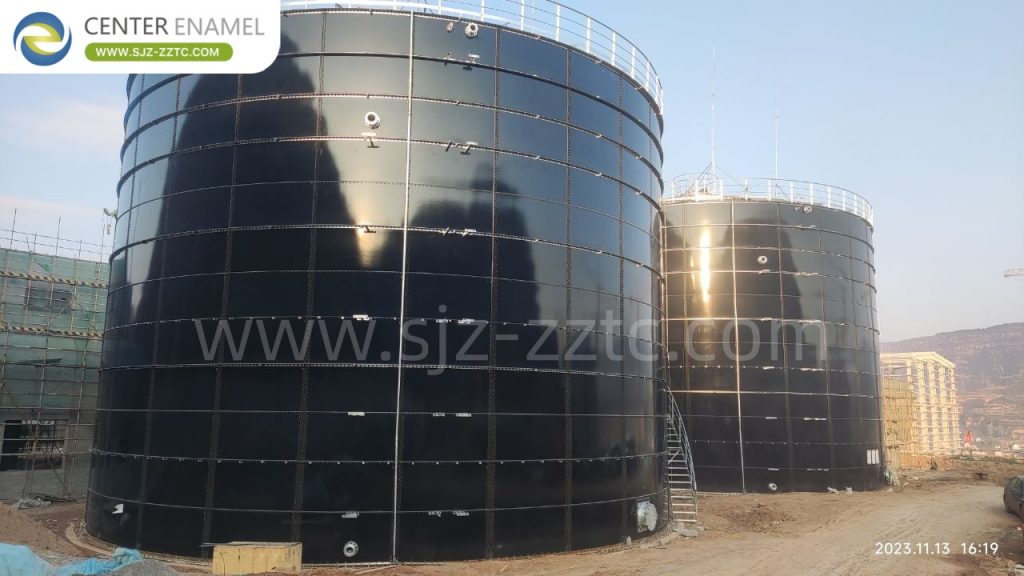
For optimal biogas capture and storage, GFS Tanks (Glass-Fused-to-Steel) provide exceptional durability and performance. Center Enamel's GFS Tanks are engineered with a glass coating applied by firing at 820-930°C, creating an inert, inorganic bond that combines the strength and flexibility of steel with outstanding corrosion resistance .
This coating is impermeable to the aggressive organic acids and hydrogen sulfide generated during digestion, ensuring a service life exceeding 30 years with minimal maintenance. The smooth glass surface prevents biofilm buildup and is easy to clean, making GFS Tanks ideal for the challenging environments of biogas production .
Key advantages of GFS Tanks include:
Exceptional corrosion resistance against H₂S and organic acids
pH resistance from 1-14, suitable for aggressive environments
Zero-leakage containment for biogas storage
Rapid installation with modular bolted design
Long service life of 30-50 years
Double Membrane Roof systems complement GFS Tanks in biogas applications, providing superior airtightness necessary for gas collection and odor control. The integrated design forms a single, efficient structure that saves on the cost and space of separate ground-mounted gas holders .
Center Enamel: Your One-Stop Biogas Project Partner
Center Enamel has been committed to water, wastewater, and biogas projects, establishing itself as the largest manufacturer of Glass-Fused-to-Steel (GFS) tanks in Asia. With over 36 years of experience and a 150,000 m² R&D and production base, the company delivers unparalleled expertise in designing and executing turnkey Biogas Projects worldwide .
Comprehensive EPC Services Include:
Engineering & Design: Tailored solutions meeting international standards including ISO 28765, AWWA D103, and EN 1090
Procurement: High-quality materials, equipment, and technologies including biogas storage tanks, CSTR reactors, and digesters
Construction: Professional project management ensuring safe, timely, and cost-effective construction
Commissioning: Full support during startup to guarantee optimal operation
Center Enamel provides an integrated solution covering the entire biogas lifecycle—from feedstock receiving to biogas utilization—ensuring that every component works together seamlessly. Their global presence and local support, operating in more than 100 countries, enable tailored solutions for specific regional conditions .
Beyond Energy: Diverse Uses of Agricultural Waste
Agricultural waste has numerous applications beyond biogas production. These include:
Biofertilizers: Nutrient-rich digestate from anaerobic digestion can be used as organic fertilizer to improve soil fertility and reduce dependence on synthetic fertilizers
Bioplastics and biodegradable materials: Lignocellulosic residues can be converted into biopolymers and biodegradable plastics
Industrial enzymes: Solid-state fermentation can produce enzymes for food, pharmaceutical, and environmental applications
Bio-based construction materials: Agricultural residues can be used to create sustainable building materials
Animal feed: Some agricultural byproducts can be processed into nutritious animal feed
Conclusion: Transforming Waste into Sustainable Value
Agricultural waste no longer needs to be viewed as a disposal problem. Through advanced anaerobic digestion technology—utilizing the CSTR Process and durable GFS Tanks—crop residues, manure, and other agricultural byproducts can be transformed from environmental liabilities into valuable renewable energy resources.
Center Enamel offers comprehensive biogas solutions that address both the environmental challenges of agricultural waste disposal and the growing demand for clean energy. By converting this abundant biomass into biogas, we can reduce greenhouse gas emissions, improve air quality, create sustainable energy streams, and contribute to a circular economy that benefits farmers, communities, and the environment.
Frequently Asked Questions (FAQ)
1. What types of agricultural waste can be used for biogas production?
Agricultural waste suitable for biogas production includes crop residues (rice straw, wheat straw, corn stover, sugarcane bagasse), livestock manure (cattle, poultry, swine), agro-industrial processing byproducts (fruit peels, press cakes), and food processing waste .
2. Why are GFS Tanks ideal for agricultural biogas projects?
GFS Tanks offer exceptional corrosion resistance against the aggressive hydrogen sulfide and organic acids produced during anaerobic digestion. The glass coating creates an impermeable barrier that withstands harsh agricultural conditions, ensuring a service life exceeding 30 years with minimal maintenance and no need for recoating .
3. Can Center Enamel provide a complete turnkey biogas solution for agricultural waste?
Yes, Center Enamel is an expert EPC contractor providing comprehensive one-stop solutions covering design, supply, and installation of the entire Biogas Project—including the CSTR Process, GFS Tanks, double membrane roofs, and all associated equipment—tailored specifically for agricultural applications .