
What Are the Uses of Cassava Waste? From Liability to Biogas Energy
Cassava processing generates millions of tonnes of organic waste annually, creating serious environmental challenges for producing nations. However, cassava waste—including peels, pulp, and high-strength wastewater—is not merely a disposal problem but a valuable resource that can be converted into renewable energy, animal feed, and biofertilizer . This article explores the diverse applications of cassava waste, with a particular focus on biogas production through advanced anaerobic digestion technologies like the CSTR Process and durable GFS Tanks.
The Scale of Cassava Waste Generation
Cassava (Manihot esculenta) is a global food security crop, especially in Africa, Asia, and Latin America . However, processing cassava into starch, flour, or garri creates substantial waste streams. Cassava peels alone account for over 18% of the entire plant's mass . Globally, the cassava processing industry is valued at $183 billion, yet many producing countries capture only a fraction of this value due to underutilized waste streams .
The cassava starch production process is water-intensive, generating high-strength wastewater with chemical oxygen demand (COD) levels of 8,000–20,000 mg/L . Solid residues like peels and pulp contain 15–50% total solids and have a carbon-to-nitrogen (C/N) ratio of 25–35, making them highly suitable for anaerobic digestion . In Nigeria alone, an estimated 15 million metric tonnes of cassava waste is generated each year, with more than half underutilized .
Traditional Uses of Cassava Waste
Cassava waste has several established applications that offer immediate value:
Animal Feed: Cassava peels can be processed into High Quality Cassava Peel (HQCP) mash, replacing up to 25% of maize in poultry feed. This reduces reliance on imported feed grains and supports local livestock production .
Biofertilizer: Composting cassava peels produces nutrient-rich organic fertilizer, reducing dependence on synthetic alternatives .
Plant Boiler Fuel: Dried peels have a calorific value of approximately 12 MJ/kg, which can supply 30–50% of a processing plant's energy needs .
While these applications are valuable, they do not capture the full energy potential of cassava waste. The most promising use—biogas production—can generate renewable energy while addressing environmental pollution simultaneously .
Cassava Waste to Biogas: The Anaerobic Digestion Advantage
Biogas production through anaerobic digestion (AD) offers a dual benefit: treating organic waste and generating renewable energy . The AD process breaks down organic matter in an oxygen-free environment through four stages—hydrolysis, acidogenesis, acetogenesis, and methanogenesis . The resulting biogas typically contains 55–75% methane, which can be used for power generation, heating, or as vehicle fuel .
Research demonstrates that cassava wastewater and solid residues are ideal substrates for biogas production. One study showed that conventional AD of cassava processing wastewater achieved a biogas yield of 5.57 ml per ml of wastewater, with methane content reaching 75% . When co-digesting cassava peel with cow dung, methane content reached 60.6%, producing 93,730 cm³ of biogas over a 30-day retention period .
The CSTR Process: Optimizing Biogas Production
The CSTR Process (Continuous Stirred-Tank Reactor) is the most suitable anaerobic treatment technology for high-solids cassava processing waste. This system ensures fermentation raw materials and microorganisms are fully mixed in a closed tank, maximizing biogas yield. The CSTR reactor is equipped with a mechanical stirring device that prevents scum crusting and sediment accumulation—common issues when treating cassava wastewater .
Recent research has shown that multi-substrate digestion—combining different cassava waste fractions including starch, meal, fiber, and solid waste—can increase methane content from 53.98% to 61.74% compared to single-substrate digestion . Under optimized conditions with the CSTR Process, peak methane content of 62.39% has been achieved . The process maintains stability at a volatile fatty acids (FOS)-to-alkalinity (TAC) ratio ≤ 0.24 and pH range of 6.83–7.57 .
GFS Tanks: The Infrastructure for Reliable Biogas Projects
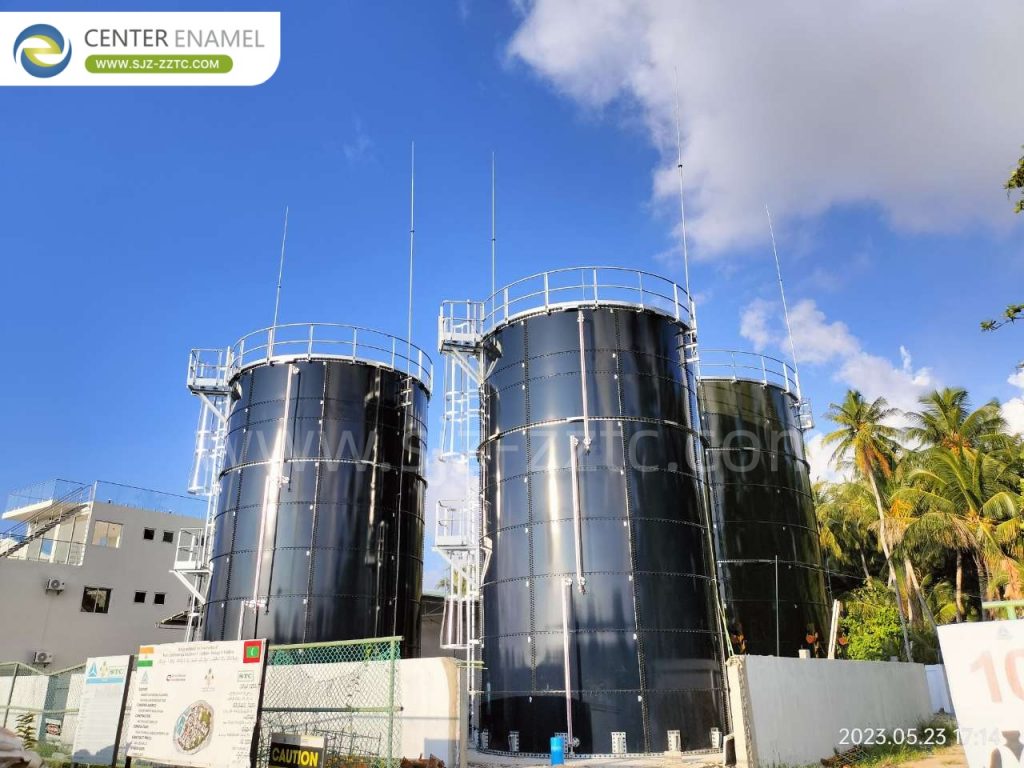
The success of any Biogas Project depends on the integrity of its containment infrastructure. Center Enamel's GFS Tanks (Glass-Fused-to-Steel) provide the ideal solution for anaerobic digesters in cassava waste-to-energy projects.
These tanks are manufactured using a unique high-temperature firing process (820°C–930°C) that fuses glass to steel, creating an inert, inorganic bond with outstanding corrosion resistance . This makes GFS Tanks immune to the aggressive acids, ammonia, and hydrogen sulfide (H₂S) generated during the anaerobic digestion process .
The bolted modular design allows for rapid installation without on-site welding, making GFS Tanks ideal for rural processing facilities . With a service life exceeding 30 years and minimal maintenance requirements, GFS Tanks provide the durable, scalable infrastructure essential for long-term biogas energy solutions .
Integrated Biorefinery Approaches for Maximum Value
Beyond simple biogas production, cassava waste can be integrated into biorefinery models that extract multiple value-added products. Modified anaerobic digestion (MAD) can produce volatile fatty acids (VFAs) such as acetic acid, which have higher economic value and can serve as substrates for bioplastics and other biochemicals .
One innovative approach combines L-lactic acid fermentation with biogas production. The "cassava residue–L-lactic acid–biogas" (CLB) process can produce high-purity L-lactic acid (95.6% purification rate) while still generating comparable biogas volumes (265.78 ml/g organic dry matter) . This integrated approach increases carbon utilization rates and economic efficiency compared to conventional biogas-only operations .
Center Enamel: Your Partner in Biogas Projects
Center Enamel brings extensive experience to biogas projects worldwide. With installations in over 100 countries, the company specializes in providing complete biogas solutions from design through installation and commissioning .
For cassava processing waste-to-energy projects, Center Enamel offers:
Turnkey EPC services covering project design, equipment manufacturing, and installation
Glass-Fused-to-Steel (GFS) tanks engineered for superior corrosion resistance and long service life
Double membrane roofs for integrated biogas storage and odor control
Customized solutions tailored to local waste composition and climate conditions
The company's proven track record includes large-scale biogas installations for agricultural waste across diverse environments . By partnering with Center Enamel, cassava processors can transform their waste streams into consistent, reliable energy sources while meeting stringent environmental regulations.
Conclusion
Cassava waste—from peels and pulp to high-strength wastewater—offers significant opportunities for sustainable value creation. While traditional applications like animal feed and biofertilizer provide immediate benefits, biogas production through advanced anaerobic digestion maximizes both environmental and economic returns. The CSTR Process optimizes methane yield from cassava waste, while GFS Tanks provide the durable infrastructure required for long-term project success. As global demand for renewable energy continues to rise, cassava waste-to-biogas projects offer a compelling pathway for producers to turn environmental liability into a valuable asset.
Frequently Asked Questions (FAQs)
1.What types of cassava waste are suitable for biogas production?
Cassava peels, pulp (onggok), and high-strength wastewater from starch processing are all suitable substrates for anaerobic digestion. Research shows that multi-substrate digestion combining different fractions can increase methane content from 53.98% to 61.74% compared to single-substrate digestion .
2.How much biogas can be produced from cassava waste?
A 500 m³ biodigester processing cassava peels can generate approximately 75,000 m³ of biogas annually, with 60% methane content, replacing over 300 tonnes of firewood per year. The biogas opportunity from cassava waste is estimated at US$300 million .
3. What is the economic viability of cassava waste biogas projects?
Studies show positive returns with a payback period of 7 years and an Internal Rate of Return of 18.7% at a 10% discount rate. Each plant creates approximately 10 full-time jobs during construction and 4 positions during operation, while providing renewable energy that reduces operational costs .