
What Can You Do with Bagasse? Turn Waste into Clean Energy & Biogas
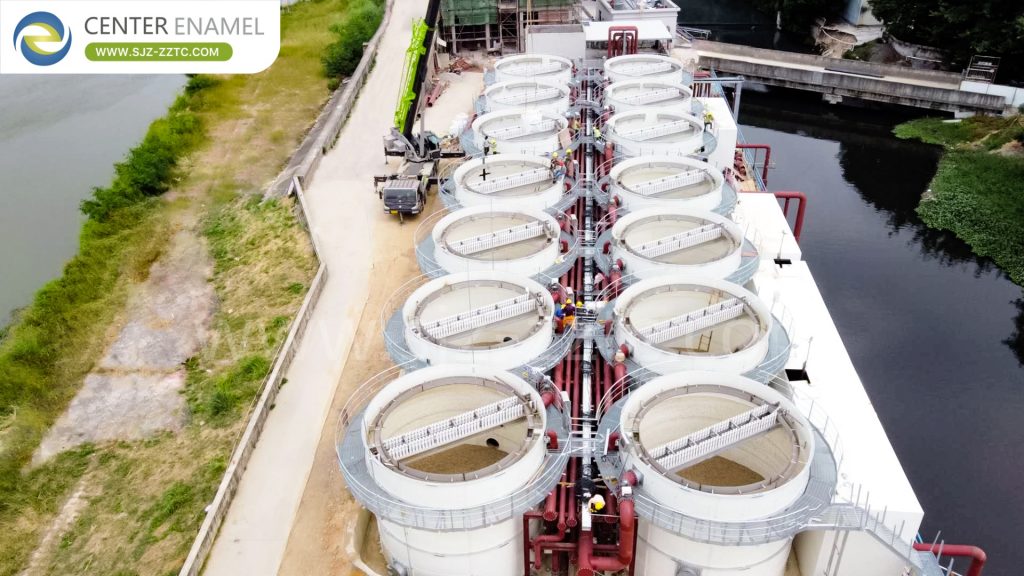
If you work in the sugarcane industry, agriculture, or renewable energy, you’ve probably asked: what can you do with bagasse? Bagasse is the fibrous organic residue left after sugarcane is crushed to extract juice. It is one of the most abundant biomass wastes in tropical and subtropical regions worldwide. For decades, bagasse was treated as useless waste, often burned or landfilled. Today, we know better—bagasse is a high-value resource that can drive clean energy, circular economy, and sustainable development.
Many people still only think of burning bagasse for simple heat or letting it rot in landfills. But these outdated methods cause air pollution, greenhouse gas emissions, land waste, and economic loss. The real answer to what can you do with bagasse is far more powerful: convert bagasse into biogas through advanced anaerobic digestion.
This modern solution not only solves waste problems but also generates stable, affordable clean energy, high-quality organic fertilizer, and long-term profit. As a leading global EPC contractor for biomass and biogas projects, Center Enamel helps businesses turn bagasse from a burden into a strategic asset.
Common Traditional Uses of Bagasse (And Why They Are Not Enough)
Before we explore the best answer to what can you do with bagasse, let’s look at traditional uses and their limitations:
1. Burning for Boiler Heat
Burning bagasse is still common in many sugar mills. It produces smoke, particulate matter, and toxic emissions. It wastes the organic value of bagasse and harms air quality and public health.
2. Animal Feed Additive
Bagasse has low nutrition and high fiber. It cannot be used as main feed and has limited market demand.
3. Paper or Pulp Production
This requires complex processing, high investment, and is not suitable for most small and medium sugar mills.
4. Landfilling or Composting
Landfilling releases methane, a potent greenhouse gas. Traditional composting is slow, needs large spaces, and cannot handle large-scale bagasse output.
These methods fail to fully unlock the potential of bagasse. So what can you do with bagasse to create real value while protecting the environment?
The best and most sustainable solution is bagasse-to-biogas project.
What Can You Do with Bagasse? Convert It to Biogas!
Bagasse is rich in cellulose, hemicellulose, sugar, and organic matter—making it perfect feedstock for anaerobic digestion. Instead of wasting bagasse, you can use it to produce clean biogas efficiently.
How Bagasse Becomes Biogas
Under sealed, oxygen-free conditions, microorganisms break down bagasse in four stable stages:
Hydrolysis: Large organic molecules are broken into soluble sugars and amino acids.
Acidification: Acid-forming bacteria turn materials into volatile fatty acids.
Acetogenesis: Intermediates are converted into acetic acid, the foundation of methane.
Methanogenesis: Methane-producing bacteria generate biogas (55%–70% methane).
The biogas can be directly used for power generation, heating, steam production, or grid supply. The digested residue becomes high-quality organic fertilizer for farms and plantations. This forms a fully closed circular economy—answering what can you do with bagasse in the most sustainable way.
Key Benefits of Turning Bagasse into Biogas
When you choose biogas production as the answer to what can you do with bagasse, you gain multiple economic, environmental, and social benefits:
Eliminate Waste Pollution
Stops open burning, landfill leachate, odor, and pest breeding.
Produce Clean Renewable Energy
Replaces coal, diesel, and natural gas, lowering energy costs for mills.
Reduce Carbon Emissions
Helps comply with national low-carbon and environmental policies.
Create Extra Income
Biogas cuts utility costs; organic fertilizer can be sold for profit.
Improve Resource Efficiency
Turns low-value waste into high-value energy and fertilizer.
This is why more and more sugar mills and agricultural enterprises worldwide are choosing biogas as the best response to what can you do with bagasse.
4 Advanced Anaerobic Technologies for Bagasse Biogas Projects
To maximize the value of bagasse, Center Enamel provides four mature, field-proven anaerobic technologies—each optimized to answer what can you do with bagasse efficiently.
1. CSTR (Completely Stirred Tank Reactor)
The most widely used technology for high-solid bagasse. Full mechanical mixing prevents scum and sediment, ensures stable fermentation, and delivers high biogas yield. Ideal for industrial-scale bagasse projects.
2. UASB (Upflow Anaerobic Sludge Blanket)
Best for low-solid bagasse slurry and leachate. High efficiency, low operating cost, suitable for medium-scale projects.
3. USR (Upflow Solids Reactor)
Simple structure, low investment, easy maintenance. Perfect for small-scale and decentralized bagasse utilization.
4. IC (Internal Circulation)
Biogas-driven internal circulation improves loading rate by 3–5 times. Small footprint, high efficiency for land-limited areas.
These technologies make what can you do with bagasse no longer a problem—but a profitable, scalable business.
Core Equipment: GFS Tanks for Bagasse Biogas Projects
A reliable bagasse biogas project requires durable equipment that can withstand high temperature, humidity, and corrosion. Center Enamel’s GFS (Glass-Fused-to-Steel) Tanks are the global top choice.
- Fused at over 820°C
- pH 1–14 corrosion resistance
- Anti-acid, UV-stable, service life over 30 years
- Bolted assembly for fast, low-cost installation
- Fully compatible with CSTR, UASB, USR, and IC systems
Supported by professional gas holders, stirring systems, and control systems, our equipment ensures stable long-term operation.
Why Choose Center Enamel for Your Bagasse Biogas Project
When you ask what can you do with bagasse and want a professional, reliable solution, Center Enamel is your best EPC partner.
1. Full-Cycle Turnkey EPC Service
We handle everything: design, manufacturing, installation, commissioning, and after-sales.
2. Customized Anaerobic Solutions
We tailor technologies based on your bagasse type, output, climate, and project scale.
3. World-Leading GFS Tanks
Asia’s largest production base, 200+ patented enamel formulas, strict international certifications.
4. International Certifications
ISO 28765, AWWA D103, NSF/ANSI 61, CE, OSHA, 1500V spark test per tank.
5. Rich Global Experience
Successful projects in Southeast Asia, Europe, North America, and Africa.
6. Local After-Sales Support
Dedicated service teams ensure stable operation and timely maintenance.
Center Enamel turns the question what can you do with bagasse into a sustainable, low-carbon, high-profit business model.
Successful Bagasse Biogas Projects by Center Enamel
Case1: France Biogas Project
Process Stage: CSTR
Tank Dimensions: φ18.33 × 8.4 m (H) — 1 Unit
Total Volume: 2,215 m³ — 1 Unit
Completion Date: 2021
Case2: Canada Biogas Project
Tank Dimensions: φ8.4 × 7.2 m (H) — 2 Units
Total Volume: 798 m³
Completion Date: 2024
So what can you do with bagasse? The best and most sustainable answer is to convert it into biogas using advanced anaerobic digestion. This method eliminates pollution, produces clean energy, reduces costs, and supports circular economy.
With four professional anaerobic technologies, high-performance GFS tanks, and full EPC solutions, Center Enamel helps you fully utilize bagasse and achieve green development. If you want to turn bagasse waste into profit and energy, choose biogas—and choose Center Enamel as your trusted partner.