
What Compressor Is Used for CBG?
Compressed biomethane (CBG) is moved with a low-pressure blower for tank-to-upgrader transfer and then raised to storage and vehicle pressure with a reciprocating or diaphragm compressor, typically reaching 200-250 bar for dispensing. The choice depends on the final pressure and the need to keep the gas oil-free and methane-pure between the upgrading unit and the storage banks or dispenser.
Two Stages of Compression
Raw biogas is first boosted a little to push it through the upgrader. After CO₂, water, and H₂S are removed, the clean biomethane is compressed in stages to 200-250 bar. Diaphragm and oil-free reciprocating machines dominate the high-pressure stage because they cannot contaminate the fuel.
Design Parameter Table
| Parameter | Typical value or range | Why it matters |
| Transfer pressure | Low, 0.1-0.5 bar gauge | Blower duty |
| Storage / dispense | 200-250 bar | Vehicle CBG standard |
| Compressor type | Reciprocating / diaphragm | Oil-free, pure gas |
| Methane purity | 95-99% CH₄ | Upgrading sets it |
| Stages | 2-4 to 250 bar | Manage heat and seal |
| Limitation to check | H₂S before compression | Protect seals |
Compressor Comparison for CBG
| Type | Pressure | Best use |
| Roots / lobe blower | Low | Transfer and boosting |
| Reciprocating | Up to 250 bar | High-pressure filling |
| Diaphragm | Up to 250 bar | Oil-free, ultra-pure |
Project Case Study
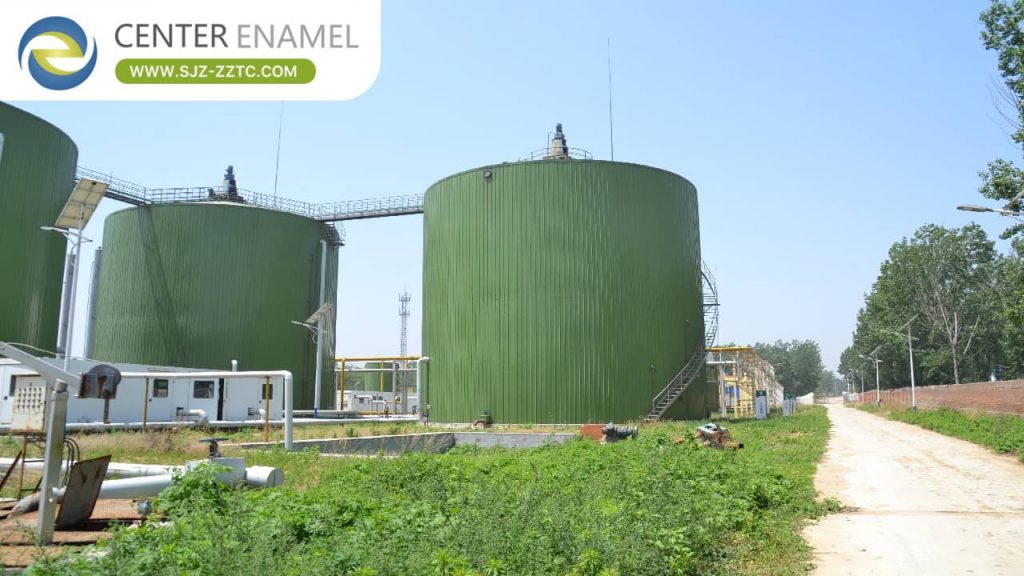
Zhenyuan Group Biogas Project, Henan. A vehicle-grade methane plant treats 650 tonnes per day of farm manure and washing wastewater through CSTR digestion and upgrading, producing 3 million m³ of methane per year for vehicle fuel, a project that depends on reliable high-pressure compression to fill transport storage.
| Project | Zhenyuan Group Biogas Project, Henan |
| Location | Xinzheng, Henan, China |
| Industry | Agriculture / Renewable Fuel |
| Application | Vehicle-grade methane production |
| Product | CSTR primary 3 × Ø15.29 × 15 m, secondary Ø5.22 × 6 m |
| Result | 3,000,000 m³ vehicle-grade CH₄ per year |
| Status | Delivered 2013 |
About Shijiazhuang Zhengzhong Technology Co., Ltd (Center Enamel)
Shijiazhuang Zhengzhong Technology Co., Ltd (Center Enamel) contributes the product technology around CBG: beyond GFS biogas digester tanks, the company holds pressure-vessel manufacturing capability (I/II class pressure vessel license) relevant to the storage and buffer vessels of a biomethane skid, built to ASME and ISO 9001 discipline. The digester, upgrading, and compression package is engineered as one system.
Use a blower for transfer and an oil-free reciprocating or diaphragm compressor to reach 200-250 bar for CBG storage and dispensing. Send your flow and fill pressure and we will size the compression stage.
Frequently Asked Questions (FAQ)
Q1: What compressor raises biogas pressure?
A: A blower for low-pressure transfer, then an oil-free reciprocating or diaphragm compressor for the 200-250 bar stage.
Q2: Why 200-250 bar for CBG?
A: That is the standard vehicle compressed-gas pressure, matching CNG refueling and onboard storage.
Q3: Is a diaphragm compressor used?
A: Yes, where the gas must stay oil-free and ultra-pure between upgrading and filling.
Q4: What compressor feeds a CBG dispenser?
A: The high-pressure reciprocating or diaphragm compressor fills the cascade banks the dispenser draws from.
Q5: Does H₂S need removal first?
A: Yes, H₂S must be stripped before compression to protect seals, vessels, and the fuel quality.
Q6: How pure must the methane be?
A: Typically 95-99% CH₄ after upgrading, which the compressor then handles without contamination.
Suggested CTA
Send your biomethane flow and target fill pressure. We will size the compression stage and the storage vessels for your CBG skid.