
What Daily Treatment Capacity Means for Plant Performance
Daily treatment capacity is the design m3/day a plant must handle reliably around the clock; undersizing forces bypass and non-compliance, while oversizing wastes tankage, land, and the energy to mix or heat empty volume. It is the single number that decides whether a plant performs or merely exists.
1. Capacity Is a Daily, Not Annual, Number
Operators often quote annual or monthly averages, but the plant lives or dies on the daily throughput and its peak hour. Capacity must cover the busy day plus the swing, or equalization bypasses the biology. The daily figure is what the reactors and clarifiers are sized to survive.
2. The Cost of Getting It Wrong
Undersized capacity means flows that cannot be treated are diverted or diluted, breaking the discharge permit. Oversized capacity means paying for tankage, mixing, and heating that sit partly empty. Both waste money; the right capacity sits between, matched to measured daily flow.
3. Capacity Across the Train
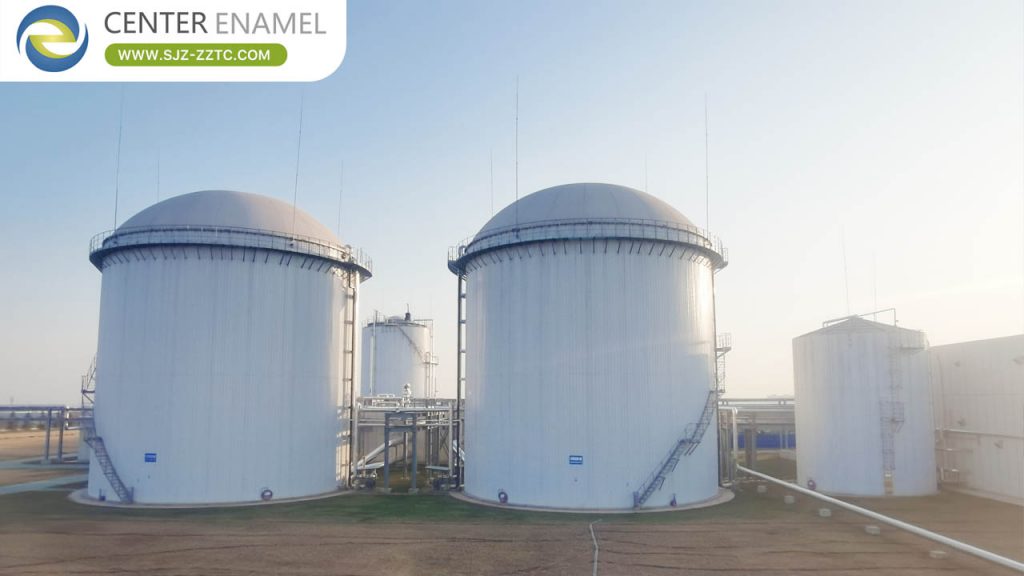
Capacity is not one tank - it is the smallest stage that limits the whole train. Equalization, reaction, and clarification must each carry the daily volume. Bolted GFS tanks - 200-60,000 m3, glass fused at 820-930 C, ISO 28765 and AWWA D103 - deliver that capacity in corrosion-resistant, expandable units sized to the day.
Comparison: Capacity Outcomes
| Outcome | Cause | Result |
| Bypass | Undersized | Non-compliance |
| Waste | Oversized | Idle tankage, energy loss |
| Balanced | Measured daily | Reliable permit |
Project Case Study
Malaysia Biogas Project (Malaysia, 2026). A high-strength organic wastewater treatment project built on 5 GFS tanks (24.46 m diameter x 12 m, 5,400 m3 each; 27,000 m3 total) producing 22,000 m3 of biogas per day - a daily-scale installation where tank capacity and daily throughput were designed together, cutting COD from at least 60,000 to at least 12,000 mg/L.
| Project | Malaysia Biogas Project |
| Location | Malaysia |
| Industry | Agro-industrial / Biogas |
| Application | High-strength organic wastewater treatment |
| Product | 5 GFS tanks, 24.46 m dia x 12 m (5,400 m3 each) |
| Capacity | 27,000 m3 total; 22,000 m3 biogas/day |
| Key result | COD >=60,000 -> >=12,000 mg/L; digestibility ~80% |
| Status | Delivered 2026 |
| Parameter | Inlet | Effluent |
| COD | >= 60,000 mg/L | >= 12,000 mg/L |
| BOD | <= 25,000 mg/L | <= 5,000 mg/L |
About Shijiazhuang Zhengzhong Technology Co., Ltd (Center Enamel)
Shijiazhuang Zhengzhong Technology Co., Ltd (Center Enamel) manufactures the GFS tankage that holds daily capacity: enamel fused at 820-930 C forms an inert, impermeable barrier against high-strength organic liquors, engineered to ISO 28765 and AWWA D103, shipped flat-pack and assembled on site. Capacity is delivered as tankage matched to the day.
Treat daily treatment capacity as the design number that governs performance: size to measured daily flow and peak, balance the train, and avoid bypass and waste. Send your daily flow and we will size the capacity in GFS tankage.
Frequently Asked Questions (FAQ)
Q1: What is daily treatment capacity?
A: The design m3/day a plant must reliably handle around the clock, plus its peak.
Q2: Why does it matter?
A: It decides whether the plant meets its permit or bypasses and wastes tankage.
Q3: What happens if undersized?
A: Untreated flows are diverted or diluted, breaking the discharge permit.
Q4: How is capacity measured?
A: From measured daily throughput and peak hour, confirmed by the pollutant profile.
Q5: What tank sizes are available?
A: GFS tanks from 200 m3 to 60,000 m3.
Q6: What standards apply?
A: Tanks are built to ISO 28765 and AWWA D103.
Suggested CTA
Send your daily flow and profile. We will size daily treatment capacity in GFS tankage.