
What Delays A Sewage Project? Common Schedule Risks
Sewage projects slip most often on four fronts: late environmental and discharge permits, unclear or shifting influent and permit data, long concrete civil works, and interface gaps between separately procured tanks and process packages. Each adds weeks to months; bundling the tankage and the process under one responsible party removes the most common gap, because the boundary where tanks meet biology is exactly where blame lands when the schedule slips.
Permit And Approval Delays
Environmental review and a discharge permit set the legal start date, and they often take longer than the construction that follows. Projects that begin detailed design before the permit is granted risk redesign when the permit comes back with a tighter limit or a new parameter.
Data And Scope Gaps
A plant sized on guessed flow or unmeasured pollutant load will be wrong. Missing or shifting influent data forces design rework, and a permit that changes mid-project resets the biological scope. The fix is boring but decisive: lock the flow, the peak, and the permit before the tanks are drawn.
Civil And Concrete Works
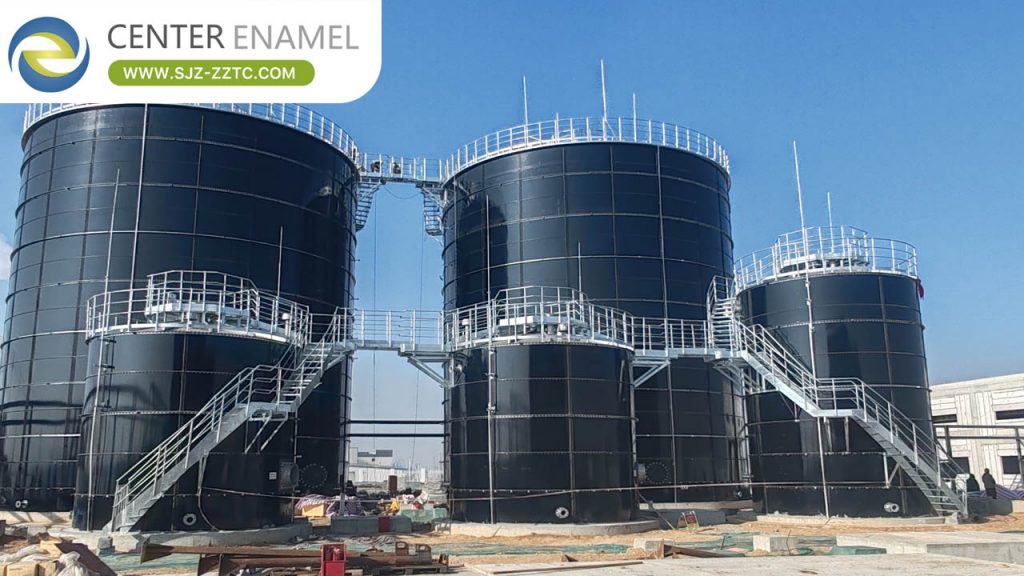
Cast-in-place concrete is slow and weather-exposed. Foundations, cast tanks, and curing add months that bolted tankage avoids. Where the site allows, shifting the tankage to factory-coated bolted panels removes most of this exposure.
| Delay Driver | Typical Impact | Mitigation |
| Permit and approval | 1-4 months | Start early, pre-engage regulator |
| Unfixed influent data | Design rework | Measure flow and load first |
| Concrete civil works | Months of casting | Use bolted GFS tankage |
| Tank-process interface | Weeks of dispute | Single responsible party |
Interface Gaps Between Vendors
When the tank and the process come from two vendors, the boundary between them is where responsibility blurs and the schedule stalls. A tank delivered to the wrong nozzle height, or a process that assumes tank volume the tank does not have, becomes a change order and a delay. One scope that owns the boundary prevents it.
About The Supplier
Shijiazhuang Zhengzhong Technology Co., Ltd (Center Enamel) delivers Glass-Fused-to-Steel tankage and, with a bundled scope, the process as one package, with enamel firing at 820-930 C and certifications including ISO 9001, NSF/ANSI 61, and CE-EN 1090. Single-responsibility delivery is the specific antidote to the interface gap that delays so many sewage projects.
Comparison: Delay Risk By Delivery Model
| Model | Interface Risk | Schedule Exposure |
| Tank plus process separate | High at the boundary | Weeks of dispute |
| Bundled single scope | Low, one owner | Boundary owned upfront |
| Turnkey EPC | Lowest | Single contract |
Sewage projects are delayed by permits, data, concrete, and vendor gaps, in that order. Start the permit early, measure the flow before designing, choose bolted tankage, and bundle the tank and process so the boundary has one owner.
Frequently Asked Questions
Q1: What delays sewage projects? A1: Permits, unclear data, concrete civil works, and tank-process interface gaps.
Q2: Why do permits slip? A2: Environmental review and discharge limits often take longer than the build.
Q3: What is the interface gap? A3: The boundary where separately procured tanks and process meet, and blame lands.
Q4: How to avoid delays? A4: Lock permit and flow data early, use bolted tankage, bundle scope.
Q5: Does bolted tankage help? A5: Yes, it removes months of concrete casting and curing.
Q6: What is single responsibility? A6: One party owns the tank and process boundary and the guarantee.
Q7: Can delays be predicted? A7: Mostly; the four drivers above account for most slips.
Q8: How fast can tankage install? A8: Bolted GFS panels erect in weeks versus months for concrete.
Suggested CTA
Describe your permit status and delivery model to an engineer, or request a delay-risk review and bundled sewage scope.