
What Digesters Recover Biogas at a WWTP?
The digesters that recover biogas at a WWTP are covered anaerobic digesters for sludge and high-rate anaerobic reactors—UASB and EGSB—for strong liquid sidestreams. Both run without oxygen and convert biodegradable organics into biogas (roughly 55–65% methane) instead of burning energy on aeration, turning the plant's organic load into a recoverable fuel.
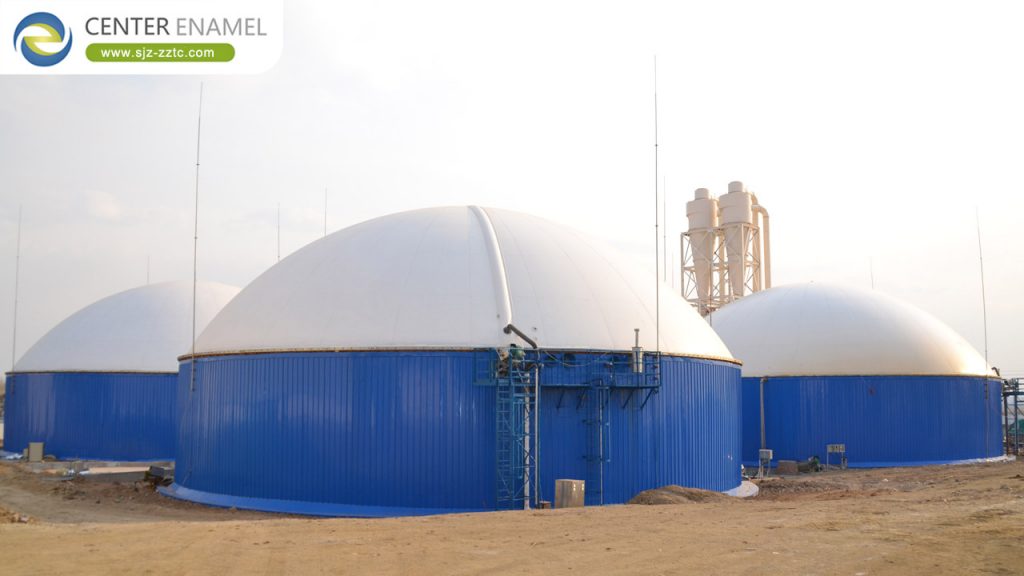
What “Recovering Biogas” Means at a Plant
Sewage treatment produces two organic streams worth recovering: the thickened sludge from primary and secondary settling, and strong liquid sidestreams from dewatering or sludge treatment. Aerobic treatment would spend 0.5–1.5 kWh/kg COD to clean them; anaerobic digestion avoids that cost and returns 0.30–0.45 m³ of biogas per kg of COD removed, about 60% of it methane.
Covered Anaerobic Digester (Sludge)
The classic WWTP biogas source is a fully enclosed, mixed, heated tank treating thickened sludge at mesophilic 35–38°C (or thermophilic ~50–55°C). It is robust, tolerant of solids, and the workhorse for municipal plants aiming at energy neutrality. Gas is collected under the fixed or floating roof and sent to a CHP or boiler.
UASB and EGSB (Liquid Sidestreams)
For high-strength liquid streams, UASB (Upflow Anaerobic Sludge Blanket) and its higher-rate cousin EGSB (Expanded Granular Sludge Bed) pack dense granular sludge and treat at OLR 5–15 kg COD/m³·day with 6–12 h hydraulic retention. They recover biogas from sidestreams in a fraction of the footprint of a conventional digester—ideal where a plant wants energy without a giant tank.
Comparative Data Table: WWTP Biogas Digesters
| Digester type | Typical feed at WWTP | Biogas role | Key point |
| Covered anaerobic digester | thickened sludge | primary methane source | mesophilic 35–38°C |
| UASB / EGSB | strong liquid sidestream | recovers high-COD energy | high-rate, small footprint |
| Covered lagoon | warm-climate sludge | low-cost option | land-intensive |
| Two-stage (acid + methanogenic) | mixed sludge | higher rate | more complex O&M |
Technical Considerations
Selection depends on feed form and site. Sludge (high solids) needs a mixed, heated tank; liquid sidestreams (high COD, low solids) suit UASB/EGSB. Both need steady feeding, temperature control, and gas tightness. Granular-sludge systems demand good influent screening to protect the bed; conventional digesters need reliable mixing and grit removal.
Advantages and Limitations
Anaerobic recovery cuts a plant's energy bill and emissions while producing a sellable fuel. Limits: capital cost, the need for skilled operation, and the reality that very dilute plants have little to recover. The right answer is usually a sludge digester plus, where sidestream COD is high, a UASB/EGSB add-on.
Best Practices / How to Choose
Characterize both sludge and sidestream load first. Put thickened sludge in a covered mesophilic digester; route strong liquid streams (dewatering centrate, sludge liquors) to UASB/EGSB. Capture all gas, size CHP to steady flow, and keep digester heat in the loop. Match reactor to feed, not the other way around.
At a WWTP, biogas is recovered by covered anaerobic digesters treating sludge and by high-rate UASB/EGSB reactors treating strong liquid sidestreams. Together they convert the plant's organics into 55–65% methane biogas instead of an aeration cost—the core of energy-neutral operation.
Frequently Asked Questions (FAQ)
Q1: What digester recovers biogas at a WWTP?
A: Covered anaerobic digesters for sludge, plus UASB/EGSB high-rate reactors for strong liquid sidestreams—both run without oxygen and produce 55–65% methane biogas.
Q2: Which reactor treats sludge?
A: A mixed, heated covered anaerobic digester at mesophilic 35–38°C is the standard; it is robust, solids-tolerant, and the main methane source at municipal plants.
Q3: Which treats liquid streams?
A: UASB and EGSB handle strong liquid sidestreams at OLR 5–15 kg COD/m³·day with 6–12 h retention, in a much smaller footprint than a tank digester.
Q4: Can a plant use both?
A: Yes—and often should. Sludge goes to the covered digester; high-COD liquors go to UASB/EGSB, maximizing recovery from every organic stream.
Q5: What temperature do they run at?
A: Mesophilic 35–38°C is standard for sludge digesters; thermophilic 50–55°C is possible but harder to hold stable.
Q6: How much biogas do they make?
A: About 0.30–0.45 m³ of biogas per kg of COD removed, roughly 60% methane—the same yield basis across digester types.
Project Case Reference
Malaysia Biogas Project — Malaysia · 2026
5 GFS Tanks · 27,000 m³ Total Volume · 22,000 m³ Biogas/Day
A large-scale biogas project in Malaysia featuring 5 Glass-Fused-to-Steel (GFS) tanks. The project achieves approximately 80% digestibility, with each single tank producing about 4,400 m³ of biogas daily, totaling 22,000 m³ per day across all 5 tanks.
Technical Specifications
Single Tank Volume: 5,400 m³ (Ø24.46 × 12 m)
Total Effective Volume: 27,000 m³ (5 tanks)
Daily Biogas Production: 22,000 m³ total
Digestibility: ≈ 80%
Gas Production Rate: 0.45 m³ / kg COD removed
Tank Type: Glass-Fused-to-Steel (GFS)
Water Quality Data
| Parameter | Inlet Water | Effluent |
| COD | ≥ 60,000 mg/L | ≥ 12,000 mg/L |
| BOD | ≤ 25,000 mg/L | ≤ 5,000 mg/L |