
What Does a Biogas Project EPC Include?
A biogas project EPC (Engineering, Procurement, Construction) delivers the entire plant—process design, equipment and tank procurement, civil works, installation, and commissioning—under a single contract with one point of responsibility. For owners this removes the interface risk of split design-and-build contracts and gives a fixed scope, schedule, and performance basis from digester to gas use.
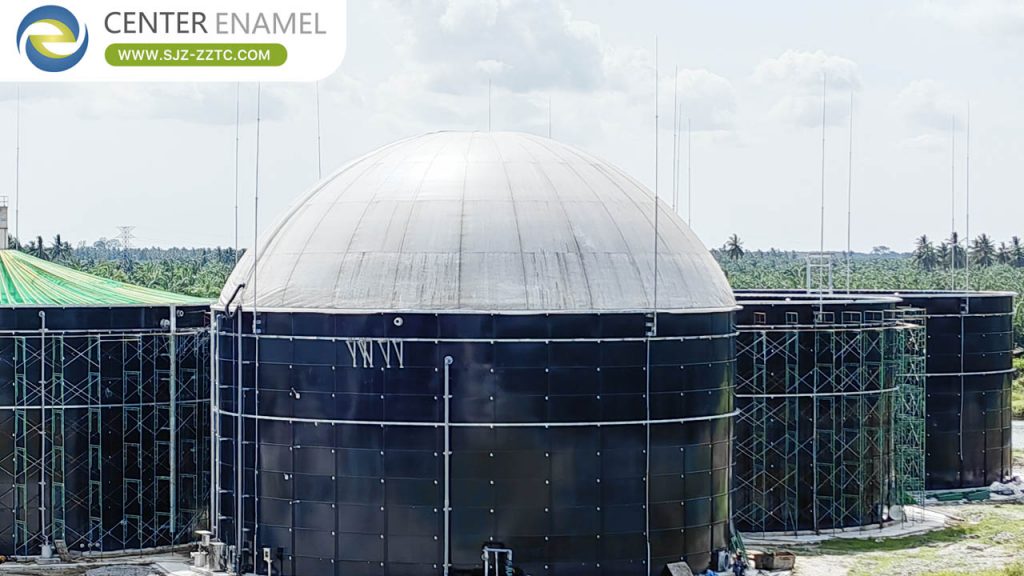
Engineering
The EPC engineer sizes the digester by feed and HRT (mesophilic 35–38°C, residence 15–30 days), designs biogas handling, and sets performance guarantees (e.g. gas yield, COD removal). Good engineering also fixes tank standards and corrosion specs up front.
Procurement
EPC bundles digester and storage tanks, mixers, gas holders, piping, CHP or upgrader, and controls. Procuring bolted GFS tanks (glass fused at 820–930°C, ISO 28765 / AWWA D103) as a coordinated package shortens lead time versus site-welded steel.
Construction and Commissioning
One contractor manages civil, mechanical, electrical, and startup, then commissions against guarantees. Single-point responsibility means one party owns deviations—critical when a digester, gas system, and power unit must work as one.
| Phase | Scope | Owner benefit |
| Engineering | design + guarantees | clear basis |
| Procurement | tanks + equipment | shorter lead time |
| Construction | build + integrate | single interface |
| Commissioning | test to guarantee | performance proof |
EPC vs Split Contracts
Split contracts leave the owner to manage interfaces between designer, tank supplier, and builder—where leaks, schedule slips, and blame disputes arise. EPC costs 10–25% more in fee but buys single-point accountability and plant-level guarantees (often ≥ 95% availability).
Technical Considerations
Set feed specification, performance guarantees (gas yield, COD removal, availability), and standards in the contract. Specify corrosion-resistant GFS tankage, plan winter/commissioning spares, and confirm the EPC’s referenced project experience matches your feed and scale.
How to Select an EPC
Evaluate by referenced projects with the same feed and scale, engineering team, tank/standard credentials, and guarantee terms—not lowest fee alone. A feed + target-output brief lets EPCs return comparable scopes.
Project Case Study
Zhaqi Biogas Project in Inner Mongolia. A 900 m³/day manure-and-agri-waste plant with 4 CSTR reactors (Φ 25.98 × 8.4 m each), producing 20,000 m³/day biogas at mesophilic operation—a documented biogas project with coordinated reactor supply and engineering for cold-climate duty.
| Project | Zhaqi Biogas Project in Inner Mongolia |
| Location | Xing'an, Inner Mongolia, China |
| Industry | Biogas / Agriculture |
| Application | Manure + agricultural waste |
| Product | 4 CSTR anaerobic reactors (GFS) |
| Capacity | 900 m³/D feed, 20,000 m³/day biogas |
| Material | Glass-Fused-to-Steel (GFS) |
| Standards | ISO 28765 |
| Status | Delivered 2017 |
About Center Enamel
Center Enamel demonstrates its relevant project experience across delivered biogas projects: Zhaqi Inner Mongolia (4 CSTR, 20,000 m³/day biogas), Zhenyuan Henan (vehicle-grade CH₄), Malaysia (22,000 m³/day), and Pakistan (food-waste CSTR). The company supplies the bolted GFS digester and storage tankage at the core of EPC biogas plants, engineered to ISO 28765 / AWWA D103, ISO 9001, CE/EN 1090, and supports EPC coordination from procurement through installation.
Advantages and Limitations
EPC gives single-point responsibility, fixed scope, and plant-level guarantees—worth the 10–25% fee premium for complex biogas plants. Limits: guarantees must be written carefully, and the owner must still specify feed and acceptance tests. Verified EPC experience at the same feed and scale is the real proof of delivery capability.
Comparison: EPC vs Split Contracts
| Model | Responsibility | Fee | Best when |
| EPC (single) | one contractor | +10–25% | complex / guaranteed |
| Split (design+build) | owner coordinates | lower fee | simple / experienced |
A biogas project EPC bundles engineering, procurement, and construction under one contract—single-point responsibility and plant-level guarantees (≥ 95% availability) that are worth the 10–25% premium for complex plants. Choose an EPC by relevant delivered experience at your feed and scale, and write the feed specification and guarantees into the contract.
Frequently Asked Questions (FAQ)
Q1: What does a biogas project EPC include?
A: Engineering, procurement, construction, and commissioning under one contract—single-point responsibility from digester to gas use.
Q2: Why choose EPC over split contracts?
A: EPC removes interface risk and gives plant-level guarantees; split contracts leave the owner to manage designer, tank supplier, and builder.
Q3: What is single-point responsibility?
A: One contractor owns deviations and performance—critical when digester, gas system, and power unit must work as one.
Q4: How much more does EPC cost?
A: Typically 10–25% more in fee, offset by accountability and guarantees (≥ 95% availability).
Q5: What project experience exists?
A: Delivered biogas plants include Zhaqi Inner Mongolia (4 CSTR, 20,000 m³/day), Zhenyuan Henan (vehicle CH₄), Malaysia, and Pakistan.
Q6: What standards apply to tanks?
A: GFS tanks to ISO 28765 / AWWA D103, ISO 9001, CE/EN 1090.
Suggested CTA
Share your feed type, target output, and guarantee expectations. We will supply GFS digester and storage tanks as part of your EPC scope and confirm standards, capacity, and delivery.