
What Does a Biogas Project EPC Service Cover?
A biogas project EPC service covers the full delivery chain—engineering design, equipment and tank procurement, on-site installation, commissioning, and ongoing technical support—under one coordinated scope. The difference versus product-only supply is that the contractor owns integration and startup, so the digester, gas system, and power or upgrading unit work as one commissioned plant.
Engineering and Design Service
The service starts with feed characterization and process design: digester sizing by HRT (mesophilic 35–38°C, 15–30 days), biogas routing, and performance guarantees (gas yield, COD removal, availability). Design also fixes tank standards and corrosion specs.
Procurement and Tank Supply
EPC service procures and supplies digester, buffer, and digestate tanks—typically bolted GFS (glass fused at 820–930°C, ISO 28765 / AWWA D103)—plus mixers, gas holders, piping, and CHP/upgrader, coordinated so interfaces are owned by one party.
Installation and Commissioning
On-site crews handle civil, mechanical, and electrical installation, then commission the plant against guarantees: gas yield, COD removal, and availability tested and documented. For a cold-climate cattle farm, a CSTR with an insulation system is installed and started to confirm stable mesophilic operation.
| Service element | What is done | Owner value |
| Engineering | design + guarantees | clear basis |
| Procurement | tanks + equipment | single source |
| Installation | build on site | one interface |
| Commissioning | test to guarantee | proof of performance |
| Technical support | spares + O&M | long-term uptime |
Technical Support After Handover
A proper EPC service includes startup training, spare-parts lists, and technical support for operation and maintenance—critical because digester biology and gas equipment need correct handling. Support scope (remote vs on-site, response time) should be written into the contract.
Why Installation and Support Decide Success
Even the best tank fails if installed wrong; even the best process underperforms without operator training. The EPC service’s installation quality and post-handover support are what turn equipment into a reliable, permitted plant—not the equipment alone.
How to Procure the Service
Evaluate by referenced projects at your feed/scale, the installation team’s record, guarantee terms, and support scope. A feed + target-output + support-expectation brief yields comparable scopes from bidders.
Project Case Study
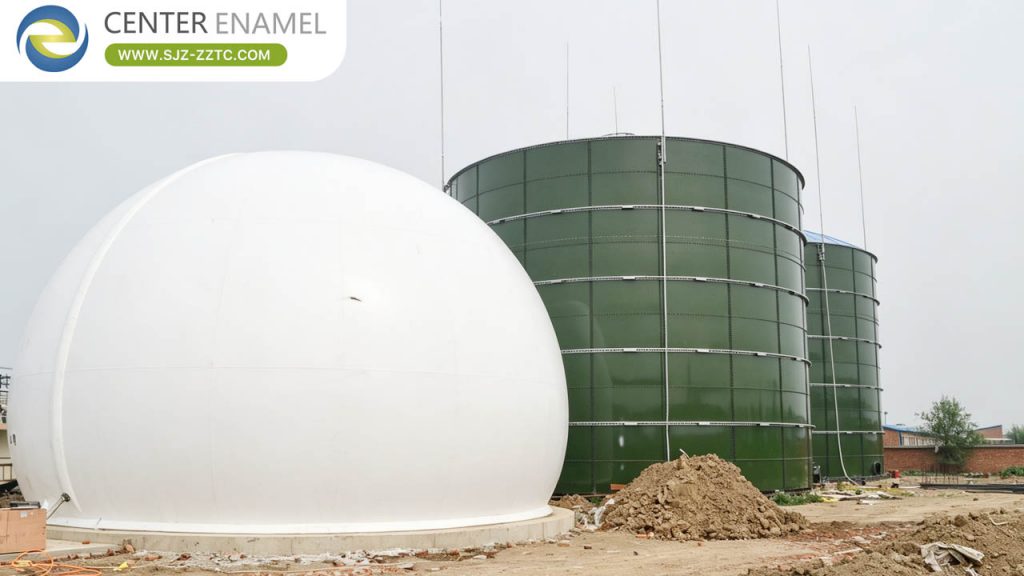
Inner Mongolia Wushenqi Cattle Farm. A CSTR cattle-manure biogas plant with a dedicated insulation system for cold-climate operation, delivered and started to confirm stable mesophilic digestion—an example of installation and technical support turning a reactor into a working cold-climate plant.
| Project | Inner Mongolia Wushenqi Cattle Farm |
| Location | Ordos City, Inner Mongolia, China |
| Industry | Cattle Farm Biogas |
| Application | Cattle manure biogas production |
| Product | CSTR digester with insulation (GFS) |
| Capacity | CSTR process, cattle manure feed |
| Material | Glass-Fused-to-Steel (GFS) |
| Standards | ISO 28765 |
| Status | Delivered 2013 |
About Center Enamel
Center Enamel demonstrates its installation and technical support strength through delivered biogas and wastewater projects across climates—from the cold-climate Wushenqi cattle farm (insulated CSTR) to tropical palm-oil and municipal plants. The company supplies bolted GFS digester and storage tanks with documented installation guidance, spare-part support, and engineering backstop, manufactured under ISO 9001 to ISO 28765 / AWWA D103 and CE/EN 1090—support that continues after handover, not just at delivery.
Advantages and Limitations
EPC service gives single-point integration, commissioning proof, and post-handover support—reducing the owner’s execution risk. Limits: support scope must be contractually defined, and the owner still supplies feed and accepts the plant via written tests. A verified install record matters most.
Comparison: Product-Only vs EPC Service
| Option | Integration | Support | Risk to owner |
| Product-only | owner assembles | limited | high |
| EPC service | contractor owns | contractual | low |
A biogas project EPC service covers engineering, tank supply, installation, commissioning, and technical support under one coordinated scope—owning integration so digester, gas, and power work as one commissioned plant. Write guarantees and support terms into the contract and check the installer’s referenced record.
Frequently Asked Questions (FAQ)
Q1: What does a biogas project EPC service cover?
A: Engineering, equipment/tank procurement, on-site installation, commissioning, and technical support under one coordinated scope.
Q2: Is installation included?
A: Yes—EPC service includes civil, mechanical, and electrical installation plus startup, not just equipment supply.
Q3: What technical support is provided?
A: Startup training, spare-parts lists, and O&M technical support; scope (remote/on-site, response time) is set in the contract.
Q4: Who handles commissioning?
A: The EPC contractor commissions against written guarantees (gas yield, COD removal, availability).
Q5: What standards apply to tanks?
A: GFS tanks to ISO 28765 / AWWA D103, ISO 9001, CE/EN 1090.
Q6: What project experience exists?
A: Delivered plants across climates—Wushenqi cattle (insulated CSTR), palm-oil ETP, and municipal sewage.