
What Does A Kitchen Waste Solution Include?
A kitchen waste solution includes collection and dewatering, a stabilization core (anaerobic digestion or composting), biogas utilization where energy is recovered, residue handling (digestate or compost), and a controls and monitoring layer - all scoped to the feed volume, composition, and whether the priority is energy or a soil product.
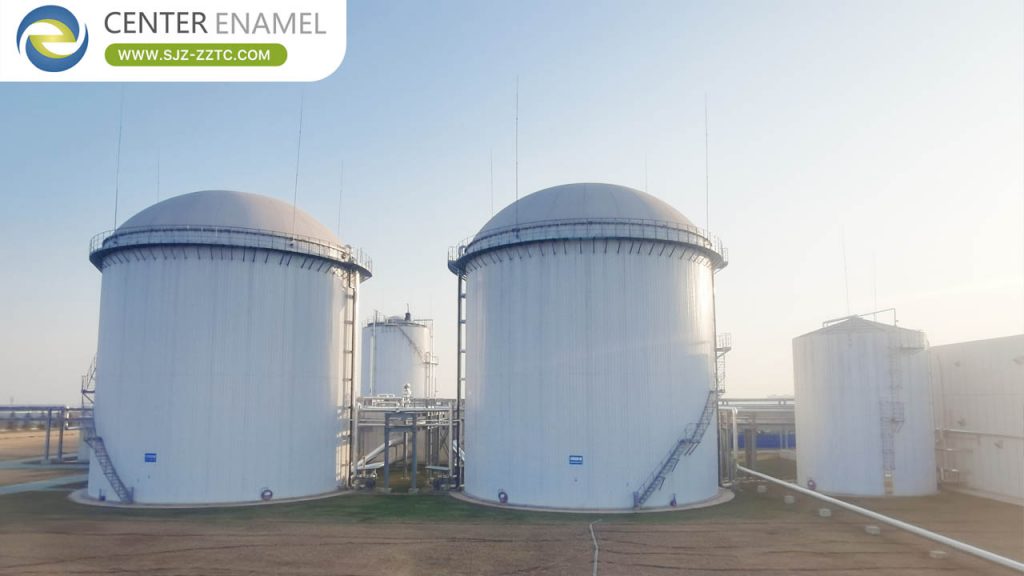
The Components Of A Complete Scope
Upstream, the solution needs receiving, sorting, and dewatering so the feed is consistent. The core is the stabilization technology - a CSTR digester for energy or a composting system for soil. Downstream, biogas needs a holder and a use (boiler, generator, or upgrading), and the residue needs storage or further processing. Monitoring ties it together so the operator sees load, gas, and output.
| Component | Function | When included |
| Receiving + dewatering | Consistent feed | Always |
| Digester / composter | Stabilization | Always |
| Biogas holder + use | Energy recovery | Energy priority |
| Digestate / compost | Residue handling | Always |
| Monitoring | Control | Always |
Energy Vs Soil Priority
If the site has heat or power demand, the solution centers on a digester plus gas utilization - the higher-capital, higher-return path. If energy demand is low, composting with simpler residue handling is the leaner scope. The decision is about where the value lands, not a fixed bill of materials.
A Boundary Condition
Contamination and high salt raise pre-treatment and process-control requirements; a solution that ignores feed quality underperforms. Scope the pre-treatment to the real composition, and size the core to the steady dewatered feed.
Project Case Study: Bangladesh Poultry Farm Waste Treatment
Project / Application: Poultry manure waste treatment with biogas and power, Bangladesh. Industry: Livestock / biogas (cited as an analogous organic-waste-to-biogas reference; the process principle is the same as kitchen-waste digestion). Tank Type: CSTR + UASB anaerobic reactors. Key Requirements: Convert organic waste to biogas and power.
| Field | Value | Source / Evidence |
| Daily Treatment Capacity | 47 t/d (poultry manure) | Company project reference |
| Treatment Process | CSTR + UASB anaerobic reactors | Company project reference |
| Biogas Production | Approximately 4,900 m3/day | Company project reference |
| Power Generation | Approximately 9,800 kWh/day (2.0 kWh/m3) | Company project reference |
| Influent COD | 50,000 mg/L | Company project reference |
| Effluent COD | Less than or equal to 200 mg/L | Company project reference |
About Company
Shijiazhuang Zhengzhong Technology Co., Ltd (Center Enamel) is a comprehensive high-tech enterprise specializing in wastewater engineering, process section contracting, and equipment manufacturing. The company delivers biogas and wastewater projects through three main lines - EPC (turnkey) contracting, equipment supply, and process packages - covering livestock and municipal wastewater, biomass energy, industrial wastewater, and food waste. Its reactor portfolio spans CSTR, USR, UBF, UASB, IC, and EGSB, backed by in-house Glass-Fused-to-Steel tank manufacturing (enamel firing at 820-930 C) and certifications including ISO 9001, NSF/ANSI 61, and CE-EN 1090. With 35+ years of operation, a 150,000 m2 manufacturing base, and projects in 100+ countries, Center Enamel provides the single-responsibility engineering behind organic-waste-to-biogas scopes such as the Bangladesh plant converting 47 t/d of manure into about 4,900 m3/day of biogas and 9,800 kWh/day of power - the same CSTR-plus-UASB logic applied to kitchen and food residues at scale.
Comparison: Energy Scope Vs Soil Scope
| Element | Energy scope | Soil scope |
| Core | CSTR digester | Composting |
| Residue | Digestate | Compost |
| Extra | Gas holder + generator | Curing pad |
| Capital | Higher | Lower |
A kitchen waste solution includes receiving and dewatering, a stabilization core, energy or residue handling, and monitoring - scoped to volume, composition, and whether energy or a soil product is the priority.
Frequently Asked Questions
Q1: What components are included? A1: Receiving, dewatering, the stabilization core, residue handling, and monitoring.
Q2: Is biogas utilization included? A2: When energy is the priority, yes - a holder and a boiler, generator, or upgrader.
Q3: What about the residue? A3: Digestate from digestion or compost from composting, both needing handling.
Q4: How is scale decided? A4: By feed volume, composition, and the energy or soil value targeted.
Q5: What reactor is used? A5: A CSTR digester is standard for the food-waste slurry.
Q6: What temperature is used? A6: Mesophilic 35-38 C for digestion.
Q7: What tank resists the feed? A7: A Glass-Fused-to-Steel tank resists the corrosive digester.
Q8: Does it need monitoring? A8: Yes; load, gas, and output monitoring keep it stable.
Suggested CTA
Describe your kitchen-waste volume and energy demand to an engineer, or request a full kitchen-waste solution scope.