
What Does a Sewage Project Involve?
A sewage project involves the full delivery chain from feasibility to operation: defining the catchment and limit, designing the process and tank farm, executing civil and mechanical/electrical works, installing and commissioning the treatment train, then running O&M — all under a discharge permit and an EPC or split contract. It is a construction and engineering program, not just a set of tanks.
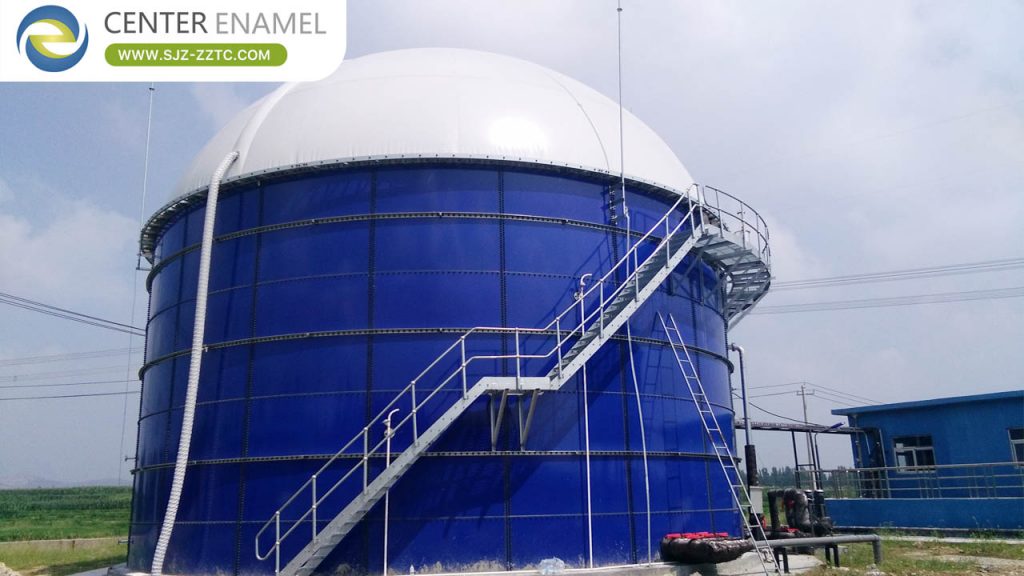
Phase 1 — Feasibility and Permit
Confirm catchment population/flow, existing infrastructure, and the discharge permit (limits for BOD, COD, N, P, SS). A feasibility study sets capacity, footprint, and budget, and secures environmental approval before design.
Phase 2 — Process and Tank Design
Engineers select the train (preliminary → primary → secondary → tertiary → sludge) and size each tank to HRT and load. Storage and equalization tanks buffer diurnal flow; reactors and clarifiers dominate volume. GFS bolted tanks shorten civil time versus cast-in-place concrete.
Phase 3 — Civil, Mechanical, and Electrical
Civil works build foundations and bunded areas; mechanical installs reactors, mixers, blowers, and dewatering; electrical and instrumentation add control, SCADA, and metering. Coordination of these trades is the main schedule risk.
| Phase | Key deliverables | Main risk |
| Feasibility | Flow, limit, permit, budget | Wrong basis |
| Design | Process, tank sizes, P&ID | Scope creep |
| Civil/M&E | Foundations, equipment | Interface delays |
| Install | Erection, piping | Rework |
| Commission | Seed, tune, test | Under-performance |
| O&M | Monitoring, spares | Neglect |
Phase 4 — Installation and Commissioning
Bolted tanks are erected on prepared foundations; equipment is set and piped; the plant is seeded with biomass and ramped to design load while tuning blowers, dosing, and returns. Commissioning proves the guarantee before handover.
Phase 5 — Operation and Maintenance
O&M keeps removal at design: sludge wasting, asset inspection, and spare parts. A clear O&M plan and operator training protect the asset for its service life.
Contract Models: EPC vs Split
An EPC (turnkey) contract puts single-point responsibility and a plant-level guarantee (often ≥95% availability) on one party; a split (design + separate suppliers) lowers upfront cost but shifts integration risk to the owner. Choose by risk appetite and in-house capability.
Project Case Study
Domestic Sewage Treatment Project in Ghana. A 1,800 m³/day municipal sewage plant delivered in 2021, integrating UBF + A²/O across 4 GFS reactor sets (Ø11.46 × 9.6 m UBF; Ø14.52 × 4.8 m sedimentation; 2 Ø20.64 × 6.6 m A²/O). It illustrates a complete sewage-project delivery — design, tank supply, and integration to a discharge limit.
| Project | Domestic Sewage Treatment Project in Ghana |
| Location | Ghana |
| Industry | Municipal / Domestic Sewage |
| Application | Sewage treatment (UBF + A²/O) |
| Product | 4 GFS reactor sets |
| Capacity | 1,800 m³/day |
| Status | Delivered 2021 |
About Center Enamel
Center Enamel contributes engineering capability to sewage projects through bolted GFS tank systems engineered to the process design: tanks are built to verified volumes, coatings, and roofs, shipped flat-pack, and erected on-site with technical support. The company integrates tank supply into the owner’s or EPC’s overall delivery rather than as an isolated product.
Advantages and Limitations
A managed sewage project delivers reliable discharge compliance and reuse potential. Limits: schedule risk concentrates at civil/M&E interfaces, and a weak feasibility basis undermines everything. Early tank standardization shortens programs; GFS bolted tanks reduce civil dependence.
Conclusion
A sewage project is a phased engineering program — feasibility, design, civil/M&E, install, commission, O&M — delivered under a permit and an EPC or split contract. Define the basis first, standardize tankage, and manage interfaces. Tell us your capacity and limit and we will scope the tank farm for your project.
Frequently Asked Questions (FAQ)
Q1: What does a sewage project involve?
A: Feasibility, process and tank design, civil/M&E works, installation, commissioning, and O&M under a discharge permit.
Q2: EPC or split contract?
A: EPC gives single-point responsibility and a plant guarantee; split lowers upfront cost but shifts integration risk to the owner.
Q3: How are tanks delivered?
A: Bolted GFS tanks ship flat-pack and erect on prepared foundations, cutting civil time versus concrete.
Q4: What capacity is available?
A: GFS sewage tanks range 200 m³ to 60,000 m³.
Q5: What permits are needed?
A: An environmental discharge permit setting BOD/COD/N/P/SS limits, plus local construction approvals.
Q6: What project experience exists?
A: Delivered a 1,800 m³/day municipal sewage plant in Ghana (UBF + A²/O).
Share your catchment flow, discharge permit, and contract model. We will scope the tank farm and integrate GFS tankage into your sewage project delivery.