
What Does an EPC Contractor Do in Biogas and Wastewater Projects?
An EPC contractor carries single-point responsibility for delivering a functioning plant-from engineering through procurement and construction to commissioning and handover . But in biogas and wastewater, the role goes far beyond generic construction management. The processes are biologically driven, the equipment is process-critical, and the performance guarantees are tied to effluent quality or gas yield. This article explains what an EPC contractor actually does in these two sectors, where the responsibilities diverge, and how to evaluate a contractor before signing.
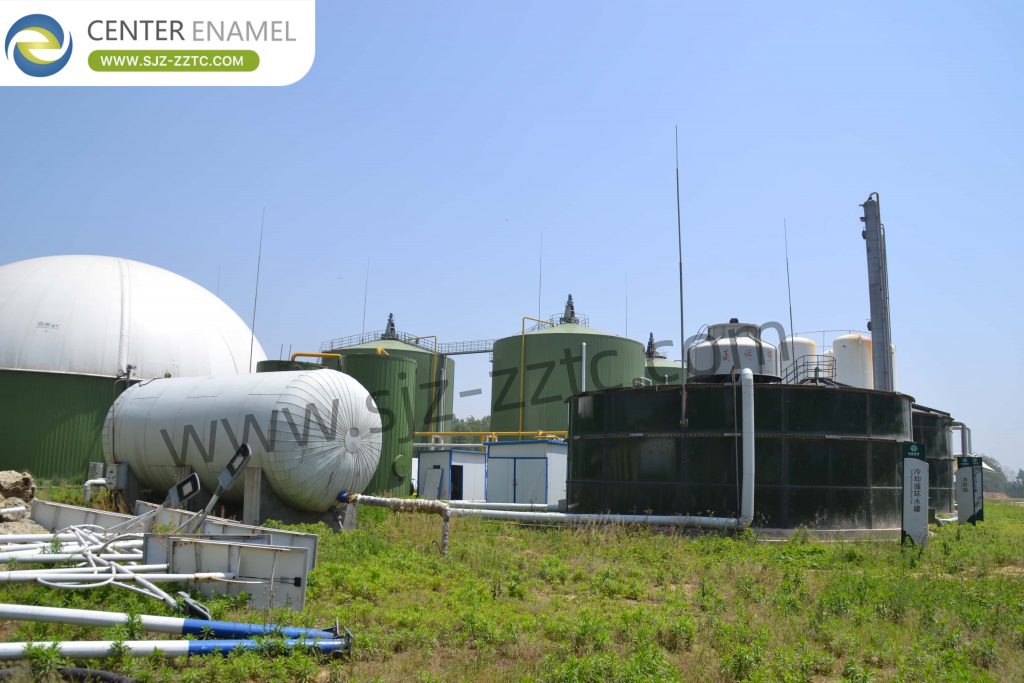
The Core EPC Contractor Role: Single-Point Accountability
Under an EPC contract, the contractor is obligated to deliver a complete facility at a guaranteed price, by a fixed date, performing to specified levels. Failure to comply triggers contractual consequences, typically delay and performance liquidated damages . This is the defining feature of EPC: risk transfer. The owner does not coordinate between a designer, an equipment vendor, and a construction firm. The EPC contractor does that coordination internally and absorbs the interface risk.
In biogas and wastewater, this accountability extends to process performance. The contractor does not merely install equipment; it warrants that the anaerobic digester will produce the specified methane yield, or that the treatment train will meet consent limits for COD, ammonia, and phosphorus. That guarantee is backed by engineering margins, not best efforts .
What an EPC Contractor Does in Biogas Projects
A biogas EPC contractor manages a chain that begins with feedstock characterization and ends with gas injected into a pipeline or converted to electricity. The engineering phase involves mass and energy balance modeling, anaerobic digestion design, gas upgrading specification, and carbon intensity scoring-work that determines whether the project’s business case holds . Feedstock flexibility matters: a contractor must engineer feeding, mixing, and digester systems around the specific waste streams, including difficult or variable inputs .
Procurement in biogas is dominated by long-lead items: gas conditioning skids, upgrading membranes, flares, and CHP units. Equipment lead times of 26 weeks or more are common, and early vendor selection directly affects schedule feasibility . Construction involves anaerobic tanks, gas-tight piping, and explosion-protection measures. Commissioning is biological as well as mechanical: the digester must be seeded, biomass acclimated, and gas quality stabilized before performance testing. A biogas EPC contractor that treats commissioning as a simple “switch-on” underestimates the biological risk.
What an EPC Contractor Does in Wastewater Treatment Projects
Wastewater EPC follows a parallel structure but with different process risks. Engineering begins with influent characterization-flow and load variability, industrial contributions, and seasonal swings. The contractor selects the treatment train (activated sludge, MBR, MBBR, or advanced oxidation), develops P&IDs, and sizes clarifiers, blowers, and membrane modules. Under-specified influent data is a chronic failure point: if the owner provides only averages and the actual waste contains shock loads or salinity spikes, the plant may be technically compliant on paper but operationally fragile .
Procurement covers pumps, diffusers, clarifier mechanisms, membrane cassettes, and SCADA systems. Construction may involve substantial civil works-concrete tanks, clarifiers, and buildings-which makes schedule compression harder than in modular biogas skids. Commissioning in wastewater is dominated by biological start-up: activated sludge systems require biomass growth and acclimation, and membrane systems require integrity testing and flux stabilization before performance validation. A rigorous EPC contractor validates sustained performance over 4–8 weeks, not a single grab sample .
Biogas vs. Wastewater EPC: Key Differences at a Glance
The two sectors share the EPC contractual structure but differ in process risk, equipment profile, and commissioning emphasis. The table below summarizes the practical distinctions.
| Dimension | Biogas EPC | Wastewater EPC |
| Primary process risk | Feedstock variability; biological methane yield | Influent load shocks; effluent compliance stability |
| Critical long-lead equipment | Gas upgrading skids, CHP units, flares | Blowers, membrane modules, clarifier mechanisms |
| Construction profile | Tank-heavy, gas-tight, ATEX-rated electrical | Civil-intensive (concrete tanks, clarifiers), large footprint |
| Commissioning focus | Digester seeding, gas quality stabilization | Biomass acclimation, membrane integrity, sustained effluent testing |
| Performance guarantee | Methane yield, gas quality, availability | Effluent parameters (COD, BOD, TSS, NH₃-N, TP) |
A biogas contractor’s process expertise centers on anaerobic microbiology and gas handling. A wastewater contractor’s expertise centers on hydraulic profiling, nutrient removal, and separation processes. Some contractors operate in both-wastewater treatment and biosolids handling are natural adjacencies to anaerobic digestion-but the owner should verify sector-specific references, not assume transferability .
Engineering and Procurement Responsibilities in Detail
Engineering in both sectors is where risk is designed in or out. For biogas, this means modeling digestion kinetics, sizing gas holders, and specifying upgrading technology compatible with the intended offtake (pipeline injection, CNG, or CHP). For wastewater, it means mass balances, hydraulic profiles, and equipment sizing that account for diurnal and seasonal variability.
Procurement is the EPC contractor’s supply-chain function. The contractor selects vendors, negotiates terms, manages logistics, and inspects delivered equipment against specifications . In biogas, procurement strategy often determines project bankability: lenders scrutinize whether critical equipment comes from proven vendors with performance guarantees. In wastewater, procurement quality affects lifecycle cost more than initial capex-a low-bid blower package can consume more energy over ten years than the price difference at purchase.
Construction, Commissioning, and Handover
Construction management under EPC includes schedule control, subcontractor oversight, quality assurance, and safety compliance . In biogas projects, gas-tightness and explosion protection are non-negotiable construction requirements. In wastewater, civil works quality-tank tolerances, watertightness, and pipe alignment-determines whether commissioning proceeds smoothly.
Commissioning is where the EPC contractor’s process knowledge is tested. A biogas plant must demonstrate stable gas production at guaranteed yield and quality. A wastewater plant must demonstrate sustained effluent compliance under specified influent conditions. In both cases, the contractor should provide operator training, O&M manuals, and a structured handover package that includes as-built drawings and performance test records .
How to Evaluate an EPC Contractor for Biogas or Wastewater
Price-only selection is a poor strategy in process-driven projects. The lowest bid may reflect under-designed margins, undersized equipment, or an unrealistic schedule. Evaluate contractors on four criteria.
Sector-specific process depth. Ask for references on feedstocks or waste streams similar to yours. A contractor with municipal wastewater experience may not understand high-salinity industrial effluent; a biogas contractor with agricultural experience may not handle food-waste variability.
Performance guarantee track record. Request documented evidence of plants that have sustained compliance or gas yield over 12–24 months, not just a seven-day acceptance test.
Commissioning philosophy. A contractor that treats commissioning as a checkbox is a liability. Ask how biological start-up is handled, how long performance validation lasts, and what happens if the plant misses guarantee during the test period.
Aftercare and operator support. The handover moment is where many EPC contractors disappear. A strong contractor offers structured training, spare parts strategy, and a defined aftercare period with performance reviews .
FAQ
What is the difference between an EPC contractor and a general contractor?
A general contractor typically builds to a design provided by others. An EPC contractor owns the design, procures the process equipment, constructs the facility, and guarantees performance. In biogas and wastewater, that performance guarantee is the critical distinction.
Does an EPC contractor operate the plant after handover?
Standard EPC ends at commissioning and performance acceptance. If you need the contractor to run the plant, specify an EPCO model (adding Operations) or a separate O&M contract. Some contractors offer aftercare packages including remote monitoring and optimization visits.
How long does a biogas or wastewater EPC project take?
Industrial wastewater projects typically run 28–52 weeks from contract to commissioning, depending on process complexity and civil works . Biogas projects vary widely with feedstock and upgrading scope; modular skid-mounted systems can compress schedules, while large anaerobic tank farms with extensive civil works take longer.
Planning a biogas or wastewater project and unsure whether EPC is the right delivery model? Contact our process engineers to discuss your feedstock or influent data and define a scope that matches your compliance and operational requirements.
Send us your project parameters today, and we will respond with a preliminary technology direction and delivery recommendation within five working days.