
What Does MBR Stand For in Water Treatment? The Ultimate Guide to Membrane Bioreactors
In the rapidly evolving field of environmental engineering and wastewater treatment, municipalities and industries constantly seek advanced technologies that deliver superior water quality while minimizing spatial footprints. When exploring cutting-edge biological treatment systems, one acronym frequently takes center stage: MBR.
So, what does MBR stand for in water treatment? MBR stands for Membrane Bioreactor. It represents a powerful convergence of traditional biological wastewater treatment and modern membrane filtration technology, setting a new benchmark for effluent purity, reliability, and compactness.
What Does MBR Stand For? Defining Membrane Bioreactor Technology
At its foundational level, a Membrane Bioreactor (MBR) is an advanced wastewater treatment process that combines a suspended growth biological process-typically an activated sludge system-with a liquid-solids separation process using membrane filtration.
Unlike conventional activated sludge (CAS) systems that rely on gravity sedimentation in secondary clarifiers to separate treated water from biomass, an MBR system utilizes specialized microfiltration or ultrafiltration membranes. Because the membrane acts as an absolute physical barrier, it completely eliminates the need for settling tanks, fundamentally changing how wastewater treatment plants are designed, operated, and optimized.
How MBR Systems Work: The Integration of Biology and Filtration
The operation of an MBR system is a seamless two-stage process that merges biological degradation with physical separation:
Biological Degradation: Wastewater enters an aeration basin where microorganisms consume dissolved and suspended organic pollutants. Because the microbes are kept at significantly higher concentrations than in conventional systems, biological breakdown occurs at an accelerated rate.
Membrane Filtration: Instead of flowing to a clarifier, the mixed liquor is drawn through submerged or external membrane modules using vacuum suction or positive pressure. The membrane pores (typically ranging from 0.04 to 0.4 microns) block bacteria, viruses, suspended solids, and large macromolecules, allowing only clean, crystal-clear permeate to pass through.
This closed-loop integration ensures that effluent quality remains consistently pristine, regardless of fluctuations in incoming organic loads or hydraulic surges.
Key Advantages of MBR Over Conventional Wastewater Treatment
Membrane Bioreactor technology has gained widespread adoption globally because it offers monumental performance advantages over conventional secondary clarification methods:
Exceptional Effluent Quality: MBR systems produce near-sterile water. The physical barrier removes virtually all suspended solids, turbidity, and a high percentage of pathogens, making the water immediately suitable for non-potable reuse or advanced polishing.
Significantly Reduced Footprint: By eliminating secondary clarifiers and operating at much higher biomass concentrations, MBR plants require a fraction of the land area compared to conventional facilities-an essential benefit for space-constrained urban sites.
High Biomass Concentration (MLSS): Operating with a high Mixed Liquor Suspended Solids (MLSS) concentration allows the system to process higher organic loading rates within smaller reactor volumes.
Reduced Sludge Production: MBR systems typically operate at higher sludge retention times (SRTs), which naturally reduces the net volume of excess biological sludge generated, thereby lowering sludge handling and disposal costs.
Core Configurations: Submerged vs. External MBR Systems
When engineering an MBR plant, system designers generally choose between two primary mechanical configurations based on project scale, energy constraints, and operational preferences:
1. Submerged (Immersed) MBR Systems
In submerged configurations, the membrane modules are placed directly inside the aeration tank or a dedicated membrane tank.
Mechanism: Filtration is driven by suction pumps pulling permeate through the membranes, while coarse bubble diffusers mounted beneath the modules continuously scour the membrane surface with air to prevent fouling.
Applications: Highly favored for municipal wastewater treatment and large-scale industrial plants due to lower specific energy consumption and compact tank integration.
2. External (Side-Stream) MBR Systems
In external configurations, the membranes are housed in separate pressure vessels located outside the biological reactor.
Mechanism: A high-pressure recirculation pump continuously pumps mixed liquor from the bioreactor through the membrane modules.
Applications: Frequently deployed in high-strength industrial wastewater applications or smaller-scale specialized treatment streams where high cross-flow velocities are required to manage difficult foulants.
Critical Applications of MBR Technology Across Industries
The versatility and high-purity output of Membrane Bioreactor systems make them indispensable across a wide spectrum of municipal and industrial sectors:
Municipal Wastewater Upgrades: Cities expanding their treatment capacity within existing footprints rely on MBR to meet stringent discharge standards or prepare water for urban reuse (landscape irrigation and toilet flushing).
High-Strength Industrial Wastewater: Food and beverage processing, pharmaceuticals, chemical manufacturing, and landfill leachate treatment benefit immensely from MBR's ability to withstand toxic shocks and variable chemical oxygen demand (COD) levels.
Water Reuse and Reclamation: In water-scarce regions, MBR serves as the core pre-treatment or primary treatment barrier before reverse osmosis (RO), enabling safe potable and agricultural water recycling.
Remote Camps and Commercial Complexes: Resort islands, remote mining camps, and commercial developments utilize packaged MBR units for their compact size and autonomous reliability.
The Role of High-Performance GFS Storage Tanks in Modern Wastewater Infrastructure
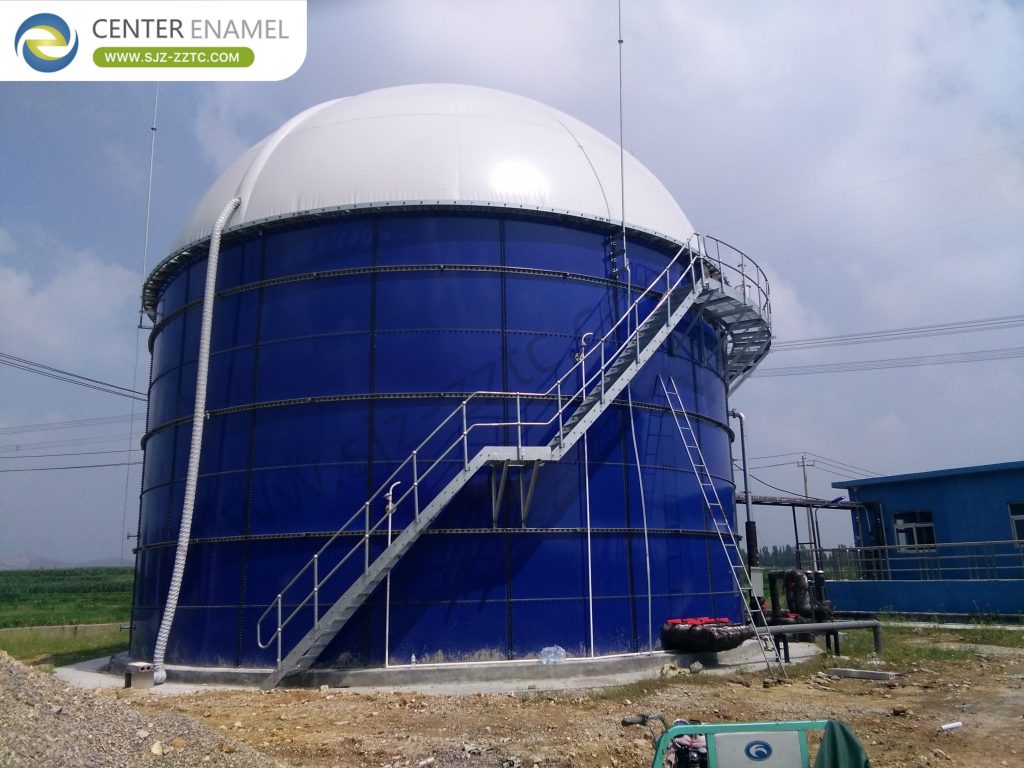
While membrane tanks and bioreactors form the heart of an MBR facility, the broader plant infrastructure-including equalization tanks, aeration basins, and treated water storage reservoirs-requires robust, chemical-resistant containment. This is where Glass-Fused-to-Steel (GFS) storage tanks play a vital role.
GFS tanks are constructed by fusing specialized glass enamel to high-strength structural steel plates at temperatures between 820°C and 930°C. This thermal fusion creates a permanent, inert bond that combines the structural resilience of steel with the chemical inertness of glass.
Key Advantages of GFS Tanks in Wastewater Projects:
Superior Corrosion Resistance: Municipal and industrial wastewaters often contain corrosive chemicals, aggressive cleaning agents, and varying pH levels. GFS surfaces withstand acid and alkaline environments (pH range 3–11) without degrading.
Rapid Modular Installation: Bolted GFS tanks are assembled quickly on-site using modular panels, dramatically reducing project construction timelines compared to traditional cast-in-place concrete tanks.
Extended Service Life: The ultra-smooth glass coating prevents biological scaling, sediment accumulation, and rust, ensuring a maintenance-free operating lifespan exceeding 30 years.
Aesthetic Appeal and Weather Durability: GFS tanks resist fading, chalking, and UV radiation, maintaining a professional, clean appearance for municipal utility sites.
Center Enamel: Your Trusted Partner for Turnkey Wastewater Solutions with Decades of Experience
Executing a successful water treatment or MBR infrastructure project requires deep engineering capability and world-class equipment manufacturing. Center Enamel stands out as a premier global manufacturer and comprehensive service provider in the environmental engineering sector.
Backed by decades of industry experience, Center Enamel specializes in the research, development, and production of high-end bolted steel tanks, including GFS tanks, fusion bonded epoxy tanks, and stainless steel tanks. Beyond supplying superior containment vessels, Center Enamel delivers integrated EPC (Engineering, Procurement, and Construction) solutions for municipal wastewater treatment, industrial effluent management, and water reclamation projects.
Why Global Clients Choose Center Enamel:
Advanced Manufacturing Facilities: Operating state-of-the-art production lines equipped with advanced robotic welding and precise enameling technology to guarantee uncompromised quality control.
Global Engineering Standards: A seasoned team of technical experts capable of designing containment systems and treatment structures compliant with strict international standards (such as ISO, AWWA, and OSHA).
Extensive Project Portfolio: Thousands of successful municipal and industrial environmental engineering projects operating reliably across dozens of countries worldwide.
End-to-End Service Support: Providing comprehensive assistance from preliminary design, custom engineering, and on-site installation to ongoing technical support and maintenance guidance.
Frequently Asked Questions (FAQs) About MBR Systems
Q1: What is the main difference between conventional activated sludge and an MBR system?
The primary difference lies in how solid-liquid separation is achieved. Conventional activated sludge systems rely on gravity settling in secondary clarifiers, which require large land areas and can be vulnerable to sludge bulking. An MBR system replaces clarifiers with physical microfiltration or ultrafiltration membranes, producing superior effluent quality while occupying a much smaller footprint.
Q2: What are the main operational challenges in running an MBR plant?
The most significant operational challenge in MBR systems is membrane fouling, caused by the accumulation of suspended solids, organic matter, and microbial byproducts on or inside the membrane pores. Managing fouling requires appropriate aeration scouring, regular chemical cleaning protocols (such as maintenance cleanings and chemical enhanced backwashes), and careful control of mixed liquor suspended solids (MLSS).
Q3: How long do GFS storage tanks last in a wastewater treatment facility?
Glass-Fused-to-Steel (GFS) tanks are engineered for exceptional durability, offering a designed service life of 30 years or more. The permanent fusion of glass and steel creates an impenetrable barrier against corrosive wastewater, aggressive chemicals, and harsh weather elements, delivering maximum long-term value for municipal and industrial water infrastructure.