
What Equipment Is Used for Wastewater Treatment?
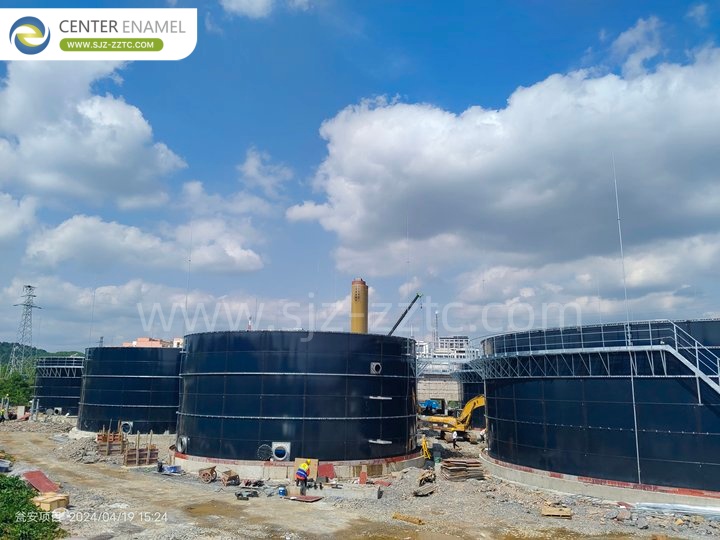
Effective wastewater management is vital for safeguarding public health, protecting natural ecosystems, and complying with stringent environmental regulations. Transforming raw, hazardous wastewater into clean, discharge-ready or reusable water requires a complex chain of physical, chemical, and biological processes. Each stage relies on specialized machinery designed to handle heavy solids, corrosive liquids, and active biological cultures.
This article explores the core equipment utilized across modern wastewater treatment plants (WWTPs), highlights the unparalleled advantages of Glass-Fused-to-Steel (GFS) storage technology, and showcases how Center Enamel delivers world-class engineering solutions for global environmental challenges.
Screening and Debris Removal Equipment
The first line of defense in any wastewater treatment facility consists of screening and grit removal machinery. Raw municipal and industrial wastewater carries large solid objects such as rags, plastics, wood, wipes, and heavy grit that can easily clog piping, jam pumps, and damage downstream mechanical equipment.
Bar Screens and Mechanical Rakes: Installed at plant inlets to catch large debris, automatically lifting and discharging accumulated material.
Rotary Drum Screens: Used for fine screening to capture smaller suspended solids and fibers continuously.
Grit Chambers and Vortex Grit Separators: Designed to reduce flow velocity, allowing dense inorganic particles like sand, coffee grounds, and gravel to settle while keeping organic matter suspended.
Proper screening equipment ensures smooth hydraulic flow and protects sensitive pumps throughout the entire treatment train.
Flow Equalization and Mixing Systems
Industrial production cycles and municipal water use fluctuate dramatically throughout the day, creating hydraulic and organic shock loads. Equalization tanks equipped with heavy-duty mixing systems are deployed to smooth out these flow variations.
Submersible Mixers and Jet Aerators: Kept running inside equalization tanks to prevent the settling of suspended solids and maintain homogeneous wastewater characteristics.
Chemical Dosing Units: Automatically adjust pH levels and nutrient concentrations before the wastewater moves forward.
By stabilizing incoming flows, equalization equipment prevents biological shock, protects downstream biological treatment bacteria, and ensures consistent chemical reaction rates.
Primary Clarification and Sedimentation Tanks
Once large debris and grit are removed, wastewater enters primary sedimentation tanks or clarifiers. The primary objective here is to allow suspended organic and inorganic solids to settle to the bottom by gravity, while oils, grease, and floating scum rise to the surface.
Sludge Scraper Mechanisms: Slow-rotating bridge or center-driven scrapers push settled primary sludge toward a central hopper for extraction.
Skimmers: Surface skimmers sweep floating grease and oils into troughs for separate disposal or recovery.
Efficient primary clarifiers can remove up to 60% of suspended solids and up to 30% of biochemical oxygen demand (BOD) prior to secondary biological treatment.
Biological Treatment Aeration Systems
Secondary treatment relies on microorganisms to consume dissolved and colloidal organic pollutants. To keep these aerobic bacteria alive and active, sophisticated aeration systems are required to supply continuous oxygen into the biological reactors, such as Activated Sludge Processes (ASP) or Sequencing Batch Reactors (SBR).
Blowers and Compressors: Deliver high volumes of air under pressure.
Fine-Bubble and Coarse-Bubble Diffusers: Installed at the tank floor to transfer oxygen into the liquid efficiently.
Surface Aerators: Mechanical agitators that churn the water surface to maximize atmospheric oxygen absorption.
Adequate aeration ensures high metabolic rates for bacteria, driving down chemical oxygen demand (COD) effectively.
Secondary Clarifiers and Biomass Separation
Following biological treatment, the wastewater flows into secondary clarifiers. Here, the biological flocs (activated sludge) formed during the aeration stage must be separated from the treated water.
Sludge Return Pumps: A significant portion of the settled biological sludge is pumped back to the aeration basin to maintain a high concentration of active microorganisms.
Waste Activated Sludge (WAS) Pumps: Excess sludge is directed to sludge handling and dewatering units.
Weirs and Launder Troughs: Ensure uniform collection and overflow of clarified effluent heading toward tertiary treatment or disinfection.
Sludge Dewatering and Conditioning Equipment
The sludge collected from primary and secondary clarifiers contains a high percentage of water and requires extensive volume reduction before final disposal or incineration. Sludge dewatering equipment transforms liquid sludge into a manageable solid cake.
Belt Filter Presses and Screw Presses: Utilize mechanical pressure to squeeze water out of conditioned sludge.
Centrifuges: Spin at high speeds to separate solid particles from liquid through centrifugal force.
Polymer Dosing Systems: Add specialized flocculant polymers to condition the sludge, making water separation faster and more efficient.
Tertiary Treatment and Disinfection Systems
The final stage of wastewater treatment polishes the effluent to remove remaining nutrients (nitrogen and phosphorus), trace contaminants, and pathogenic microorganisms before environmental discharge or water reuse.
Rapid Sand Filters and Membrane Bioreactors (MBR): Capture ultra-fine suspended particles.
UV Disinfection Units: Emit ultraviolet light to disrupt the DNA of harmful bacteria, viruses, and pathogens without chemical additions.
Chlorination and Ozonation Systems: Chemical disinfection methods used to guarantee microbiological safety.
Advantages of GFS Tanks in Wastewater Treatment
Choosing the right containment technology for equalization, aeration, clarification, and sludge storage is vital for plant longevity. Glass-Fused-to-Steel (GFS) tanks-also called Glass-Lined Steel tanks-represent the pinnacle of engineering for modern wastewater treatment infrastructure.
Exceptional Corrosion Resistance: The fusion of high-grade glass at extreme temperatures (850℃ to 940℃) with steel creates an inert, impermeable barrier that resists aggressive chemicals, wastewater acids, and corrosive sludges.
Rapid Modular Installation: Unlike traditional concrete tanks requiring weeks of curing time, GFS tanks feature prefabricated bolted panel designs that significantly shorten construction schedules and reduce labor costs.
Low Maintenance and Long Service Life: The ultra-smooth glass surface prevents bio-fouling, sludge adhesion, and scaling, ensuring easy cleaning and an operational lifespan exceeding 30 years.
Scalability and Flexibility: GFS tanks can be easily expanded, dismantled, or relocated if facility capacity needs modification.
Center Enamel: Your Trusted Wastewater Treatment Solution Provider
Executing a successful municipal or industrial wastewater treatment project requires partnering with an experienced industry leader. Center Enamel is a globally recognized professional manufacturer and solution provider specializing in high-performance containment systems and environmental engineering.
Backed by decades of global expertise, Center Enamel provides comprehensive one-stop services, including:
Advanced Manufacturing: Delivering premium GFS tanks, Fusion Bonded Epoxy Tanks, and stainless steel tanks produced through state-of-the-art manufacturing lines.
Customized Engineering Design: Tailoring wastewater treatment equipment layouts, mixing units, and clarifier systems to match exact project specifications and local discharge standards.
Global Project Execution: Successfully supplying reliable wastewater treatment and biogas storage solutions across municipal, agricultural, and industrial sectors worldwide.
By combining cutting-edge containment technology with rigorous engineering excellence, Center Enamel ensures that every client's treatment facility operates with maximum efficiency, durability, and cost-effectiveness.
Frequently Asked Questions
What equipment is essential for primary wastewater treatment?
Essential primary treatment equipment includes mechanical bar screens for debris removal, grit chambers for sand separation, and primary clarification tanks equipped with scum skimmers and sludge scraping mechanisms to remove settleable solids and floating oils.
Why are GFS tanks preferred over concrete tanks in wastewater plants?
Glass-Fused-to-Steel tanks offer superior corrosion resistance against harsh chemicals, faster modular bolted installation, minimal long-term maintenance requirements, and the unique flexibility to be expanded or relocated compared to traditional concrete structures.
How does Center Enamel support global wastewater projects?
Center Enamel provides comprehensive wastewater solutions by manufacturing high-performance bolted tanks (GFS and FBE Tanks) and delivering expert engineering design, custom configurations, and worldwide installation support for industrial and municipal clients.