
What Happens in Secondary Treatment?
Secondary treatment is the biological stage of a WWTP: microbes in suspended (activated sludge) or attached (biofilm) form consume dissolved COD and, in configured zones, nitrogen and phosphorus, after which a secondary clarifier separates the biomass from the cleaned water before disinfection. It is where the bulk of dissolved pollution is destroyed, turning a physically cleaned but still organic-rich stream into water that meets most discharge limits.
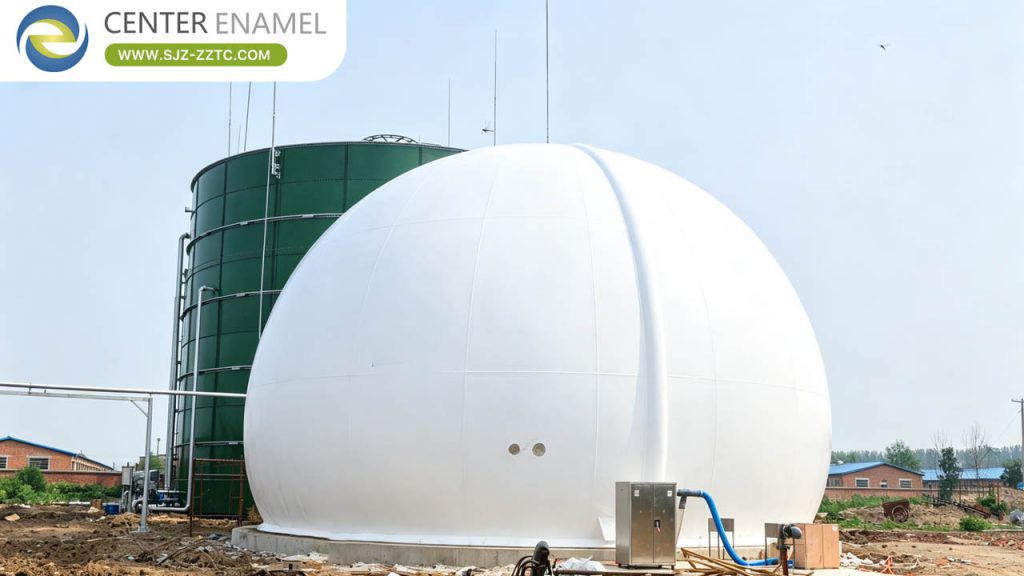
The Biology Step
In activated sludge, air and microbes mix with the water so organics are oxidized and biomass grows. In biofilm or upflow systems (such as UBF), microbes attach to a medium and treat the water as it passes. Either way, the goal is the same: remove what primary treatment cannot, the dissolved fraction.
Design Parameter Table
| Parameter | Typical value or range | Why it matters |
| Process | Activated sludge / UBF / A²O | Removes dissolved COD |
| COD removal | 80-90% of incoming | Core duty |
| Retention | Hours to days | Microbe contact |
| Nutrient zones | Anoxic + aerobic | N and P removal |
| Temperature | Mesophilic biology | Steady performance |
| Limitation to check | Toxic shock | Protect biomass |
Secondary vs Other Stages
| Stage | Mechanism | Removes |
| Primary | Physical settling | Grit, settleable solids |
| Secondary | Biological | Dissolved COD, N, P |
| Tertiary | Polishing | Trace, residual |
Project Case Study
Domestic Sewage Treatment Project, Ghana. The 1,800 m³/day municipal plant shows secondary treatment in practice: a UBF anaerobic stage plus two A²/O aerobic tanks remove the dissolved load, taking COD from 1,000 to 100 mg/L, BOD 500 to 25, ammonia 30 to 10, and total phosphorus 10 to 2 mg/L before final clarification and disinfection.
| Project | Domestic Sewage Treatment Project, Ghana |
| Location | Ghana |
| Industry | Municipal / Domestic Sewage |
| Application | UBF + A²/O biological treatment |
| Product | UBF Ø11.46 × 9.6 m, A²/O 2 × Ø20.64 × 6.6 m |
| Result | COD 1,000→100, BOD 500→25, NH₃ 30→10, TP 10→2 mg/L |
| Status | Delivered 2021 |
About Shijiazhuang Zhengzhong Technology Co., Ltd (Center Enamel)
Shijiazhuang Zhengzhong Technology Co., Ltd (Center Enamel) delivers the installation and project vessel for secondary treatment: bolted GFS tanks serve as UBF, A²/O, and activated-sludge reactors and secondary clarifiers, with enamel fused at 820-930°C for an inert barrier, built to ISO 28765 / AWWA D103 and CE-EN 1090. The same tank platform carries primary, secondary, and sludge duties with purpose-built internals.
Secondary treatment is where biology removes dissolved COD and nutrients, then a clarifier separates the biomass; design the zones for the nutrients your limit sets. Send your influent and limit and we will size the secondary GFS reactors.
Frequently Asked Questions (FAQ)
Q1: What happens in secondary treatment?
A: Microbes remove dissolved COD and nutrients, then a clarifier separates biomass before disinfection.
Q2: How does activated sludge work?
A: Air and microbes mix with water so organics are oxidized and biomass grows, then it is settled out.
Q3: What removes nutrients?
A: Anoxic and aerobic zones (as in A²O) denitrify and take up phosphorus during secondary treatment.
Q4: What is the role of the clarifier?
A: It separates the biological sludge from the cleaned water so only clear effluent moves on.
Q5: How much COD does secondary remove?
A: Typically 80-90% of the incoming dissolved COD under stable conditions.
Q6: Can one tank do primary and secondary?
A: The GFS platform can host both, but they need different internals and are usually separate units.
Suggested CTA
Send your influent and discharge limit. We will size the secondary GFS reactors and clarifiers for your nutrient targets.