
What Infrastructure Is Needed for a Biogas Plant?
Developing a biogas plant requires far more than just a large tank. Whether you are planning a small on-farm anaerobic digester or a commercial-scale biomethane facility, the infrastructure needed spans civil works, mechanical systems, process controls, and utility connections. A failure to plan any single component can lead to bottlenecks, safety hazards, or financial underperformance. This guide breaks down the core infrastructure requirements for a modern biogas plant, helping developers, farmers, and project managers understand what must be in place before commissioning.
Feedstock Receiving and Pretreatment Infrastructure
The front end of any biogas plant determines its operational reliability. Raw materials-whether manure, energy crops, food waste, or industrial residues-must be received, stored, and prepared before entering the digester.
A typical setup includes a collection and mix tank designed to hold one to three days of feedstock, allowing for settling of heavy foreign materials and preheating or pretreatment to achieve the correct total solids concentration. For solid feedstocks, chopping machines, pumps, mixers, and stone traps are essential to create a uniform slurry that can be pumped without clogging. Waste separation equipment may also be required to remove plastics, stones, or other contaminants that could damage downstream equipment. The receiving area should be sited with vehicle access in mind and far enough from neighboring dwellings to minimize odor and noise impacts.
The Anaerobic Digester and Heating System
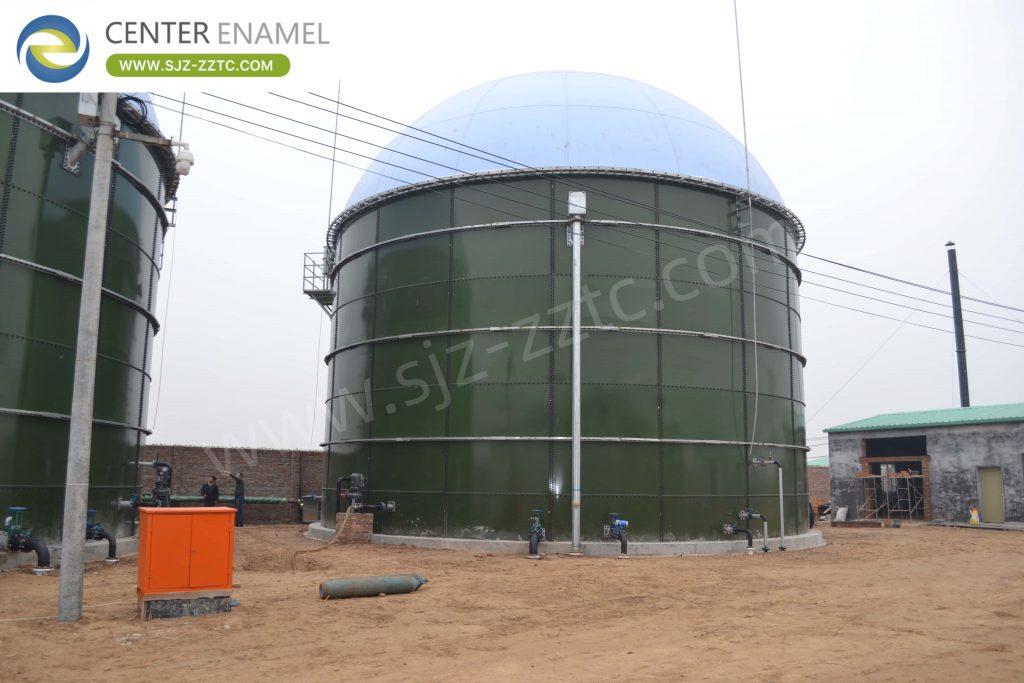
The digester itself is the heart of the facility. For most commercial installations, a complete mix or plug-flow reactor is used, constructed from concrete or steel and insulated to maintain stable internal temperatures. A fluid depth of 8 feet or greater is generally more economical for tank design, and internal dividers or flow separators help prevent short-circuiting.
Temperature control is non-negotiable. Mesophilic digestion requires a consistent range of 95°F to 105°F (35°C to 40°C), while thermophilic systems operate between 125°F and 135°F (52°C to 57°C). This demands a heating system comprising a boiler or heat exchanger, circulation pumps, insulation (typically polyurethane at 5–7.5 cm thickness), and temperature regulation controls. Without reliable heating, microbial activity collapses, and gas production plummets.
Biogas Collection, Storage, and Safety Infrastructure
Raw biogas leaving the digester is saturated with water vapor, hydrogen sulfide, and other trace contaminants. The collection infrastructure must safely transport this gas from the digester headspace to treatment or utilization equipment.
Essential components include gas piping, blowers, gas traps, pressure relief valves, and condensate drains. A gas storage vessel-sized to buffer normal fluctuations and provide reserve capacity during routine maintenance-prevents unnecessary flaring or venting. Safety infrastructure is equally critical. Explosion-proof motors, switches, and spark-producing devices must be used on all biogas blowers, and underground gas lines require permanent above-ground markers to prevent accidental rupture. Exposed flammable gas piping should be painted yellow according to ASME standards. An emergency flare or, where regulations permit, a properly designed vent stack provides a final safety layer.
Biogas Treatment and Upgrading Systems
If the biogas will be used to generate electricity, minimal treatment is needed beyond moisture removal and partial hydrogen sulfide reduction. However, projects targeting biomethane injection into the gas grid or use as compressed fuel require a full upgrading plant.
Upgrading separates methane from carbon dioxide to achieve methane concentrations above 96% and typically involves water scrubbing, pressure swing adsorption, chemical absorption, or membrane separation. Hydrogen sulfide, water vapor, and ammonia must be removed before or during upgrading to protect downstream equipment and meet pipeline specifications. The choice of technology depends on gas composition, desired end product, and energy availability on site. Water scrubbing, for instance, is well-established and widely used in Sweden, while membrane systems are gaining traction for smaller-scale applications.
Power Generation and Heat Recovery Equipment
For combined heat and power (CHP) configurations, the CHP unit-typically a gas engine connected to an alternator-converts biogas into electricity and useful heat. The heat is often recovered to warm the digester, improving overall plant efficiency. A generator system based on biogas co-generation can supply both electricity for export and hot water for internal process needs.
Supporting infrastructure includes gas conditioning equipment to remove residual moisture and particulates before the engine, as well as synchronization and grid-protection controls. Projects exporting electricity must also install transformers, metering, and interconnection equipment that comply with local utility requirements.
Digestate Handling and Storage Infrastructure
Anaerobic digestion produces significant volumes of nutrient-rich digestate that must be managed responsibly. Infrastructure for digestate handling includes storage tanks or lagoons, separation equipment, and transfer pumps. A slurry separation system with an elevated stage, controls, and accessories allows operators to divide digestate into a liquid fraction for irrigation or fertilizer and a solid fraction for composting or bedding.
Storage capacity must be sized to accommodate periods when land application is not possible-for example, during winter or wet weather. The volume of the digester itself should not be counted toward waste storage requirements. Underestimating digestate management costs is a common pitfall; dehydration, transport, and disposal can erode project margins if not planned for from the outset.
Site Utilities, Civil Works, and Access Infrastructure
The physical site must support all the above systems with reliable utilities and appropriate civil engineering. A reasonably flat area of approximately 200 square meters with a gravel base is a typical starting point for small-to-mid-scale plants, though commercial facilities require substantially more land. An electrical supply of adequate amperage and a water line for process needs are essential.
Concrete foundations, floors, and bunding (containment walls) are required for tanks, equipment pads, and chemical storage areas. Site access roads must accommodate heavy vehicles delivering feedstock and removing digestate. The plant should be located near the source of feedstock to minimize transport costs, while maintaining appropriate distance from sensitive receptors to manage odor, noise, and visual impact.
Control, Monitoring, and Safety Systems
Modern biogas plants rely on centralized control systems to maintain stable operation and protect equipment. A control panel and computerized monitoring system typically includes digital temperature meters, gas pressure and flow sensors, tank level indicators, and alarm systems. Automated controls regulate digester heating, mixing schedules, and gas pressure.
Safety instrumentation-including gas detection for methane and hydrogen sulfide, emergency shutdown systems, and ventilation for enclosed spaces-is mandatory in most jurisdictions. Remote monitoring capabilities allow operators to respond to alarms promptly, reducing downtime and preventing hazardous conditions.
Grid Connection or Gas Injection Infrastructure
The final infrastructure layer depends on the plant's output pathway. For electricity export, this means transformers, switchgear, protection relays, and a grid connection agreement with the local distribution network operator. Interconnection can add significant capital cost and may take months to secure approval.
For biomethane injection, the plant must connect to a gas network entry point, which involves compression equipment, odorization systems, calorific value adjustment, and a gas network entry agreement. Pipeline-quality biomethane must meet strict specifications for methane content, sulfur, water dew point, and other parameters. Projects without a viable grid connection may instead compress biogas for vehicle fuel or use it locally for heat and power.
Frequently Asked Questions
How much land is required for a biogas plant?
A small farm-scale system may fit on a few hundred square meters, while commercial plants processing tens of thousands of tons annually typically require several acres to accommodate digesters, feedstock storage, digestate lagoons, and access roads.
Can a biogas plant operate completely off-grid?
Yes, but it requires additional infrastructure. Off-grid plants need sufficient gas storage and a CHP unit sized to match on-site demand, or alternatively compression and storage for vehicle fuel use. The trade-off is higher capital cost for storage and reduced operational flexibility.
What is the most commonly overlooked infrastructure component?
Digestate management and gas treatment are frequent blind spots. Operators often focus on the digester and engine but underestimate the cost and complexity of handling liquid effluent or removing hydrogen sulfide before gas utilization.
Ready to Plan Your Biogas Infrastructure?
Every biogas project is unique, and the right infrastructure package depends on your feedstock, output goals, and site conditions. Our team can help you assess your requirements and design a system that performs reliably from day one. Contact us today to discuss your project and receive a tailored infrastructure checklist.