
What Is a Biogas Desulfurizer? A Complete Technical Guide
Biogas, a renewable energy source produced through anaerobic digestion of organic waste, contains methane (typically 50-70%) and carbon dioxide, along with trace but significant amounts of hydrogen sulfide (H₂S). While biogas offers tremendous potential for sustainable energy production, the presence of H₂S-a corrosive, toxic, and environmentally harmful gas-poses serious challenges to equipment, human health, and the environment. This is where a biogas desulfurizer becomes indispensable.
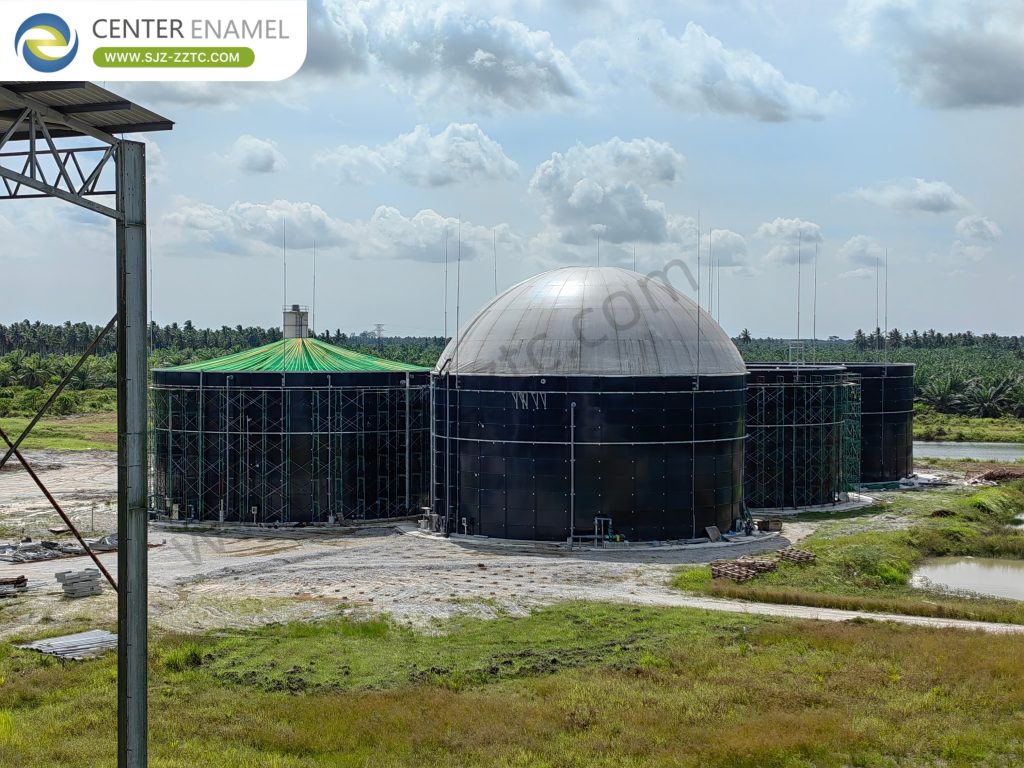
A biogas desulfurizer is a specialized system or device designed to remove hydrogen sulfide and other sulfur compounds from raw biogas, making it safe for combustion, engine operation, or pipeline injection. This article provides a comprehensive overview of biogas desulfurization technology, its various methods, and how Center Enamel delivers professional biogas project solutions worldwide.
Understanding Hydrogen Sulfide in Biogas
Hydrogen sulfide in biogas typically ranges from 100 to 1,000 parts per million (ppm), though concentrations can be significantly higher depending on feedstock composition. When biogas containing H₂S is combusted, it produces sulfur dioxide (SO₂) emissions that harm human health and contribute to environmental pollution.
Beyond environmental concerns, H₂S is highly corrosive. When combined with moisture, it forms sulfuric acid that rapidly degrades metal components, including engines, pipes, and storage tanks. This corrosion leads to costly equipment failures and unplanned downtime. Additionally, H₂S is acutely toxic to humans and can poison catalysts used in biogas upgrading systems.
For these reasons, effective desulfurization is not optional-it is essential for any biogas utilization strategy.
What Does a Biogas Desulfurizer Do?
A biogas desulfurizer removes H₂S and other sulfur-containing compounds-such as mercaptans, carbonyl sulfide, and dimethyl sulfide-from the biogas stream. The device typically consists of a reaction chamber containing a desulfurization medium (adsorbent, chemical solution, or biological culture) through which the biogas passes.
The core functions of a biogas desulfurizer include:
H₂S Removal: Reducing H₂S concentration to levels safe for downstream equipment (typically below 50 ppm for most engines).
Sulfur Recovery (in some systems): Converting H₂S into elemental sulfur, a valuable industrial byproduct that can be sold or reused.
Moisture and Particulate Control: Preventing condensed water and solid particles from damaging equipment.
Major Types of Biogas Desulfurization Technologies
Biogas desulfurization technologies fall into three broad categories: physicochemical methods (adsorption and chemical scrubbing), biological methods, and microaeration. Each has distinct advantages and limitations depending on project scale, H₂S concentration, and economic factors.
Adsorption Desulfurization
Adsorption is one of the simplest and most widely used desulfurization methods, particularly for small-to-medium scale biogas applications. In this approach, biogas passes through a vessel filled with a solid adsorbent material that traps H₂S molecules.
Common adsorbents include:
Activated Carbon: Offers high surface area and can achieve removal efficiencies over 95%
Iron Oxide Pellets: React with H₂S to form iron sulfide, which can be regenerated by exposure to air
Zinc Oxide: Provides high removal efficiency but is typically more expensive
The main advantage of adsorption is its simplicity and low capital cost. However, adsorbents eventually become saturated and require replacement or regeneration, generating solid waste that must be managed.
Chemical Oxidation and Scrubbing
Chemical methods involve contacting biogas with a liquid reagent that reacts with H₂S. Common approaches include:
Caustic Scrubbing: Using sodium hydroxide (NaOH) solution to absorb H₂S. While effective, caustic scrubbing generates waste brine that requires disposal.
Oxidative Scrubbing: Using oxidizing agents such as hydrogen peroxide or sodium hypochlorite to convert H₂S into sulfates. This approach can achieve high removal efficiency but involves ongoing chemical costs.
These systems are typically used in larger industrial applications where continuous operation and high H₂S loads justify the chemical expenditure.
Biological Desulfurization
Biological desulfurization harnesses naturally occurring sulfur-oxidizing bacteria (SOB) to convert H₂S into elemental sulfur or sulfate. This approach is increasingly preferred for its environmental sustainability and lower operating costs.
Biotrickling Filters (BTFs): Biogas flows through a packed bed of inert material where SOB are immobilized. A recirculating nutrient solution trickles over the packing, providing water and nutrients. This technology can achieve over 99% removal efficiency at commercial scale.
Biofilters: Similar to BTFs but operate with a moist solid medium rather than a recirculating liquid. These systems are simpler but more prone to clogging and acidification.
Bioscrubbers: A two-stage process where H₂S is first absorbed into a liquid phase, then the liquid is treated biologically in a separate reactor.
A pilot-scale biotrickling filter study achieved 99.2% removal efficiency even under real operational fluctuations, with pH remaining stable between 7.5 and 4.6 without active regulation. Biological systems produce elemental sulfur as a byproduct-a saleable commodity that offsets operating costs.
Microaeration
Microaeration involves injecting controlled, small amounts of air or pure oxygen directly into the anaerobic digester headspace or liquid. Under oxygen-limited conditions, sulfide-oxidizing bacteria convert H₂S into elemental sulfur, requiring only 0.5 mol O₂ per mol of sulfur removed.
Key advantages of microaeration include:
No separate reactor vessel required-desulfurization occurs within the existing digester
Cost-effective-minimal equipment and chemical requirements
Enhanced digester performance-studies show microaeration can improve methane yield and process stability
Gas-phase injection (into the digester headspace) is more commonly reported and offers better oxygen utilization compared to liquid-phase injection, where oxygen can be consumed by facultative bacteria before reaching the H₂S.
How to Choose the Right Biogas Desulfurizer
Selecting appropriate desulfurization technology depends on several factors:
H₂S Concentration: High H₂S levels (>1,000 ppm) often justify biological or chemical systems; low levels may be managed with adsorption.
Biogas Flow Rate: Larger flows typically require biological or chemical systems for cost-efficiency.
Required Outlet H₂S Level: Strict emission limits or engine manufacturer requirements (often <50 ppm) may necessitate multi-stage systems.
Budget and Operating Costs: Adsorption offers low capital cost but high replacement costs; biological systems require higher initial investment but lower operating costs.
Byproduct Management: Elemental sulfur recovery can offset costs; waste brine or spent adsorbent requires disposal.
The Role of Biogas Desulfurizer Components
A typical biogas desulfurizer system consists of:
Reaction Vessel: Contains the desulfurization medium-whether adsorbent pellets, packing material for biological growth, or liquid reagent. The vessel must be corrosion-resistant to withstand H₂S and sulfuric acid attack.
Gas Distribution System: Ensures even flow distribution through the medium to maximize contact and prevent channeling.
Moisture Control: Condensate removal traps prevent liquid water from damaging adsorbents or diluting chemical reagents.
Monitoring and Control: H₂S sensors, pH meters, and flow controls enable real-time performance tracking and automatic adjustments.
Regeneration or Replacement Access: For adsorption systems, easy access for media replacement is essential to minimize downtime.
Innovations in Biogas Desulfurization
Recent advances are improving desulfurization efficiency, reducing costs, and expanding application possibilities:
Photocatalytic Desulfurization: Using UV light and titanium dioxide (TiO₂) catalysts, photocatalytic reactors have demonstrated >99% H₂S removal efficiency, offering a maintenance-free option for small-scale systems.
Anoxic Biotrickling Filters: Operating without oxygen, these systems use nitrate as the electron acceptor, opening possibilities for sites where oxygen supply is limited.
Agricultural Digestate as Nutrient Source: Recent research shows that diluted agricultural digestate can serve as the recirculation medium in biotrickling filters, eliminating the need for purchased nutrients and making biological desulfurization even more sustainable.
Advanced Process Control: Real-time ORP monitoring and automated air injection control enable precise microaeration, preventing over-oxidation and minimizing energy consumption.
Center Enamel-Your Professional Biogas Project Partner
Center Enamel is a globally recognized leader in providing comprehensive biogas infrastructure solutions, with successful projects spanning over 90 countries worldwide. With deep expertise in anaerobic digestion and biogas handling, Center Enamel delivers turnkey biogas project solutions that integrate seamlessly with desulfurization systems.
Corrosion-Resistant Tank Infrastructure
Biogas environments are chemically aggressive. H₂S combined with moisture forms sulfuric acid that attacks conventional concrete and steel structures. Center Enamel’s proprietary Glass-Fused-to-Steel (GFS) tanks provide an impervious barrier against acid attack, ensuring structural integrity for over 30 years.
Key features include:
Double-sided enamel coating fused to steel at high temperatures, creating a chemically inert surface
Superior gas tightness with precision-engineered bolted connections, preventing methane leakage
Modular assembly for rapid on-site construction, essential for projects with strict timelines
Complete Biogas Storage Solutions
Center Enamel offers multiple tank technologies to suit specific project requirements:
Glass-Fused-to-Steel (GFS) Tanks: Ideal for biogas storage and anaerobic digestion applications, with proven performance in projects such as the 5,504 m³ Sweden biogas project and the 2,752 m³ France biogas project.
Welded Steel Tanks: Offering seamless, gas-tight structures with specialized coatings for corrosion resistance, as demonstrated in the Malaysia biogas project with a tank diameter of 22.93 meters.
Global Track Record and Certifications
Center Enamel’s commitment to quality is backed by international certifications including ISO 9001, NSF/ANSI 61, AWWA D103-09, CE, and ASME. With landmark projects across Europe, Asia, and North America, Center Enamel brings unmatched engineering expertise to every biogas project.
Conclusion
A biogas desulfurizer is a critical component of any biogas utilization system, removing harmful hydrogen sulfide to protect equipment, enable safe energy recovery, and ensure environmental compliance. Understanding the available technologies-adsorption, chemical scrubbing, biological treatment, and microaeration-is essential for selecting the right solution for each project’s unique conditions.
Center Enamel stands ready to support biogas projects worldwide with corrosion-resistant tank infrastructure, complete biogas storage solutions, and full EPC project delivery capabilities. By combining durable materials, engineering excellence, and a global track record, Center Enamel helps clients achieve reliable, sustainable biogas operations.
Frequently Asked Questions
What is the most cost-effective biogas desulfurization method?
For small-scale systems, adsorption with iron oxide or activated carbon offers low capital cost. For larger facilities, microaeration and biological biotrickling filters provide lower operating costs and produce valuable elemental sulfur as a byproduct.
How often does a biogas desulfurizer need maintenance?
Maintenance frequency depends on technology. Adsorption units require media replacement every 1–12 months depending on H₂S load. Biological systems typically require less frequent attention-monthly water flushing and occasional media washing-with 99%+ efficiency sustained for over 149 days in pilot studies.
Can Center Enamel provide complete biogas systems including desulfurization?
Yes. Center Enamel provides integrated biogas solutions including GFS tanks, welded steel tanks, biogas piping systems, dual-membrane gas holders, and desulfurization infrastructure. As a professional EPC contractor, Center Enamel manages projects from design through commissioning, ensuring compatibility between all system components.