
What Is a Biogas Gas Holder? A Complete Guide to Biogas Storage in Engineering Projects
A biogas gas holder is a critical component in any anaerobic digestion facility. It is the vessel or structure that captures, stores, and regulates the biogas produced during the breakdown of organic matter. Without adequate gas storage, a biogas project cannot balance the mismatch between continuous gas production and intermittent energy demand. Whether you are designing a wastewater treatment plant, a farm-based digester, or an industrial waste-to-energy facility, understanding the role and selection of a biogas gas holder is essential for operational stability and safety.
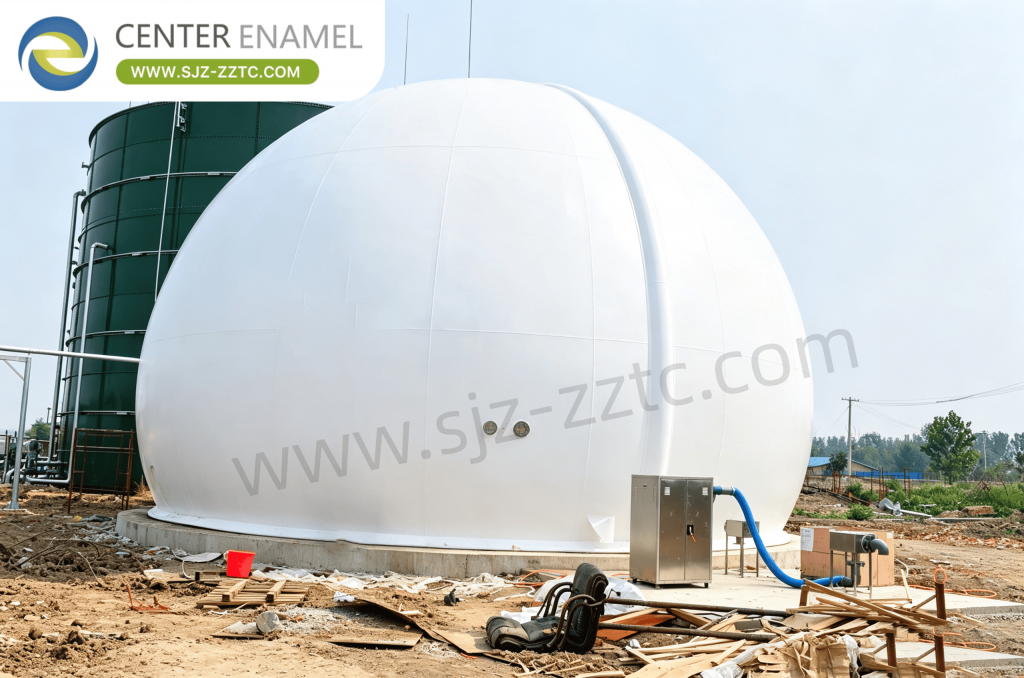
What Is a Biogas Gas Holder and How Does It Work?
A biogas gas holder is essentially a storage reservoir that receives gas from the anaerobic digester and holds it until it is consumed by a combined heat and power (CHP) unit, boiler, flare, or upgrading system. The holder maintains a consistent pressure and provides a buffer volume so that gas production fluctuations do not disrupt downstream equipment .
The working principle varies by design. In a floating gas holder, a movable drum rises and falls with the gas volume, sealed by a water jacket to prevent leakage . In a double-membrane gas holder, an inner membrane stores the biogas while an outer membrane is kept inflated by air blowers, creating a stable overpressure regardless of the fill level . Weighted flexible bag systems use a moving weight frame to pressurize the gas and allow volume changes while maintaining constant static pressure .
The core function remains the same across all types: contain the gas safely, smooth out pressure variations, and provide a measurable volume that operators can monitor.
The Main Types of Biogas Gas Holders in Engineering
Engineering projects select gas holders based on site constraints, budget, climate, and downstream pressure requirements. The table below summarizes the most common configurations.
| Gas Holder Type | Working Principle | Typical Pressure Range | Key Advantages | Common Applications |
| Floating Drum | Movable steel or FRP drum rises/falls in a water seal | 4-8 cm water column | Visual gas volume indication; simple operation | Small to medium farm digesters; rural projects |
| Double Membrane | Inner biogas membrane + outer air membrane with blower | 20-80 mbar (adjustable) | Constant pressure; large volumes; low maintenance | Municipal WWTPs; large agricultural biogas plants |
| Weighted Flexible Bag | Flexible bag compressed by a guided weight frame | 30-80 mbar | Compact footprint; high usable capacity | Transportable plants; space-constrained sites |
| Fixed Dome (integrated) | Rigid dome over digester; gas displaces slurry | Variable (dependent on slurry head) | No moving parts; low cost | Small-scale household digesters |
Data sources:
Floating drum holders are valued for their simplicity and the direct visual feedback they provide—the drum position tells you exactly how much gas is stored . However, they require regular maintenance of the guide frame and water seal, and the steel drum is susceptible to corrosion in humid conditions . Double membrane holders dominate large-scale European installations because they offer constant pressure control and can be sized from 20 m³ to over 9,000 m³ . Weighted bag designs are increasingly favored for transportable or modular plants where space savings of up to 85% can be achieved compared to conventional holders .
Why Every Biogas Project Requires a Gas Holder
The question of why biogas projects need dedicated gas storage is fundamental to process engineering. The answer lies in the inherent mismatch between gas generation and gas utilization.
Anaerobic digestion produces biogas at a relatively steady rate determined by substrate loading and temperature. However, energy demand from CHP engines, boilers, or upgrading units fluctuates throughout the day. A gas holder decouples production from consumption, allowing the plant to operate efficiently even when demand is low or zero . Without storage, excess gas would have to be flared—a waste of renewable energy and a source of emissions.
Beyond buffering, a gas holder serves several critical engineering functions. It protects downstream equipment from pressure spikes and underpressure events that can damage membranes or trigger safety shutdowns . It provides retention time for gas mixing and moisture separation. And it enables predictive control strategies: operators can monitor the fill level and adjust feed rates or engine load to optimize gas utilization .
In Germany, where double membrane holders account for roughly 62% of installed gas storage, research has shown that proper gas management—including fill level monitoring and pressure control—can significantly reduce methane losses from overpressure relief events . The gas holder is not merely a tank; it is the central node of the plant’s gas management system.
Engineering Applications of Biogas Gas Holders
Biogas gas holders appear across a wide spectrum of engineering projects, each with distinct requirements.
Municipal wastewater treatment plants use anaerobic digestion to stabilize sludge and capture methane for digester heating and electricity generation. Gas holders here are typically tank-mounted double membrane covers that replace conventional steel digester covers, offering lower installed weight and faster installation . The stored gas fuels CHP units that offset the plant’s power consumption.
Agricultural biogas plants co-digest manure, energy crops, and organic residues. These facilities often require large storage volumes to buffer seasonal variations in substrate availability and gas demand. Double membrane holders integrated into the digester roof are standard, with gas management systems coordinating multiple digesters and post-digesters .
Industrial waste-to-energy projects treating food processing waste, brewery effluent, or distillery residues benefit from compact weighted bag holders that fit within constrained plant footprints. The constant pressure output simplifies connection to boilers or gensets .
Landfill gas capture and small-scale rural digesters frequently employ floating drum holders or flexible bag systems where capital cost and simplicity outweigh the need for precise pressure control .
Key Selection Criteria for Biogas Gas Holders
Choosing the right gas holder requires balancing technical, economic, and site-specific factors. The table below outlines the primary considerations.
| Criterion | What to Evaluate | Why It Matters |
| Storage Volume | Peak gas production vs. consumption gap; desired buffer time | Undersizing leads to flaring; oversizing wastes capital |
| Operating Pressure | Downstream equipment requirements (CHP, boiler, upgrading) | Mismatched pressure requires costly compressors or regulators |
| Site Space | Available footprint; whether tank-mounted or slab-mounted | Double membrane saves space; floating drums require vertical clearance |
| Climate Exposure | Temperature extremes, wind, snow, seismic zone | Affects material selection and structural design |
| Maintenance Access | Ability to inspect membranes, seals, and blowers | Poor access increases downtime and lifecycle cost |
| Budget & Lifespan | Capital cost vs. expected service life (5-20+ years) | Steel drums corrode; membranes require periodic replacement |
Data sources:
A critical but often overlooked factor is pressure stability. Downstream CHP engines are designed for specific gas inlet pressures; a gas holder that delivers variable pressure forces the plant to install additional regulation equipment or accept reduced engine efficiency . Double membrane and weighted bag holders excel here because their pressure is actively controlled rather than dependent on the variable weight of a floating drum.
Material compatibility also matters. Hydrogen sulfide in raw biogas is corrosive to steel, particularly in the presence of moisture. Floating drums made of standard steel require regular painting and have a service life of 3-5 years in humid, salty air or 8-12 years in dry climates . Membrane materials (PVC-coated polyester) and stainless steel anchors offer better corrosion resistance and longer maintenance intervals .
Safety and Environmental Considerations
Biogas is roughly 60% methane—a potent greenhouse gas and an explosion hazard when mixed with air in the 5-15% concentration range. Gas holders must be designed with pressure relief valves, flame arresters, and gas detection systems to prevent catastrophic failures .
Overpressure events are a particular concern with double membrane holders. If the inner membrane is overfilled or temperature rises cause gas expansion, the relief valve may vent methane to atmosphere. Monitoring data from German biogas plants showed methane losses reaching up to 1.8% of annual production from such events, often linked to inadequate fill level control or operator error . Modern gas management systems address this by forecasting fill levels based on production rates and weather data, keeping the holder at an optimal partial fill (typically around 50%) rather than letting it reach the relief threshold .
For floating drum holders, the water seal must be maintained at the correct level and protected from freezing in cold climates. A loss of water seal allows biogas to escape directly into the headspace above the drum, creating an explosion risk near the digester .
Conclusion
A biogas gas holder is far more than a storage tank—it is the operational heart of a biogas plant’s gas management system. It bridges the gap between biological gas production and mechanical energy consumption, protects equipment from pressure transients, and enables the plant to operate as a reliable energy asset. From simple floating drums in rural settings to sophisticated double membrane systems at municipal scale, the right gas holder design depends on a careful assessment of volume requirements, pressure needs, site constraints, and maintenance capabilities.
Frequently Asked Questions
How long does a biogas gas holder last?
Service life varies by type and maintenance. Steel floating drums typically last 8-12 years in dry climates but only 3-5 years in humid, corrosive environments . Double membrane holders with PVC-coated polyester fabrics generally provide 10-15 years of service with periodic inspection and blower maintenance.
Can I install a gas holder on an existing digester?
Yes. Slab-mounted double membrane holders can be added alongside existing digesters, and tank-mounted versions are commonly used as retrofit covers to replace aging steel digesters . The key constraint is available footprint and piping connections.
What pressure does a biogas gas holder typically operate at?
Floating drums operate at very low pressure (4-8 cm water column, roughly 4-8 mbar). Double membrane and weighted bag holders typically operate at 20-80 mbar, which is suitable for most CHP engines and boilers without additional compression .
Planning a biogas project or upgrading your gas storage? Contact our engineering team today to discuss the right gas holder solution for your site’s specific requirements.