
What is a Chicken Manure Biogas Plant? Transforming Poultry Waste into Green Energy
Intensive poultry farming operations generate massive volumes of organic waste, including manure, feathers, spilled feed, and bedding materials (such as wood shavings or straw). Unmanaged poultry litter poses severe environmental challenges due to intense odors, fly infestations, and high risks of nutrient runoff or fugitive greenhouse gas emissions.
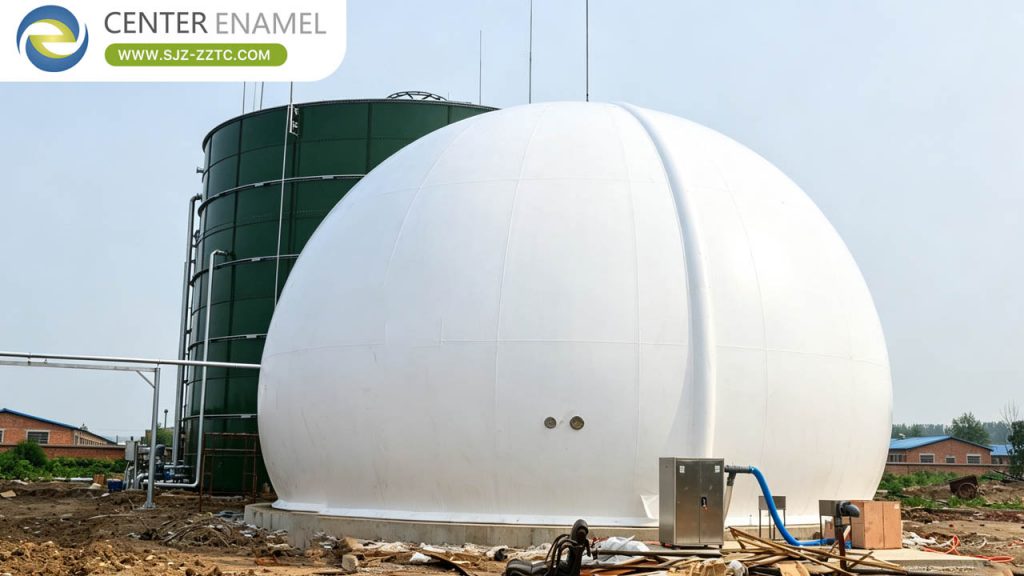
A chicken manure biogas plant is a specialized industrial bioenergy facility designed to treat this challenging waste stream using advanced anaerobic digestion (AD) technology. By sealing poultry waste inside controlled bioreactors, these facilities eliminate odors, neutralize pathogens, capture harmful methane emissions, and convert high-nitrogen waste into clean renewable energy and nutrient-dense organic fertilizer.
Core Characteristics of Chicken Manure as a Biogas Substrate
Unlike cattle or swine slurry, chicken manure possesses unique chemical and physical properties that require specialized engineering:
- High Nitrogen & Low C:N Ratio: Chicken manure typically has a very narrow Carbon-to-Nitrogen (C:N) ratio ranging from 5:1 to 10:1. While nitrogen is essential, an excess of it rapidly converts into total ammonia nitrogen (TAN), which can become toxic to methanogenic bacteria and cause process failure if unmanaged.
- High Dry Matter & Solid Content: Depending on whether it is sourced from cage-layer houses or floor-raised broiler operations with bedding litter, chicken manure often contains significant fibrous solids and grit that demand robust mechanical mixing and screening.
- Exceptional Biomethane Potential: Despite processing challenges, chicken manure yields high concentrations of volatile solids, making it a lucrative energy reservoir when balanced correctly.
The Process Workflow of a Chicken Manure Biogas Plant
Successful operation of a poultry waste biogas facility follows a structured engineering workflow:
- Collection and Pretreatment: Raw litter is scraped or flushed from poultry houses, screened to remove feathers, sand, and grit, and homogenized.
- Co-Digestion Blending: Because mono-digestion of pure chicken manure frequently fails due to ammonia toxicity, operators blend it with carbon-rich co-substrates—such as corn silage, agricultural straw, or food waste—to achieve an optimal C:N ratio of 20:1 to 30:1.
- Anaerobic Digestion: The prepared slurry enters sealed Continuously Stirred Tank Reactors (CSTR) operating under mesophilic (35°C–38°C) or thermophilic conditions. Microorganisms break down the complex organic matter, generating raw biogas (roughly 50% to 75% methane).
- Biogas Upgrading or Utilization: Raw gas is desulfurized (to remove corrosive hydrogen sulfide) and either burned in Combined Heat and Power (CHP) engines or upgraded into pipeline-grade biomethane (Renewable Natural Gas).
- Digestate Management: The remaining sterilized, odorless digestate is separated into solid and liquid organic fertilizer fractions for agricultural land application.
Comparative Data Table: Chicken Manure vs. Standard Feedstocks in AD
| Parameter | Chicken Manure / Litter | Cattle Manure | Food Waste |
| C:N Ratio | Very Low (5:1 – 10:1) | Moderate (15:1 – 20:1) | Moderate-Low (14:1 – 18:1) |
| Ammonia Inhibition Risk | High (Requires dilution or co-digestion) | Low (Natural buffer present) | Moderate (Risk of VFA acidification) |
| Methane Yield Potential | High (350 - 450 m3/ton VS) | Moderate (200 - 350 m3/ton VS) | Very High (450 - 600 m3/ton VS) |
| Primary Operational Focus | Nitrogen balance & grit removal | Thermal retention & volume | Acidification and VFA control |
Frequently Asked Questions (FAQ)
Q1: Why can't chicken manure be digested on its own (mono-digestion)?
A: Pure chicken manure contains exceptionally high nitrogen levels. During anaerobic breakdown, this nitrogen converts into free ammonia, which poisons the methane-producing microbes and halts the biological digestion process. Co-digesting it with carbon-rich materials like straw or food waste prevents this failure.
Q2: What are the main benefits of building a chicken manure biogas plant?
A: Key benefits include the elimination of severe farm odors, destruction of pathogens and weed seeds, conversion of waste liabilities into baseload renewable electricity or biomethane, and production of a high-grade organic bio-fertilizer.
Q3: How is the biogas generated from poultry waste utilized?
A: Depending on plant scale and economic incentives, the purified biogas can be combusted locally in CHP engines to supply farm electricity and heating, or upgraded into high-purity biomethane for vehicle fueling or injection into natural gas grids.