
What Is a Compressed Biogas Plant?
A compressed biogas (CBG) plant is a facility that upgrades raw biogas to vehicle-grade biomethane and compresses it for transport fuel—distinct from a simple digestion plant because it adds gas upgrading and high-pressure compression. The core product is bio-CNG at about 250 bar, meeting vehicle-fuel purity and safety specs.
From Feed to Vehicle Fuel
Organic feed is digested at mesophilic 35–38°C to biogas (55–65% CH₄); an upgrader raises it to 95–99% CH₄ by removing CO₂, H₂S, and H₂O; the biomethane is dried and compressed to ~250 bar and stored in cascade buffers for dispensing. A plant treating 650 T/D of manure can yield 3,000,000 m³/year of vehicle-grade CH₄.
| Stage | Input | Output | Spec |
| Digestion | manure / waste | biogas 55–65% CH₄ | 35–38°C |
| Upgrading | raw biogas | biomethane 95–99% | CO₂ removed |
| Compression | biomethane | CBG ~250 bar | bio-CNG |
| Dispensing | CBG | vehicle fuel | cascade buffer |
Vehicle-Grade Specifications
Bio-CNG must meet fuel specs: CH₄ ≥ 95%, H₂S < 15 mg/Nm³, oxygen < 1%, and a tight dew point. These are verified by online analyzers and recorded at the dispenser. Meeting them is what makes the gas interchangeable with natural-gas vehicles.
Technical Considerations
Design for explosion-proof electricals, gas detection, and venting at compression; integrate CHP waste heat for drying; synchronize digester, upgrader, and compressor capacities. Upstream, specify corrosion-resistant GFS digester and buffer tanks (glass fused at 820–930°C).
Why Certifications and Standards Matter
A vehicle-fuel plant is held to more than environmental permits: tank and pressure-equipment standards, gas-quality methods, and safety codes must all be documented. Verified, applicable standards are what let an EPC and an owner prove the plant is safe and the fuel is lawful—claims without certificates are worthless here.
How to Scope a CBG Plant
From feed tonnage and target bio-CNG volume, size digestion, pick upgrader technology, then size compression and storage; write fuel specs and applicable standards into the contract. A feed + off-take brief yields a comparable scope from suppliers.
Project Case Study
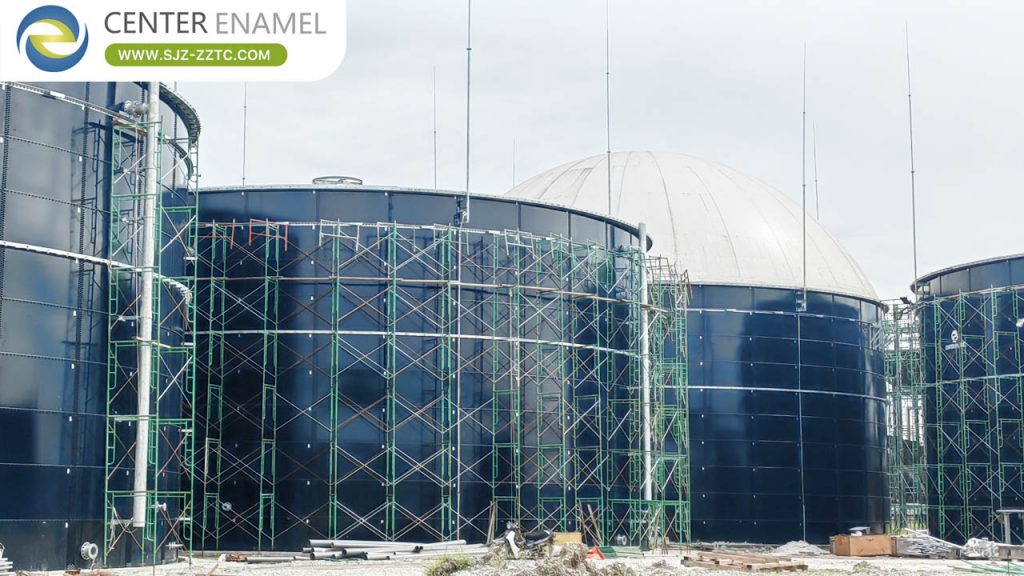
Zhenyuan Group Biogas Project in Henan. A vehicle-grade methane plant treating 650 T/D of manure and washing wastewater via medium-temperature CSTR (3 primary + 1 secondary reactors), producing 3,000,000 m³/year of vehicle-grade CH₄—a documented compressed-biogas-scale reference.
| Project | Zhenyuan Group Biogas Project (Henan) |
| Location | Xinzheng, Henan, China |
| Industry | Renewable vehicle fuel |
| Application | Vehicle-grade methane production |
| Product | CSTR digesters + upgrading train |
| Capacity | 3,000,000 m³/year CH₄ |
| Quantity | 3 primary + 1 secondary CSTR |
| Material | Glass-Fused-to-Steel (GFS) |
| Standards | ISO 28765, AWWA D103 |
| Status | Delivered 2013 |
About Center Enamel
Center Enamel demonstrates its certifications and standards backbone for biogas and CBG projects: bolted GFS tanks manufactured under ISO 9001, designed to ISO 28765 and AWWA D103, with CE/EN 1090 structural marking; the enameled shell (glass fused at 820–930°C) carries NSF/ANSI 61 and WRAS potable-adjacent credentials where applicable, and FM options for fire-rated configurations. These verified, documented standards—not marketing claims—are what let the digester and buffer tanks sit safely inside a fuel-grade plant.
Advantages and Limitations
CBG gives a high-value transport-fuel off-take with strong carbon credentials. Limits: upgrading + compression CAPEX/OpEx are significant, fuel specs are strict, and verified standards are mandatory. A firm bio-CNG off-take decides payback.
Comparison: CBG Plant vs Simple Digestion
| Scope | Output | CAPEX | Best when |
| Simple digestion | biogas + CHP | lower | heat/power on site |
| CBG plant | bio-CNG 250 bar | higher | vehicle fuel off-take |
A compressed biogas plant upgrades biogas to 95–99% CH₄ and compresses it to ~250 bar bio-CNG for vehicles, meeting strict fuel specs. Verify applicable tank and pressure-equipment standards (ISO 28765, AWWA D103, CE/EN 1090, NSF/ANSI 61, WRAS) and write them into the contract.
Frequently Asked Questions (FAQ)
Q1: What is a compressed biogas plant?
A: A facility that upgrades biogas to 95–99% CH₄ biomethane and compresses it to ~250 bar bio-CNG for vehicles—digestion plus upgrading plus compression.
Q2: What makes biomethane vehicle-grade?
A: CO₂/H₂S/H₂O removed to CH₄ ≥ 95%, H₂S < 15 mg/Nm³, O₂ < 1%, tight dew point—verified at the dispenser.
Q3: What standards apply to a CBG plant?
A: Tank standards ISO 28765 / AWWA D103, ISO 9001, CE/EN 1090; gas-quality and pressure-equipment codes per market.
Q4: How is CBG dispensed?
A: Dried biomethane is compressed to ~250 bar, stored in cascade buffers, then dispensed as bio-CNG or filled into cylinders.
Q5: What pressure is CBG?
A: About 250 bar, from multi-stage compression after drying.
Q6: What tank does the front end need?
A: Corrosion-resistant GFS digester and buffer tanks (glass fused 820–930°C); Center Enamel supplies them.
Share your feed tonnage and bio-CNG target. We will specify GFS digester and buffer tanks with the right certifications and standards and coordinate with your upgrader and compressor.