
What Is a Dehydration Tank? A Complete Guide to Biogas Drying and Purification
Biogas is a cornerstone of renewable energy, produced through the anaerobic digestion of organic waste. However, raw biogas is not ready for immediate use. It is typically saturated with water vapor and contains corrosive impurities. This is where the dehydration tank plays a pivotal role. In this article, we will explore the critical function of dehydration tanks in biogas projects, their working principles, and why they are indispensable for ensuring efficient, safe, and long-lasting biogas operations.
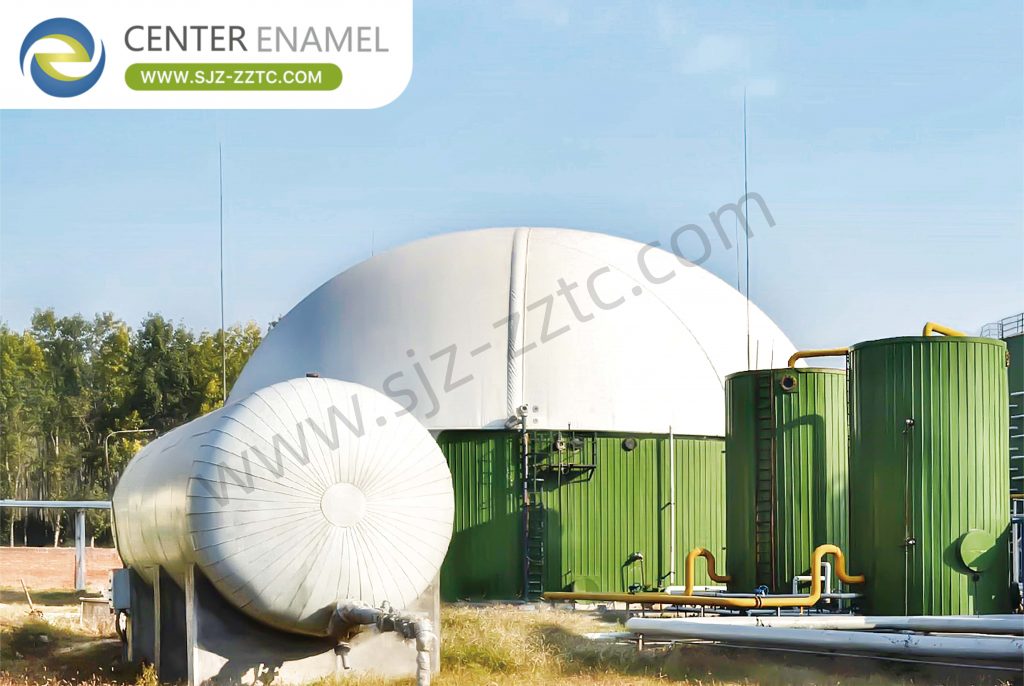
What Is a Dehydration Tank?
A dehydration tank, also known as a biogas condensate trap or water separator, is an essential component of the biogas purification system . Its primary purpose is to remove water vapor from the raw biogas generated during anaerobic digestion. Because biogas is produced in a warm, wet environment, it carries a significant amount of moisture. If this moisture is not removed, it can cause severe damage to downstream equipment, including pipes, valves, compressors, and the engines used for power generation . The dehydration tank serves as the first line of defense against the detrimental effects of moisture in the biogas stream.
The Importance of Dehydration in Biogas Purification
Water vapor in biogas is more than just a nuisance; it is a significant operational hazard. When biogas is compressed or cooled, this vapor condenses into liquid water. This water can mix with other impurities, most notably hydrogen sulfide (H₂S), to form a highly corrosive acid that attacks metal surfaces . Furthermore, moisture reduces the calorific value of the gas, decreasing the efficiency of energy production . By removing water vapor early in the process, the dehydration tank protects equipment, ensures consistent energy output, and is a necessary step before further purification processes like desulfurization and compression .
How Does a Biogas Dehydration Tank Work?
Most biogas dehydration tanks operate on the principle of condensation or mechanical separation.
Condensation Systems
These systems cool the hot, saturated biogas to a temperature where water vapor condenses into liquid droplets . This is often achieved through a heat exchanger, where the biogas is cooled using chilled water or ambient air. Once condensed, the water droplets are separated from the gas stream.
Mechanical Separation
In some designs, the dehydration tank uses a physical process to separate water from gas. For example, the "cyclone" or "centrifugal" principle forces the biogas into a spiral path inside the tank. Because water droplets are heavier than the gas, they are flung against the walls of the tank, coalesce into larger drops, and fall to the bottom for removal . Other tanks utilize filters or baffles to encourage water droplets to merge and settle out of the gas stream .
Key Components of a Dehydration Tank
A standard dehydration tank comprises several structural and functional elements. The main body of the tank is usually manufactured from carbon steel or stainless steel with internal anti-corrosion treatment . Key internal components often include:
Inlet and Outlet Ports: To direct the flow of wet biogas into the tank and dry biogas out.
Condensation or Filtration Media: Materials or structures that facilitate the removal of moisture.
Deflectors or Baffles: These force the gas to change direction, helping water droplets fall out of the gas stream .
Drainage System: A valve or outlet at the bottom of the tank to periodically discharge accumulated water .
Design Standards and Specifications
The design of a dehydration tank is critical for its performance and must be tailored to the specific biogas project. Common design criteria and parameters include:
Flow Rate: The empty tank flow rate is often maintained between 0.12 and 0.23 m/s to ensure proper separation without creating excessive turbulence .
Pressure: The biogas must enter the tank at a pressure greater than 2 kPa to ensure adequate flow through the system .
Materials: Tanks should be constructed from materials that resist corrosion from the acidic condensate. This often includes carbon steel with anti-corrosion coatings or stainless steel .
Dehydration and Desulfurization: A Dual Approach to Biogas Cleaning
Dehydration is often paired with desulfurization, as both processes are essential for biogas quality . While the dehydration tank removes moisture, the desulfurization tank removes hydrogen sulfide (H₂S). These two contaminants are a dangerous combination. Removing water first is often advantageous because it helps the equilibrium on sulfur adsorbents and reduces the burden on the desulfurization system . Many projects integrate both units, such as the "Dehydration and Desulfurization Tank," to provide a comprehensive solution for biogas pretreatment .
Applications of Dehydration Tanks in Various Biogas Projects
Dehydration tanks are a universal requirement for nearly all types of biogas installations. Their applications span a wide range of industries, including:
Wastewater Treatment Plants: Treating biogas from anaerobic digesters used to process municipal or industrial sewage .
Agricultural Farms: Handling biogas from livestock manure, such as pig or cow farms .
Food and Beverage Industry: Processing organic waste from production facilities .
Landfill Gas Capture: Removing moisture from gas extracted from waste disposal sites.
Integrating Dehydration Tanks into a Complete Biogas System
A dehydration tank is typically one step in a larger, multi-stage system designed to upgrade raw biogas to a usable fuel. The typical sequence begins with the anaerobic digester, followed by a solid-liquid separator. The biogas then enters the dehydration tank to remove moisture. After dehydration, the gas goes to a desulfurization unit to remove H₂S . Finally, the purified and dried gas is stored in a gas holder or compressed for use in engines, boilers, or for injection into natural gas grids .
Advantages of Using Glass-Fused-to-Steel (GFS) Tanks for Biogas Projects
When constructing a biogas project, the choice of tank material is paramount for long-term success. Center Enamel offers state-of-the-art Glass-Fused-to-Steel (GFS) tanks, which represent the ideal solution for anaerobic digestion and related infrastructure. GFS technology involves fusing a high-quality glass coating to steel panels at high temperatures (approximately 820-860°C), creating a highly durable and corrosion-resistant material . The advantages of GFS tanks for biogas projects are numerous and make them the preferred choice for modern installations:
Superior Corrosion Resistance: The glass coating provides inert, non-porous protection against the highly acidic and corrosive environment inside a biogas digester and associated equipment .
Rapid and Simple Installation: GFS tanks are bolted tanks, meaning they are constructed on-site from factory-prefabricated panels. This significantly reduces construction time compared to concrete or welded steel tanks .
Long Lifespan and Low Maintenance: The robust glass-steel bond ensures a long service life with minimal maintenance requirements, offering an excellent return on investment .
Cost-Effective: GFS tanks often have a lower initial capital cost and reduced lifecycle costs compared to alternative storage solutions .
Expandability: The bolted construction allows for easy expansion of tank volume if project capacity needs to increase in the future .
Center Enamel is a global leader in the supply of biogas project equipment, including high-quality GFS tanks, and provides complete turnkey solutions. They offer a range of anaerobic technologies, such as CSTR, UASB, USR, and IC processes, supported by robust GFS tanks for anaerobic reactors . Their full range of equipment includes not only GFS tanks but also FBE tanks, double membrane gas holders, and aluminum dome roofs, ensuring a one-stop solution for project developers .
Conclusion
The dehydration tank is a non-negotiable component of any successful biogas project. By efficiently removing water vapor, it protects downstream equipment from corrosion, optimizes the energy output of the biogas, and ensures the safe and reliable operation of the entire system. While the dehydration tank plays a crucial role, its success depends on the overall quality and durability of the infrastructure. For long-term reliability, the choice of robust equipment, such as Center Enamel's corrosion-resistant GFS tanks, is a strategic investment that pays dividends through enhanced performance and minimized downtime.
FAQ
Q1: What is the primary purpose of a dehydration tank in a biogas plant?
The primary purpose of a dehydration tank is to remove water vapor from raw biogas. This protects the plant's compressors, pipes, and engines from corrosion, which can be exacerbated when water mixes with hydrogen sulfide to form acidic compounds .
Q2: Why is it necessary to dehydrate biogas before desulfurization?
Dehydrating biogas before desulfurization is beneficial because it improves the efficiency of the desulfurization process. Removing water vapor helps the equilibrium on sulfur adsorbents, allowing them to capture more hydrogen sulfide and reducing the overall burden on the system .
Q3: What are the main advantages of using Glass-Fused-to-Steel (GFS) tanks for biogas infrastructure?
GFS tanks offer superior corrosion resistance, which is essential for handling aggressive biogas and chemical solutions. They also allow for rapid, cost-effective installation, require low maintenance, have a long lifespan, and can be easily expanded or relocated compared to traditional concrete or welded steel tanks .