
What Is a Turnkey Biogas Solution? Scope, Components, and Benefits Explained
A turnkey biogas solution is a single-contract delivery model in which one provider designs, engineers, supplies, installs, commissions, and hands over a fully operational biogas plant. The client receives “the key” to a working facility, and the contractor bears the integration risk across all subsystems. For 2026, turnkey delivery is the default for 70–80% of commercial biogas projects worldwide.
What Exactly Does the Turnkey Scope Include?
A complete turnkey package bundles seven work packages: (1) feasibility and feedstock analysis, (2) process and civil engineering, (3) permits and grid/bio-methane connection paperwork, (4) equipment supply—digester tanks, mixers, pumps, gas cleaning, CHP or upgrading skid, (5) civil works and tank erection, (6) commissioning, performance testing, and staff training, and (7) a warranty period with guaranteed output parameters.
The contractual heart of turnkey delivery is the performance guarantee: the contractor commits to a minimum methane yield, electrical efficiency, and uptime. If the plant underperforms, the contractor—not the client—bears the remediation cost. This is what distinguishes a true turnkey contract from a simple equipment supply deal.
Turnkey vs. Self-Managed Delivery: The Real Trade-Off
Self-managed delivery (buying components separately and hiring a civil contractor yourself) can save 5–15% on paper, but shifts integration, scheduling, and performance risk onto the client. For a first-time biogas investor, the hidden costs of managing 8–12 subcontractors—schedule delays, interface failures, warranty disputes—typically erase the apparent savings.
Turnkey delivery is most attractive when you lack in-house biogas engineering capability, when project financing requires a fixed price and date, or when your bank asks for a single point of responsibility. It is less necessary for repeat developers who already own an operations team and can arbitrage the component market.
Comparative Data Table: Turnkey vs. Self-Managed Project Delivery
| Dimension | Turnkey (Single EPC Contract) | Self-Managed (Multi-Contract) |
| Contractual interfaces | One contract, one responsible party | 8–12 contracts, client coordinates |
| Price certainty | Fixed lump sum before construction | Costs known only at completion |
| Schedule risk | Contractor liable for delays | Client carries delay risk |
| Performance guarantee | Guaranteed yield/efficiency/uptime | None—warranties per component only |
| Engineering cost premium | +5–15% on equipment budget | Base equipment cost only |
| Best for | First-time investors, financed projects | Repeat developers with own O&M team |
How Much Does a Turnkey Biogas Solution Cost?
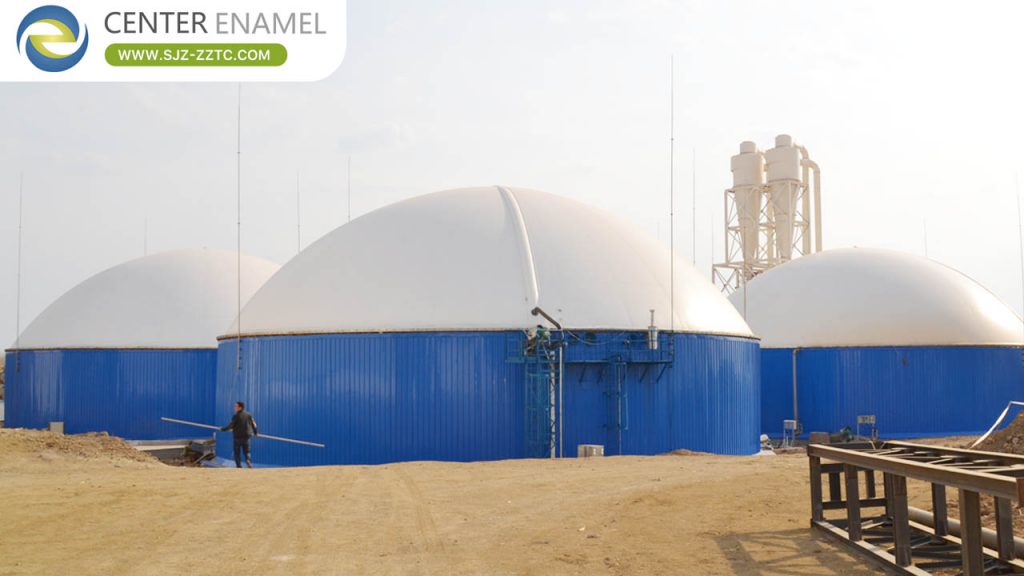
2026 turnkey pricing benchmarks: a 250 kW farm-scale plant (raw biogas ~100 Nm³/h) lands at €0.9–1.4 million; a 1 MW commercial plant (~400 Nm³/h) at €2.5–4.0 million; a 1,000 Nm³/h biomethane-upgrading plant at €6–9 million including grid connection. Digester tanks in glass-fused-to-steel (GFS) bolted construction typically account for 30–35% of turnkey CAPEX.
Frequently Asked Questions (FAQ)
Q1: What is the difference between EPC and turnkey delivery?
A: They overlap heavily—EPC (engineering, procurement, construction) is the contractual mechanism, and turnkey is the outcome (a plant ready to run). A turnkey contract is always EPC-plus: it adds commissioning, performance testing, and operator training, whereas a pure EPC contract may stop at construction handover.
Q2: Can a turnkey provider help with feedstock supply contracts?
A: Usually yes—most experienced providers include feedstock logistics design and supplier due-diligence in the feasibility phase, and some offer a long-term feedstock or off-take package through partner operators.
Q3: How long does a turnkey biogas project take from contract to operation?
A: Farm-scale plants typically 8–12 months, commercial CHP plants 12–18 months, and biomethane plants with grid connection 18–24 months. The permitting period is often the longest single item, so a good provider starts it in parallel with design.