
What is a UASB Reactor in ETP? A Complete Solution to Modern Effluent Treatment
In the evolving landscape of industrial wastewater management, the Upflow Anaerobic Sludge Blanket (UASB) reactor has become a cornerstone technology for Effluent Treatment Plants (ETPs). This guide provides a comprehensive, data-driven overview of UASB reactor working principles, key performance parameters, industrial applications, and a real-world project case study with verified results.
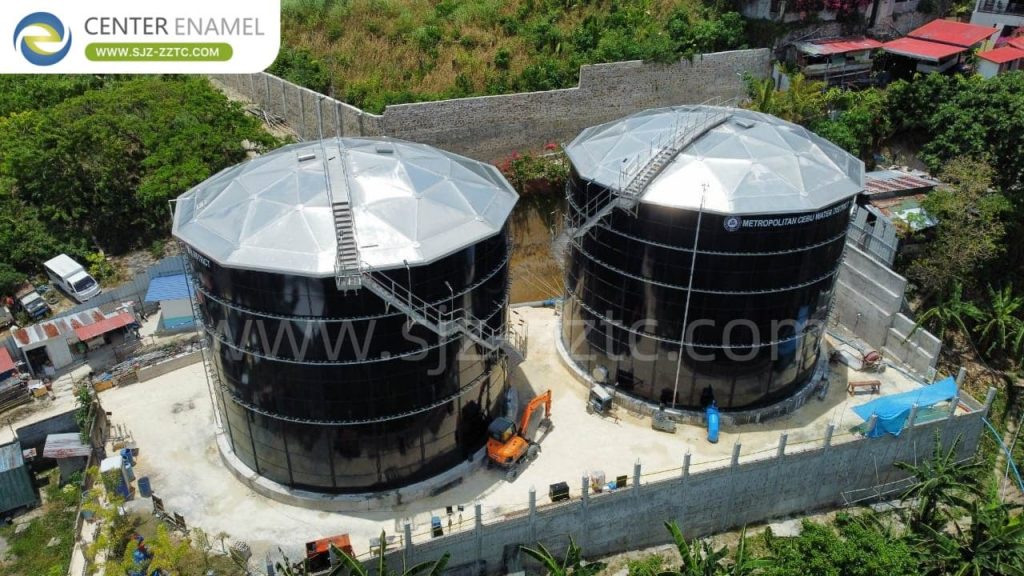
What Is a UASB Reactor?
A UASB reactor is an anaerobic biological treatment system specifically designed for high-strength organic wastewater. Unlike aerobic systems that require continuous mechanical aeration-consuming up to 60% of ETP electricity costs-the UASB operates in an oxygen-free environment. It leverages a dense layer of anaerobic microorganisms (the sludge blanket) to degrade organic pollutants while generating biogas (60–75% methane) as a recoverable energy resource.
The reactor’s defining feature is its self-immobilizing granular sludge, which enables high biomass retention without external recirculation, resulting in a compact footprint and low hydraulic retention time (HRT).
How Does a UASB Reactor Work? Working Principle & Key Components
Upflow Hydraulic Mechanism
Wastewater enters from the bottom and flows upward through the sludge blanket. This upflow velocity:
Fluidizes the sludge bed, maximizing microbe-pollutant contact
Promotes natural mixing via biogas bubble rise, eliminating mechanical agitators
Three-Phase Separator (GLSS)
At the top, a Gas-Liquid-Solid Separator (GLSS) performs three critical functions:
| Function | Description |
| Gas separation | Collects biogas and directs it to the gas outlet |
| Liquid collection | Allows treated effluent to exit for downstream polishing |
| Sludge retention | Returns settled sludge to the blanket, maintaining biomass inventory |
This self-regulating design eliminates the need for external clarifiers or sludge return pumps in most configurations.
UASB Reactor Key Operating Parameters
| Parameter | Typical Range | Industrial Example (Dairy ETP) |
| Hydraulic Retention Time (HRT) | 4 – 8 hours (industrial); up to 42 hours (some effluents) | 12.6 hours (after optimization) |
| Organic Loading Rate (OLR) | 2 – 10 kg COD/m³·day | 600 g COD/day (lab-scale dairy) |
| Temperature | 30 – 38°C (mesophilic) | 35°C ± 2°C |
| Sludge Concentration | 3 – 6% solids | 4.2% (typical granular bed) |
| COD Removal Efficiency | 60 – 80% | 72% (dairy effluent) |
| BOD Removal Efficiency | 70 – 90% | 85% (distillery spent wash) |
| Biogas Yield | 0.3 – 0.5 m³/kg COD removed | 0.42 m³/kg COD removed |
| Methane Content | 55 – 75% | 62% |
Industrial Applications of UASB Reactors in ETP
| Industry | Wastewater Characteristics | Typical Performance |
| Distillery | BOD 40,000–80,000 mg/L | 70–90% BOD removal; high biogas yield |
| Dairy | COD 2,000–10,000 mg/L | ~72% COD removal; biogas with 60% CH₄ |
| Sugar | Soluble COD high | 66% removal (first 30 days after seeding) |
| Food & Beverage | Variable organic loads | Stable treatment with energy recovery |
| Municipal Sewage | Low-to-medium strength | Effective in warm-climate regions |
UASB vs. CSTR: Which One Is Right for Your ETP?
| Feature | UASB Reactor | CSTR (Continuous Stirred Tank Reactor) |
| Mixing | Hydraulic upflow + biogas | Mechanical agitator |
| Biomass Form | Granular (self-immobilized) | Suspended flocs |
| Feedstock Suitability | Low-solids wastewater (TSS < 2%) | High-solids slurries (>5% TS) |
| HRT | 4 – 42 hours | 15 – 30 days |
| Energy Consumption | Low (no aeration, no mixing) | Higher (mechanical mixing) |
| Preferred Use | Industrial ETP, municipal STP | Manure, food waste, co-digestion |
Advantages and Challenges of UASB Reactor
| Advantage | Challenge | Mitigation |
| Low OPEX (no aeration) | Long startup (2–4 months) | Bio-augmentation; proper seed sludge |
| Small footprint | Sensitivity to pH/temperature shocks | Online monitoring + equalization tank |
| Biogas recovery | Odor risk | Enclosed GLSS + biofilter |
| Low sludge yield | Post-treatment required | Aerobic polishing step |
| High load tolerance | Poor degradation of recalcitrant compounds | Pre-treatment or co-substrate addition |
Project Case Study: Dairy ETP Upgrade with UASB Reactor
Project Overview
A large dairy processing facility in Southeast Asia needed to replace its aging aerobic lagoon with a more efficient, energy-positive solution. The plant processed 500 m³/day of wastewater with an average COD of 8,500 mg/L.
Scope of Work
Full EPC (Engineering, Procurement, Construction)
Design and fabrication of a 1,500 m³ GFS UASB reactor
Installation of GLSS, biogas holder (double-membrane), and flare system
Integration with existing equalization and post-aerobic polishing units
Technologies Used
| Component | Technology/Specification |
| Reactor tank | Glass-Fused-to-Steel (GFS), AWWA D103 |
| Three-phase separator | Center Enamel engineered GLSS |
| Biogas storage | Double-membrane holder (>99.9% gas retention) |
| Biogas treatment | Dehydration + desulfurization |
| Control system | SCADA with pH, temp, flow, and OLR monitoring |
Project Results / Performance Data
| Parameter | Before (Lagoon) | After (UASB + Polish) | Improvement |
| Effluent COD | 850 mg/L | 180 mg/L | 79% reduction |
| BOD removal | 65% | 88% | +23% |
| HRT | 72 hours | 8 hours (UASB) | 89% reduction |
| Sludge production | 2.5 tons/day | 0.9 tons/day | -64% |
| Energy recovery | None | 1,200 m³/day biogas | ~30,000 MJ/day |
| Monthly OPEX | $18,000 | $11,500 | -36% |
Client Testimonial
“Center Enamel’s UASB solution transformed our ETP from a cost burden into an energy asset. The biogas now powers our boilers, and the system has run stably for over 18 months with minimal operator intervention. The GLSS design and GFS tank quality exceeded our expectations.”
- Plant Manager, Major Dairy Group
Why Center Enamel for UASB-Based ETP Solutions?
With 30+ years in the industry and 10,000+ projects across 100+ countries, Center Enamel delivers:
Full EPC services – from feasibility to operator training
GFS tank technology – corrosion-resistant, gas-tight, 30-year lifespan
In-house GLSS & biogas systems – engineered for high efficiency
Global compliance – ISO 9001, EN 1090, NSF/ANSI 61, AWWA D103
Fast installation – bolted tanks, no welding, containerized shipping
Frequently Asked Questions (FAQ)
Q1: How long does a UASB reactor take to reach full performance after startup?
Under normal conditions, 2–4 months are required for granulation and stable operation. With bio-augmentation (e.g., Center Enamel’s recommended seed culture), startup can be reduced to 4–6 weeks, depending on effluent characteristics and temperature control.
Q2: What is the typical biogas yield and methane content from a UASB reactor?
A well-operated UASB treating industrial effluent yields 0.3–0.5 m³ biogas per kg COD removed, with 55–75% methane. For a dairy plant processing 500 m³/day, this translates to ~1,200 m³/day biogas, equivalent to 30,000 MJ of recoverable energy.
Q3: Can a UASB reactor be retrofitted into an existing ETP?
Yes. Common retrofits include:
Adding a clarifier downstream for sludge retention
Installing equalization and pH control upstream
Modifying aerobic stages to anoxic/oxic for nitrogen removal
Adding biogas handling infrastructure (holder, flare, desulfurization)
Center Enamel provides custom retrofitting engineering based on site constraints.
Q4: What types of wastewater are NOT suitable for UASB treatment?
High-sulfate wastewaters (risk of H₂S toxicity), low-COD effluents (< 1,000 mg/L), and streams with high concentrations of heavy metals or toxic organics require pre-treatment or alternative technologies.
Q5: How does a UASB reactor handle temperature variations?
Performance decreases at lower temperatures (e.g., < 20°C). In colder climates, insulation and/or heating systems (e.g., hot water recirculation) are recommended to maintain mesophilic conditions.