
What is A2O Biological Treatment?
A2O biological treatment, short for Anaerobic-Anoxic-Oxic process, is a mainstream activated sludge technology widely used for municipal and industrial wastewater treatment. It is specially designed for simultaneous removal of organic pollutants, nitrogen and phosphorus, effectively tackling water eutrophication caused by excess nutrients.
This article elaborates on its operational mechanism, core merits and typical applications. It also introduces the outstanding performance of GFS Tanks in supporting A2O systems and biogas projects, as well as the extensive project experience of Center Enamel in the environmental engineering field.
Basic Working Principle of A2O Biological Treatment
The A2O process divides the treatment system into three interconnected functional zones with distinct dissolved oxygen (DO) environments, and wastewater flows through the zones in sequence to complete layered purification.
- Anaerobic Zone (DO < 0.2 mg/L): Without oxygen and nitrate, phosphorus accumulating organisms (PAOs) release stored phosphorus and decompose complex organics into volatile fatty acids. This stage lays a foundation for subsequent phosphorus removal and denitrification.
- Anoxic Zone (DO < 0.5 mg/L): No oxygen but with nitrate from internal reflux. Denitrifying bacteria convert nitrate into nitrogen gas, realizing biological nitrogen removal and consuming residual organic matter.
- Oxic Zone (DO 1.5-2.5 mg/L): Sufficient aeration enables aerobic microbes to degrade remaining COD and BOD. Ammonia is transformed into nitrate via nitrification, and PAOs absorb large amounts of phosphorus, which is finally discharged along with excess sludge.
Internal sludge and water reflux connect the three zones to form a stable circulating treatment system.
Core Advantages and Main Applications
Compared with single aerobic or anaerobic treatment, A2O biological treatment has prominent strengths. It achieves organic matter degradation, denitrification and dephosphorization in one integrated system, requiring fewer chemical additives and lowering operational costs. The process runs stably with strong load resistance, adapting to fluctuating wastewater quality and flow rate.
It is widely applied to domestic sewage, livestock breeding wastewater, food processing wastewater and other organic effluents. It is the preferred secondary treatment process for most urban sewage plants and medium-sized industrial wastewater stations worldwide.
GFS Tanks: Reliable Support for Wastewater and Biogas Projects
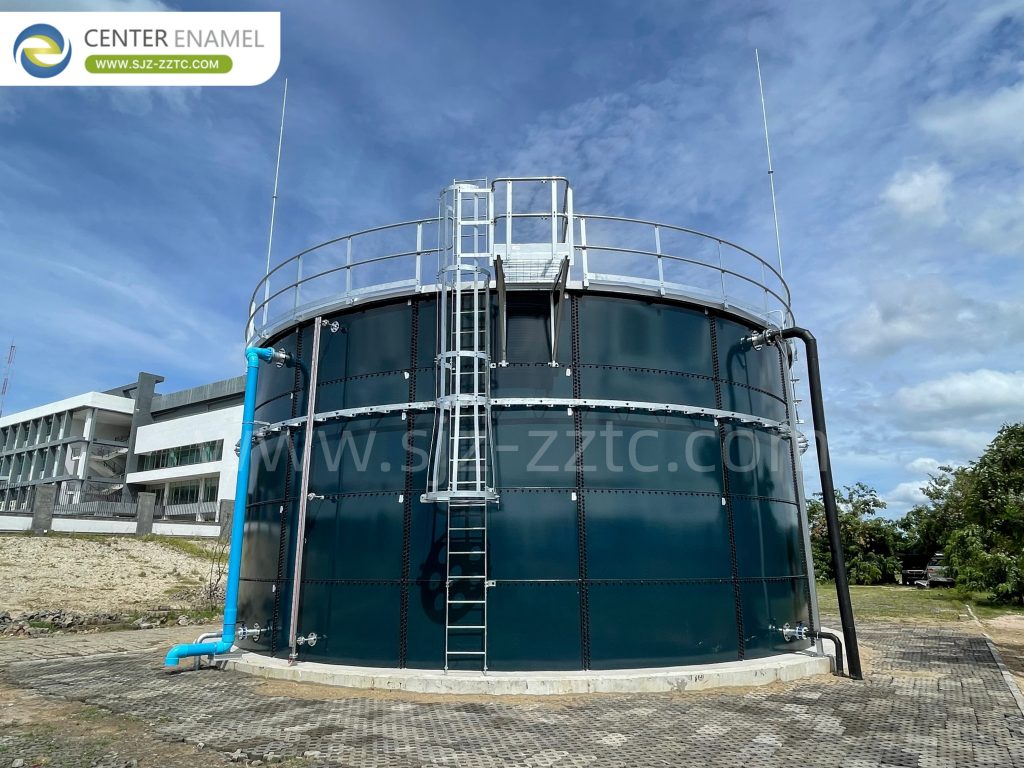
As high-performance containment equipment, GFS Tanks (Glass-Fused-to-Steel Tanks) perfectly match A2O treatment systems, anaerobic digesters and biogas production facilities. The table below shows their core parameters and values:
| Performance Item | Technical Feature | Practical Value |
| Corrosion Resistance | pH resistance range: 1–14 | Resist organic acid, hydrogen sulfide and salt in wastewater and biogas reactors |
| Service Life | Over 30 years | Reduce long-term replacement and maintenance costs |
| Structural Design | Modular bolted assembly | Fast on-site installation, no field welding required |
| Surface Property | Smooth non-porous enamel layer | Minimize sludge adhesion and simplify daily cleaning |
| Gas Tightness | Fully sealed structure | Prevent biogas leakage and odor overflow for biogas projects |
In A2O wastewater systems, GFS Tanks serve as anaerobic, anoxic and oxic zone reactors, equalization tanks and sludge storage tanks. In biogas projects, they act as core anaerobic fermentation tanks to create a stable sealed environment for methane production. Adaptable to high temperature, humidity and coastal salt corrosion, GFS Tanks operate reliably in various harsh environments.
Center Enamel’s Rich Experience in Biogas and Wastewater Projects
Center Enamel is a professional EPC contractor and manufacturer focusing on GFS Tanks and environmental engineering for decades. The company has delivered numerous wastewater treatment and biogas projects across the globe.
It provides one-stop services including customized design, equipment manufacturing, transportation, installation, commissioning and after-sales support. Its products comply with ISO, AWWA and other international standards, ensuring stable operation of A2O treatment systems and biogas facilities in different regions. With mature construction technology and localized solutions, Center Enamel has helped countless clients build efficient wastewater and biogas projects, gaining wide recognition in the industry.
A2O biological treatment remains a cost-effective and reliable solution for simultaneous nutrient and organic pollutant removal in modern wastewater treatment. Matched with durable and high-performance GFS Tanks, the whole treatment and resource recycling system gains longer service life and higher operational efficiency. Supported by Center Enamel’s professional engineering capabilities and abundant project experience, A2O combined with biogas recycling technology can maximize environmental and economic benefits, promoting the sustainable development of wastewater treatment and circular agriculture.