
What Is Agricultural Wastewater Treatment? A Complete Guide to Traditional and Modern Biogas Conversion Methods
Agricultural wastewater treatment refers to the processes used to remove contaminants from water generated by farming activities-including livestock operations, crop irrigation, and agro-industrial processing-before it is discharged, reused, or applied to land. This wastewater contains organic matter, nutrients like nitrogen and phosphorus, pathogens, and sometimes pesticides, all of which can harm water quality and public health if left untreated. As global water scarcity intensifies and regulations tighten, agricultural wastewater treatment has evolved from simple land application to sophisticated systems that recover energy, nutrients, and water.
What Makes Agricultural Wastewater Different from Other Wastewater?
Agricultural wastewater presents unique treatment challenges compared to domestic or industrial wastewater. Its composition varies dramatically depending on the farming activity, season, and local environmental conditions. Unlike municipal wastewater that arrives at a centralized treatment plant through a pipe network, agricultural wastewater is often diffuse-generated across broad areas and difficult to collect efficiently.
The primary pollutants in agricultural wastewater include organic matter from animal manure and plant residues, nutrients from fertilizers and animal waste, pesticides and herbicides from crop protection, and pathogens from livestock operations. When untreated wastewater enters waterways, the organic matter decomposes and consumes dissolved oxygen, creating hypoxic conditions that threaten aquatic life. Nutrients promote eutrophication-excessive algae growth that further depletes oxygen and disrupts freshwater ecosystems.
The following table summarizes typical pollutant categories and their environmental impacts:
| Pollutant Category | Sources | Environmental Impact |
| Organic matter | Manure, plant residues | Oxygen depletion (high BOD/COD) |
| Nitrogen & phosphorus | Fertilizers, animal waste | Eutrophication, algal blooms |
| Pesticides & herbicides | Crop protection | Toxicity to aquatic life, groundwater contamination |
| Pathogens | Livestock operations | Waterborne disease risks |
Traditional Agricultural Wastewater Treatment Methods
Traditional treatment approaches rely on natural biological processes and low-cost infrastructure suited to the dispersed nature of agricultural operations. These methods remain widely used, particularly for small to medium-scale farms.
Constructed Wetlands
Constructed wetlands are engineered systems that mimic natural wetland processes to treat wastewater. They consist of aquatic plants, substrate media (gravel or soil), and microbial communities that work together to remove pollutants. Wetland plants such as Phragmites, Acorus, and Scirpus absorb and fix nutrients like nitrogen and phosphorus, reducing eutrophication risks while providing landscape benefits.
These systems are well-suited for small-scale rural wastewater treatment due to their ease of operation and significant ecological benefits. However, treatment efficiency varies with climate and season-plant growth cycles and temperature directly affect pollutant removal performance, with lower efficiency during winter.
Anaerobic Lagoons and Stabilization Ponds
Lagoon systems rely on natural biological processes over extended retention times. Anaerobic lagoons treat high-strength organic wastewater without oxygen, while facultative and aerobic lagoons provide additional treatment in subsequent stages. These systems require significant land area but have low operational costs.
Land Application
Applying wastewater to agricultural land as a nutrient source remains a common practice, particularly for livestock operations. When properly managed according to nutrient management plans, land application recycles nitrogen, phosphorus, and organic matter into crop production. However, over-application can lead to nutrient runoff and groundwater contamination, making soil testing and application rate calculations essential.
Modern Treatment: Anaerobic Digestion for Biogas Production
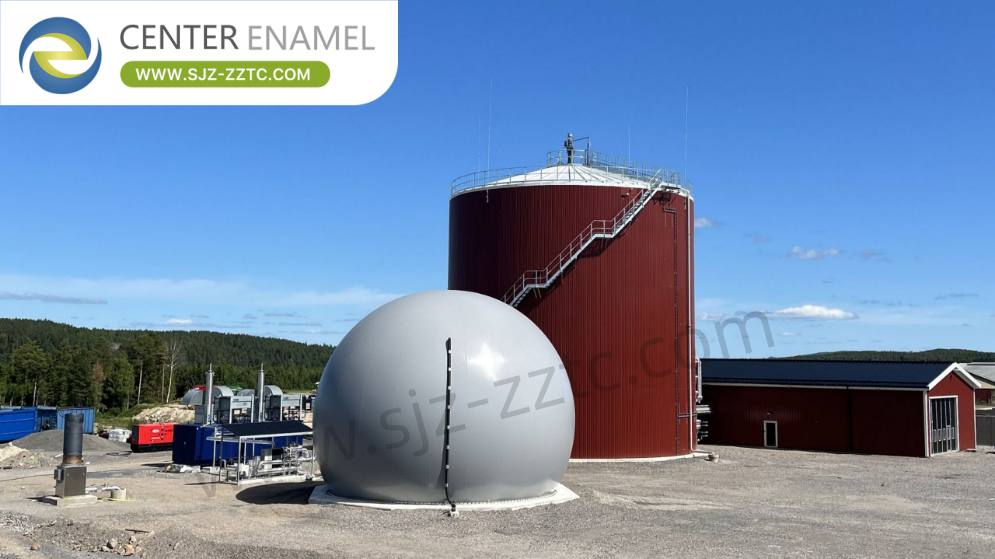
Anaerobic digestion (AD) has emerged as a cornerstone of modern agricultural wastewater treatment, transforming treatment from a cost center into an energy recovery opportunity. This process breaks down organic matter in the absence of oxygen, producing biogas-a renewable energy source typically containing 50-70% methane.
How Anaerobic Digestion Works
The AD process occurs in four stages: hydrolysis, acidogenesis, acetogenesis, and methanogenesis. Microorganisms progressively break down complex organic compounds into simpler molecules, ultimately producing methane and carbon dioxide. The process simultaneously reduces organic load (measured as COD and BOD), destroys pathogens, and controls odors.
For agricultural operations, AD offers a dual benefit: wastewater treatment and energy production. Small-scale digesters in developing countries have demonstrated that biogas can meet farmers' cooking energy needs, eliminating the purchase of propane or use of firewood while improving indoor air quality. Studies show that small-scale digesters reduce organic matter and solids in animal wastewater by 55-90%.
Enhancing Biogas Yield Through Co-Digestion
Agricultural wastewater often has a low carbon-to-nitrogen (C/N) ratio, which can inhibit methanogenic bacteria and reduce biogas yield. Co-digestion-combining agricultural wastewater with carbon-rich substrates-addresses this limitation by balancing nutrients, improving buffering capacity, and diversifying microbial communities.
Research on co-digestion of cow manure with various substrates demonstrates significant yield improvements:
| Co-Substrate | Mixing Ratio | Methane Yield | Improvement vs. Monodigestion |
| Sweet potatoes | 1:1 | 444 mL CH₄/g VS | 44.6% higher than dairy manure alone |
| Food waste | 1:1 | 320 mL CH₄/g VS | Enhanced process stability |
| Sugar beets | 3:1 | 314 mL CH₄/g VS | Balanced C/N ratio |
Innovative AD Technologies
Recent research has explored novel approaches to enhance AD performance for agricultural wastewater. A prototype system developed by USDA researchers combines anaerobic digestion with underwater acoustic stimulation to accelerate the process while reducing energy consumption compared to mechanical mixing. The digester effluent then undergoes low-level aeration designed to foster a consortium of nitrifying and Anammox bacteria capable of remediating ammonium at low cost.
Two-stage anaerobic digestion (TSAD) separates the acidogenic and methanogenic phases, reducing inhibitory effects of volatile fatty acids on methane-producing bacteria. A study on rice wastewater co-digested with cow dung slurry found that TSAD increased biomethane yield by 1.6 times and overall energy recovery by 38% compared to single-stage digestion.
Advanced Physicochemical Treatment Technologies
While biological treatment dominates agricultural wastewater management, physicochemical methods serve important roles as pretreatment steps or for targeted pollutant removal.
Membrane Separation
Membrane technologies including ultrafiltration, microfiltration, reverse osmosis, and nanofiltration selectively separate suspended solids, dissolved organics, and microorganisms based on pore size. Reverse osmosis is particularly effective for removing dissolved organic compounds and inorganic salts, making it suitable for high-strength livestock wastewater and agricultural processing effluent. However, high operational costs and membrane fouling remain challenges, driving research into antifouling nanomaterials and improved module designs.
Chemical Precipitation and Adsorption
Chemical precipitation using coagulants like aluminum or iron salts effectively removes phosphorus and heavy metals from agricultural wastewater. Adsorption technologies leverage porous materials such as activated carbon, zeolite, and biochar to capture pollutants. Modified adsorbents including magnetic nano-adsorbents and biochar have shown improved adsorption efficiency and regeneration capacity, reducing treatment costs and secondary pollution risks.
Nutrient Recovery and Water Reuse
Modern agricultural wastewater treatment increasingly emphasizes resource recovery rather than disposal. Nutrients recovered from wastewater can offset fertilizer inputs, while treated water can irrigate crops.
Recovering Nitrogen and Phosphorus
Biological treatment processes can recover key nutrients for reuse, alleviating ecological pressures associated with synthetic fertilizer production and use. Anaerobic digestion effluent (digestate) contains concentrated nutrients in plant-available forms, making it a valuable organic fertilizer. The "quick wash" process and similar technologies extract phosphorus from manure, producing concentrated fertilizer products that are more economical to transport than raw waste.
Reclaimed Water Irrigation
Treated agricultural wastewater can be reused for irrigation, boosting crop yields while improving soil structure. However, reclaimed water irrigation carries risks including heavy metal residues, pathogenic microorganisms, and potential long-term soil and crop health impacts. Proper treatment levels and crop restrictions-such as avoiding raw-consumed crops-are essential safety measures.
Energy Recovery Potential
The energy potential of agricultural wastewater treatment through AD is substantial. Small-scale digesters using bovine and swine excreta have demonstrated biogas production sufficient for cooking needs. Farm-scale systems co-digesting rice straw with piggery wastewater produced 295 MWh of cumulative energy over a 422-day digestion cycle, with maximum daily power production of 2.74 MWh during mesophilic conditions.
Regulatory Framework and Compliance
Agricultural wastewater treatment is governed by an evolving regulatory landscape. In the United States, the Clean Water Act regulates discharges from concentrated animal feeding operations (CAFOs) through National Pollutant Discharge Elimination System (NPDES) permits. Nutrient management plans are required for large operations, specifying land application rates, storage requirements, and record-keeping practices.
The EPA has proposed updated Effluent Limitation Guidelines for meat and poultry processing facilities that would establish more stringent nitrogen limits and, for the first time, phosphorus limits. These regulations affect both direct dischargers and facilities sending wastewater to publicly owned treatment works.
Compliance strategies vary by operation size and location. Small farms may rely on traditional treatment methods combined with careful land application, while larger operations increasingly adopt anaerobic digestion, advanced nutrient removal, and water reuse technologies to meet regulatory requirements while capturing economic benefits.
Need help designing an agricultural wastewater treatment system for your operation? Our team specializes in anaerobic digestion feasibility assessments, nutrient recovery strategies, and regulatory compliance guidance tailored to farms and agro-industrial facilities. Contact us today to discuss sustainable treatment solutions that turn waste into value.
Frequently Asked Questions
What is the most common method for treating agricultural wastewater?
The most common method depends on operation scale and type. For livestock operations, anaerobic lagoons and land application remain widespread due to low cost and nutrient recycling benefits. Constructed wetlands are common for smaller operations seeking passive treatment. Modern facilities increasingly adopt anaerobic digestion, which treats wastewater while producing biogas for energy recovery. Many operations combine multiple methods-such as solids separation followed by lagoon treatment and land application-to achieve treatment goals.
Can agricultural wastewater be converted to biogas?
Yes, anaerobic digestion converts organic matter in agricultural wastewater into biogas containing 50-70% methane. This biogas can be used for cooking, heating, electricity generation, or upgraded to renewable natural gas. Small-scale digesters in developing countries produce sufficient biogas for household cooking, while farm-scale systems can generate hundreds of megawatt-hours of energy annually. Co-digestion with carbon-rich substrates like crop residues improves methane yields significantly.
What are the environmental benefits of agricultural wastewater treatment?
Proper treatment prevents oxygen depletion in waterways, reduces eutrophication risks, and protects groundwater from nutrient and pathogen contamination. Treatment also enables nutrient recovery-recycling nitrogen and phosphorus into crop production-and water reuse for irrigation. Anaerobic digestion additionally reduces greenhouse gas emissions by capturing methane that would otherwise be released, and produces renewable energy that displaces fossil fuel use.