
What is an Agricultural Biogas Plant? Definition, Process & Benefits
An agricultural biogas plant is an specialized industrial bioenergy facility designed to process agricultural organic waste—such as livestock manure, crop residues, and energy crops—through controlled anaerobic digestion. In the absence of oxygen, specialized microbial consortia break down complex organic matter to produce a combustible mixture of methane and carbon dioxide, known as biogas, alongside a nutrient-rich organic by-product called digestate.
By converting unmanaged farm waste into clean baseload energy and high-grade organic fertilizer, agricultural biogas plants serve as a cornerstone of rural circular economies and sustainable agricultural decarbonization.
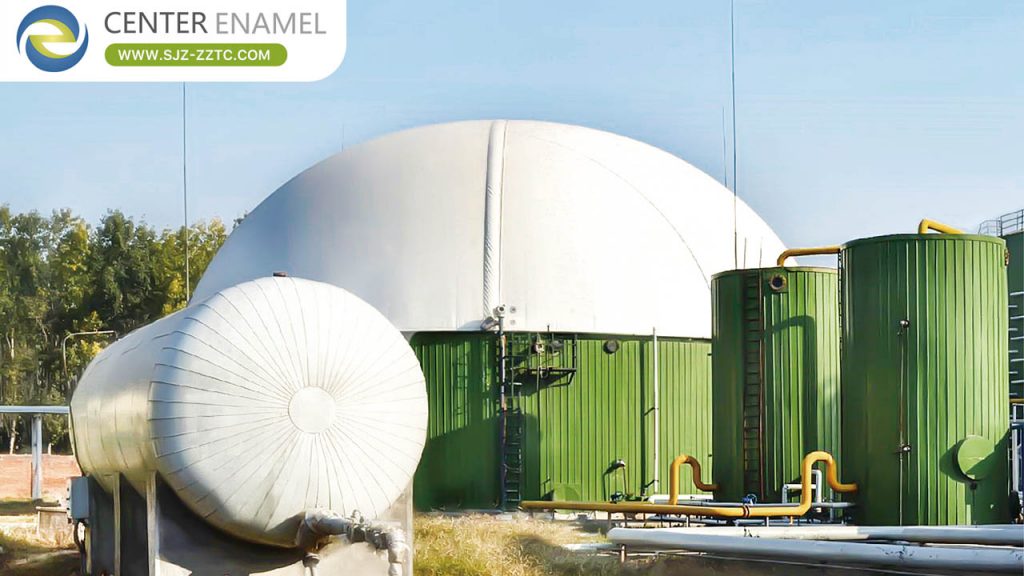
Core Components of an Agricultural Biogas Plant
A standard commercial agricultural biogas installation integrates several critical engineering elements to ensure smooth and efficient material flow:
- Substrate Feeding System: Industrial hoppers, screws, and pumps designed to introduce solid biomass and liquid slurries uniformly into the system.
- Anaerobic Digester Tanks: Sealed, airtight bioreactors (often built with Glass-Fused-to-Steel or reinforced concrete) equipped with heavy-duty internal mixers to maintain optimal thermal and biological conditions.
- Gas Storage Holder: Double-membrane roofs or dedicated gas holders mounted on top of or adjacent to the digesters to safely capture and store raw biogas.
- Utilization or Upgrading Unit: Combined Heat and Power (CHP) engines that convert biogas into electricity and thermal heat, or gas upgrading skids that purify biomethane for grid injection or vehicle fuel.
- Digestate Storage & Separation Units: Post-digestion tanks and screw presses that separate solid and liquid fertilizer fractions for agricultural land application.
How the Production Process Works
The operational workflow of an agricultural biogas facility follows a structured biological and engineering sequence:
- Feedstock Preparation & Co-Digestion: Raw inputs like livestock slurry are blended with carbon-rich crop residues or agricultural by-products to balance the Carbon-to-Nitrogen (C:N) ratio.
- Anaerobic Digestion: The prepared organic slurry is heated (typically under mesophilic conditions around 37°C–38°C) and pumped into the main digester. Over a retention period of 20 to 30 days, bacteria execute four biological stages: hydrolysis, acidogenesis, acetogenesis, and methanogenesis.
- Biogas Extraction & Purification: Raw biogas (containing roughly 50%–70% methane) is drawn from the gas holder, dewatered, and stripped of corrosive hydrogen sulfide ($H_2S$).
- Energy Generation & Nutrient Recovery: Clean gas fuels localized power generation or is upgraded into renewable natural gas (RNG), while residual digestate is safely stored and applied back to fields as a pathogen-reduced bio-fertilizer.
Comparative Data Table: Traditional Farm Management vs. Agricultural Biogas Plant
| Operational Metric | Traditional Open Manure Storage | Modern Agricultural Biogas Plant |
| Methane Emissions | High unmanaged fugitive emissions | Total containment and gas destruction |
| Energy Output | None (wasted energy potential) | Continuous baseload electricity, heat, or biomethane |
| Odor & Pest Control | Severe odor issues; attracts flies/vectors | Odor-minimized, sealed containment workflow |
| Fertilizer Value | Raw nutrients with weed seeds and pathogens | Pasteurized, homogenized, high-availability bio-fertilizer |
Frequently Asked Questions (FAQ)
Q1: What raw materials are commonly fed into an agricultural biogas plant?
A: Common feedstocks include livestock manure (cattle, swine, and poultry slurry), agricultural crop residues (such as corn stover, wheat straw, or rice stubble), and secondary organic agro-industrial processing by-products.
Q2: What are the primary end-products generated by these facilities?
A: An agricultural biogas plant generates two primary outputs: 1) Clean renewable energy in the form of electricity, thermal heat, or upgraded compressed biomethane (RNG/Bio-CNG); and 2) Nutrient-dense organic digestate used to replace synthetic fertilizers.
Q3: How do agricultural biogas plants help reduce greenhouse gas emissions?
A: They combat climate change in two major ways: by capturing fugitive methane emissions from open manure lagoons that would otherwise escape into the atmosphere, and by displacing fossil fuels with carbon-neutral renewable energy.