
What Is an Anaerobic Digester Tank? A Complete Engineering Guide
An anaerobic digester tank is a sealed, oxygen-free vessel where microorganisms break down organic matter-such as agricultural residues, food waste, sewage sludge, and animal manure-to produce biogas and nutrient-rich digestate. This biochemical process, known as anaerobic digestion (AD), is the foundation of modern bioenergy systems, transforming environmental liabilities into renewable energy assets.
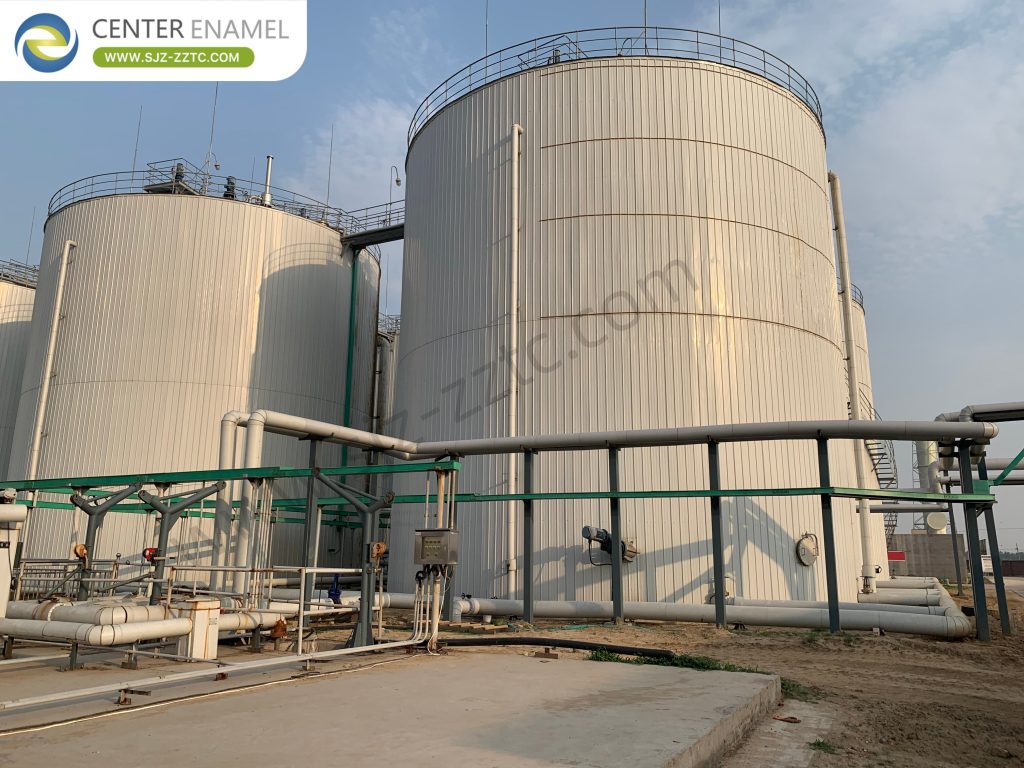
Anaerobic digester tanks are engineered to provide a perfectly sealed, thermally stable environment that maximizes microbial activity while withstanding the corrosive nature of biogenic gases. Whether used in municipal wastewater treatment, agricultural operations, or industrial facilities, these tanks are the critical infrastructure that enables sustainable waste management and energy recovery.
How an Anaerobic Digester Tank Works
Anaerobic digestion involves two distinct biochemical stages:
Stage 1 - Acid Fermentation: Complex organic compounds-including fats, proteins, and polysaccharides-are first hydrolyzed by facultative and anaerobic bacteria. These microorganisms then subject the hydrolysis products to fermentations and other metabolic processes, forming simple organic compounds, primarily short-chain volatile fatty acids and alcohols.
Stage 2 - Methane Fermentation: The end products from the first stage are converted to methane and carbon dioxide by strictly anaerobic bacteria. This methane-rich biogas (typically 40-70% methane) serves as a renewable energy source for heat, electricity generation (CHP), or upgrading to biomethane for grid injection.
The methane fermentation stage is generally the rate-limiting step in anaerobic treatment, as methane-producing bacteria are highly sensitive to environmental conditions. They operate most effectively in the mesophilic range (30-39°C) with a digestion period of approximately four weeks, though thermophilic operation (49-57°C) can achieve shorter retention times of 15-18 days.
Key Components of an Anaerobic Digester Tank
An industrial anaerobic digester tank comprises several essential subsystems:
Inlet Pipe: Introduces raw organic feedstock into the digestion zone.
Mixing Chamber/Agitation System: Ensures homogenous substrate distribution, prevents thermal stratification, and avoids crust formation. Mixing can be achieved through gas recirculation, mechanical impellers, or sludge recirculation.
Slurry Inlet & Outlet Pipes: Manages the continuous flow of active biomass and evacuation of processed digestate.
Gas Holder/Roof System: Captures and stores accumulating biogas safely at specified pressures. Options include double-membrane gas holders, aluminum geodesic dome roofs, and glass-fused steel roofs.
Gas Outlet: Directs raw biogas downstream for scrubbing, enrichment, or power generation.
Heating System: Maintains optimal temperatures for microbial activity, with integrated heating coils or external jackets.
Overflow Pipe: Acts as a safety mechanism to prevent overfilling and hydraulic pressure spikes.
Common Types of Anaerobic Digesters
Anaerobic digester configurations are classified based on mixing, temperature, and reactor design:
Standard Rate Digesters: Unheated and unmixed systems with digestion periods of 30-60 days. Simpler in design but require larger tank volumes.
High-Rate Digesters: Heated and completely mixed systems with detention periods of 10-20 days. These are preferred for larger sludge flows due to their smaller footprint.
Continuous Stirred Tank Reactors (CSTR): The most common configuration for agricultural and industrial applications, featuring continuous mixing to maintain uniform conditions.
Upflow Anaerobic Sludge Blanket (UASB) and Expanded Granular Sludge Bed Reactors (EGSB): High-rate systems designed for high-strength wastewater, relying on dense granular sludge for superior COD removal and compact footprint.
Two-Stage Digestion: Combines standard and high-rate digestion in separate tanks, with the second stage primarily separating digested solids from supernatant while allowing additional digestion and gas recovery.
Tank Shapes and Construction Materials
Anaerobic digester tanks are constructed in various shapes, each with distinct advantages:
Cylindrical Tanks: The most common configuration, typically with hopper bottoms and fixed or floating roofs.
Egg-Shaped Digesters: Provide superior hydraulics, reducing the required mixing intensity. Research indicates oval shapes are most suitable for anaerobic reaction processes.
Construction materials significantly impact longevity and performance:
Glass-Fused-to-Steel (GFS) Tanks: The premium choice for modern biogas applications. GFS technology fuses vitreous enamel to high-strength steel at 820-930°C, creating a non-porous, chemically inert surface immune to H₂S and organic acid attack.
Reinforced Concrete: Traditional but prone to micro-cracking, gas leakage, and acid spalling, with service life of 15-20 years.
Welded Carbon Steel: Requires periodic recoating and has a service life of 10-15 years before corrosion issues emerge.
Critical Design Parameters
Designing anaerobic digesters requires careful consideration of operational parameters:
| Parameter | Standard Rate | High Rate |
| Digestion Period | 30-60 days | 10-20 days |
| Temperature | Unheated | Heated (mesophilic/thermophilic) |
| Mixing | Unmixed | Completely mixed |
pH Management: Acidogenesis operates optimally at pH 5.5-6.5, while methanogenesis requires pH 7.8-8.2. Single-tank systems must maintain pH 6.8-7.2, tolerating a range of 6.5-8.0.
Sizing: Tank diameters typically range from 6m to 55m, with liquid depth of 4.5-6m (not exceeding 9m). Capacity calculations account for fresh sludge volume, digested sludge accumulation, digestion time, and storage period.
Loading Rates: High-rate digesters operate at significantly higher volumetric loading rates, processing more organic matter per unit volume.
Biogas Yield and Composition
The gas generated from anaerobic digestion contains primarily methane and carbon dioxide:
Methane: 65% (range 40-70%)
Carbon Dioxide: 30%
Nitrogen and Other Gases: ~5%
Biogas has a calorific value of 5,400-5,850 kcal/m³, making it a valuable energy resource. Gas production varies with feedstock, with agricultural residues and food waste typically yielding higher methane content than sewage sludge.
GFS Technology - The Gold Standard for Anaerobic Digesters
Glass-Fused-to-Steel technology has emerged as the definitive solution for anaerobic digestion tanks due to the aggressive chemical environment within digesters.
Superior Corrosion Resistance: Anaerobic digestion produces hydrogen sulfide and organic acids that rapidly degrade conventional materials. GFS coatings are completely immune to these corrosive agents, maintaining structural integrity for 30+ years.
Gas and Liquid Impermeability: Unlike porous concrete or seam-welded steel, GFS tanks are completely gas-tight, preventing methane leakage and maximizing energy recovery.
Modular Construction: Factory-fabricated GFS panels are bolted on-site, reducing construction time to 3-6 weeks compared to 6-12 months for concrete structures. This modularity also enables future expansion.
Minimal Maintenance: The smooth, inert glass surface prevents sludge adhesion and scaling, reducing cleaning requirements and operational downtime.
Center Enamel - Professional Biogas Project Solutions Provider
Center Enamel (Shijiazhuang Zhengzhong Technology Co., Ltd) is a global leader in anaerobic digestion tank manufacturing, with over 30 years of engineering expertise and a project footprint spanning 100+ countries. As the first manufacturer in China to independently develop Glass-Fused-to-Steel technology for bolted tanks, Center Enamel holds nearly 200 patents in enameling and coating technology.
Comprehensive Product Portfolio
GFS Anaerobic Digestion Tanks: Engineered to ISO 28765 and AWWA D103-09 standards, featuring 930°C thermal fusion technology for unmatched corrosion resistance. Available in sizes from 10 m³ to thousands of cubic meters.
Integrated Roof Systems: Options include double-membrane gas holders for pressurized biogas storage, aluminum geodesic dome roofs for odor control, and glass-fused steel roofs for complete gas tightness.
Complete Biogas Systems: Center Enamel provides end-to-end solutions including piping systems, dual-membrane gas holders, desulfurization units, and biogas purification systems.
EPC Project Delivery: As a professional EPC contractor, Center Enamel manages projects from design through commissioning, ensuring compatibility between all system components.
Industry Certifications
Center Enamel's quality systems are certified to international standards:
ISO 9001: Quality management
NSF/ANSI 61: Material safety
AWWA D103-09: Modular bolted steel design
ASME: Pressure vessel compliance
BSCI: Ethical manufacturing
Proven Global Track Record
Landmark projects demonstrate Center Enamel's engineering capability, including the 16,760 m³ Inner Mongolia bio-natural gas facility and the 42,188 m³ Eswatini alcohol wastewater project, along with numerous biogas installations across Europe, Asia, and North America.
Conclusion
An anaerobic digester tank is the heart of any biogas production system, providing the sealed, controlled environment where microorganisms convert organic waste into valuable methane and digestate. Understanding the different types, design parameters, and material requirements is essential for selecting the right solution for each application.
Glass-Fused-to-Steel technology has revolutionized anaerobic digestion infrastructure, offering unmatched corrosion resistance, gas tightness, and service life. Center Enamel's comprehensive GFS tank solutions-backed by international certifications, extensive engineering expertise, and a proven global track record-position the company as the professional partner of choice for biogas projects worldwide.
Frequently Asked Questions
What is the difference between mesophilic and thermophilic anaerobic digestion?
Mesophilic digestion operates at 30-39°C with a retention time of about four weeks, while thermophilic digestion runs at 49-57°C with shorter retention times of 15-18 days. Thermophilic offers faster processing but requires more heating and presents operational challenges.
How long does an anaerobic digester tank last?
Center Enamel's Glass-Fused-to-Steel anaerobic digester tanks are designed for a service life exceeding 30 years, compared to 15-20 years for concrete tanks and 10-15 years for carbon steel tanks.
What types of waste can be processed in an anaerobic digester?
Anaerobic digesters process a wide range of organic feedstocks including agricultural residues, food waste, municipal sewage sludge, animal manure, and industrial organic waste streams.