
What Is an Anaerobic Digestion Plant? A Complete Guide to Design, Operation, and Benefits
An anaerobic digestion plant is a controlled facility where microorganisms break down organic matter in the complete absence of oxygen, producing biogas and a nutrient-rich residue called digestate . Unlike open lagoons or landfills, where decomposition occurs slowly and uncontrollably, an AD plant creates optimized conditions for microbial activity, allowing gas production to reach its theoretical maximum within days rather than years .
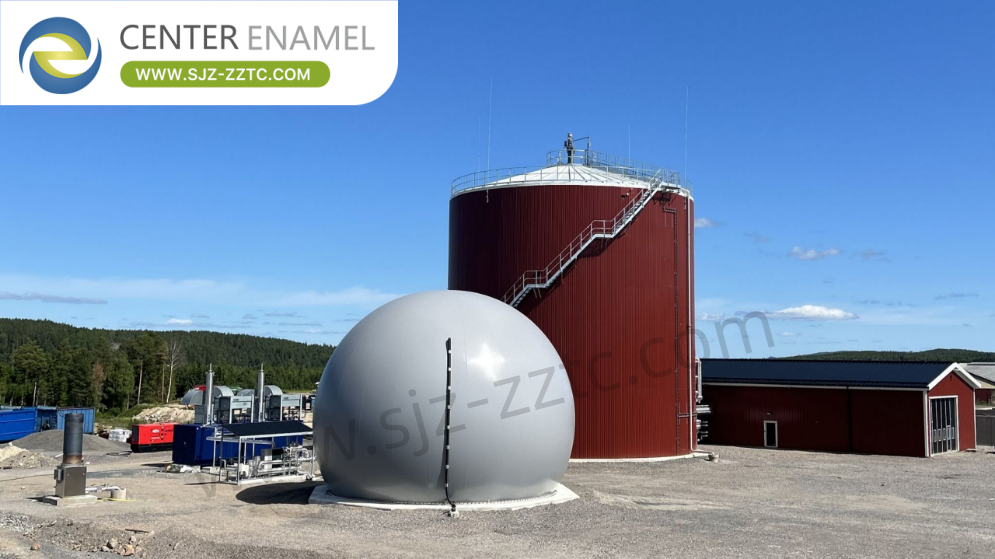
The core of any AD plant is the digester-a sealed, oxygen-free vessel that houses the biological process. Feedstock enters the system, undergoes a sequence of microbial transformations, and emerges as two valuable outputs: biogas, which can be used for heat, electricity, or upgraded to biomethane, and digestate, which serves as a soil amendment or fertilizer . This dual-output model is what makes anaerobic digestion attractive as both a waste management strategy and a renewable energy technology.
How an Anaerobic Digestion Plant Works: The Four-Stage Process
The biological conversion inside an AD plant proceeds through four sequential stages, each carried out by distinct groups of microorganisms .
Hydrolysis is the first step. Complex organic polymers-carbohydrates, proteins, and lipids-are broken down into simpler soluble compounds such as sugars, amino acids, and fatty acids. This stage is often rate-limiting for solid feedstocks like crop residues or food waste, because the recalcitrant structure of lignocellulosic material resists rapid breakdown .
Acidogenesis follows, where fermentative bacteria convert the hydrolysis products into volatile fatty acids, alcohols, ammonia, carbon dioxide, and hydrogen sulfide . The pH typically drops during this stage, which is why digester operators must maintain adequate buffering capacity to prevent acidification.
Acetogenesis transforms the acidogenesis products into acetic acid, hydrogen, and carbon dioxide-the direct precursors for methane formation. This stage requires syntrophic relationships between organisms, where hydrogen produced by one group is consumed by another to keep the reaction thermodynamically favorable .
Methanogenesis is the final and most sensitive stage. Methanogenic archaea convert acetic acid and hydrogen into methane and carbon dioxide. These organisms grow slowly and are highly sensitive to temperature fluctuations, pH changes, and oxygen exposure, making methanogenesis the critical bottleneck in digester stability .
Main Types of Anaerobic Digesters
Anaerobic digestion plants employ several digester configurations, each suited to different feedstock characteristics, scales, and operational contexts. The most common types include covered lagoons, plug-flow digesters, completely mixed reactors, and fixed-film systems .
Covered lagoons are the simplest and lowest-cost option, typically used for dilute liquid waste such as manure. A flexible cover captures biogas while the slurry digests beneath. They require large land areas and offer limited process control .
Plug-flow digesters are long, narrow, heated tanks where feedstock moves as a plug from inlet to outlet. They are well suited to thick feedstocks with 11–13% solids, such as dairy manure. Mixing is minimal, and the plug-flow design helps prevent short-circuiting of fresh feed to the outlet .
Completely mixed reactors (CSTRs) use mechanical or gas mixing to maintain uniform conditions throughout the digester. They handle a wide range of feedstocks and are common in industrial and municipal applications. CSTRs generally report higher methane yields than simpler designs; studies show yields of 489–517 L CH₄/kg VS for food waste digestion .
Fixed-film or attached-growth digesters support microbial growth on a solid medium, allowing higher organic loading rates and shorter retention times. They are less common than suspended-growth systems but useful for specific high-strength waste streams .
Table 1: Common Anaerobic Digester Types and Characteristics
| Digester Type | Typical Feedstock | Key Advantage | Primary Limitation |
| Covered Lagoon | Dilute manure, liquid waste | Low capital cost, simple operation | Large footprint, limited process control |
| Plug-Flow | Thick manure (11–13% solids) | Simple design, low mixing demand | Limited flexibility for varying feedstocks |
| Completely Mixed (CSTR) | Food waste, sewage sludge, industrial waste | Uniform conditions, high methane yield | Higher mixing energy demand |
| Fixed-Film | High-strength soluble waste | Short retention time, high loading capacity | Media clogging, higher complexity |
Feedstocks for Anaerobic Digestion Plants
AD plants accept a broad range of organic materials, and feedstock selection is one of the most important factors determining plant economics and performance. Common feedstocks include livestock manure, food waste, sewage sludge, crop residues, and the organic fraction of municipal solid waste .
Manure is a foundational feedstock for agricultural digesters, valued for its buffering capacity and inherent microbial population. Food waste offers high methane potential but requires careful handling due to its rapid acidification and potential for odor issues. Sewage sludge from wastewater treatment plants is a major feedstock for municipal digesters, often co-digested with other organic wastes to improve gas yield .
Co-digestion-the simultaneous digestion of multiple feedstocks-is widely practiced to balance nutrient ratios, dilute inhibitory compounds, and increase biogas production. Studies indicate that co-digestion enhances overall digestion by balancing nutrients and improving process economics . However, feedstock variability remains a challenge, as changes in composition can disrupt microbial communities and reduce gas output .
Biogas Production and Utilization
Biogas generated in an AD plant typically contains 50–75% methane and 25–45% carbon dioxide, along with trace gases including hydrogen sulfide, water vapor, and ammonia . The methane content determines the energy value; higher methane concentration means higher calorific value, generally in the range of 14–22 MJ per cubic meter .
Raw biogas must be treated before use in engines or boilers. Water vapor is removed by condensation, and hydrogen sulfide-which is corrosive to metal components-is typically scrubbed to below 200 ppm to protect power generation equipment . For injection into natural gas grids or use as vehicle fuel, carbon dioxide must also be removed through upgrading processes such as water scrubbing, pressure swing adsorption, or amine scrubbing.
The most common utilization pathway is combined heat and power (CHP). A CHP unit burns biogas in an internal combustion engine to generate electricity, while capturing waste heat for digester heating and facility needs. This configuration significantly improves overall energy efficiency compared to electricity generation alone . Biogas can also be upgraded to biomethane for grid injection or transportation fuel, or used directly in boilers for heat production .
Digestate: The Nutrient-Rich Co-Product
The material remaining after anaerobic digestion-digestate-is not a waste but a valuable product. It is rich in nitrogen, phosphorus, and potassium, along with organic matter that improves soil structure and water-holding capacity . Digestate can be applied to agricultural land as a fertilizer substitute, reducing dependence on synthetic fertilizers and closing nutrient cycles .
The composition of digestate depends on the feedstock and digestion conditions. Liquid digestate fractions can be used for fertigation, while solid fractions are suitable for composting or direct land application. Proper management is essential to prevent nutrient runoff and ammonia emissions, and in some regions, digestate application is regulated to protect water quality.
Key Operational Parameters and Challenges
Successful AD plant operation depends on maintaining conditions that support the slow-growing methanogenic community. Temperature is a primary control variable. Mesophilic digestion operates at 30–40°C, while thermophilic digestion runs at 45–65°C. Thermophilic systems achieve faster reaction rates and greater pathogen destruction but are more sensitive to temperature fluctuations and require more heating energy .
The organic loading rate (OLR) must be balanced against the digester’s microbial capacity. Overloading leads to volatile fatty acid accumulation, pH drop, and process failure. Hydraulic retention time (HRT) determines how long feedstock remains in the digester; typical values range from 20 to 30 days or more for stable operation. The carbon-to-nitrogen ratio of the feedstock also matters, with an optimal range around 25:1 to support microbial growth .
Process instability remains a persistent challenge. High failure rates have been reported due to inadequate process control, particularly in smaller agricultural operations . Ammonia accumulation, foaming, and trace gas corrosion are common issues that require careful monitoring and corrective action .
Table 2: Key Operational Parameters for Anaerobic Digesters
| Parameter | Typical Range | Impact on Process |
| Temperature (Mesophilic) | 30–40°C | Balances kinetics and stability; lower heating demand than thermophilic |
| Temperature (Thermophilic) | 45–65°C | Faster kinetics, greater pathogen kill; higher sensitivity and energy input |
| Hydraulic Retention Time | 20–30+ days | Ensures adequate microbial conversion; shorter HRT risks washout |
| Organic Loading Rate | Feedstock-dependent | Excess OLR causes acid accumulation and process failure |
| C:N Ratio | ~25:1 | Supports balanced microbial nutrition |
| pH | 6.8–7.4 (methanogenic range) | Critical for methanogen activity; acidification inhibits gas production |
Economic and Environmental Benefits
The economic case for anaerobic digestion plants rests on multiple revenue and cost-avoidance streams. Biogas replaces purchased energy, reducing operating costs for the facility or generating income through electricity sales. Digestate substitutes for synthetic fertilizers, lowering agricultural input costs. Gate fees for accepting organic waste-particularly food waste and industrial byproducts-can provide a significant revenue stream in regions with disposal restrictions .
Capital costs vary widely by scale and configuration. A biogas electricity generating plant may require capital investment in the range of several hundred thousand to several million dollars, with payback periods estimated at 5 to 16 years depending on operational efficiency and energy prices . Government incentives and renewable energy policies substantially influence project feasibility .
The environmental benefits are equally significant. Anaerobic digestion diverts organic waste from landfills, where it would otherwise decompose anaerobically and release methane-a potent greenhouse gas-into the atmosphere without energy recovery. AD captures that methane and converts it to useful energy, reducing net emissions. Digestate application returns nutrients to the soil, displacing fossil-fuel-derived fertilizers. Odor from livestock operations can be reduced by as much as 80% through digestion . Pathogen reduction during digestion also lowers the risk of water contamination from land-applied manure.
FAQ
What is the difference between an anaerobic digestion plant and a biogas plant?
The terms are often used interchangeably. A biogas plant is essentially an anaerobic digestion plant viewed from the perspective of its primary energy output. Both refer to a facility that decomposes organic matter without oxygen to produce biogas. The distinction is largely semantic: "anaerobic digestion plant" emphasizes the biological process, while "biogas plant" emphasizes the product.
What feedstocks can be processed in an anaerobic digestion plant?
AD plants accept a wide range of organic materials, including livestock manure, food waste, sewage sludge, crop residues, food processing byproducts, and the organic fraction of municipal solid waste . Feedstock selection depends on digester design, local availability, and the plant’s gas production goals. Co-digestion of multiple feedstocks is common to improve process stability and biogas yield.
How long does it take to build and commission an anaerobic digestion plant?
Construction timelines vary with scale and complexity, but a typical industrial or municipal AD plant may take 12 to 24 months from permitting through commissioning. Smaller agricultural digesters can be built more quickly. Commissioning involves inoculating the digester, gradually increasing feedstock loading, and monitoring microbial establishment-a process that can take several weeks to months before stable gas production is achieved.
Ready to explore whether an anaerobic digestion plant is right for your waste stream or energy strategy? Contact our team to discuss feedstock assessment, digester design, and project feasibility.
Reach out today to speak with an AD specialist about your specific requirements.