
What Is an Anaerobic Tank? A Complete Guide to Anaerobic Wastewater Treatment
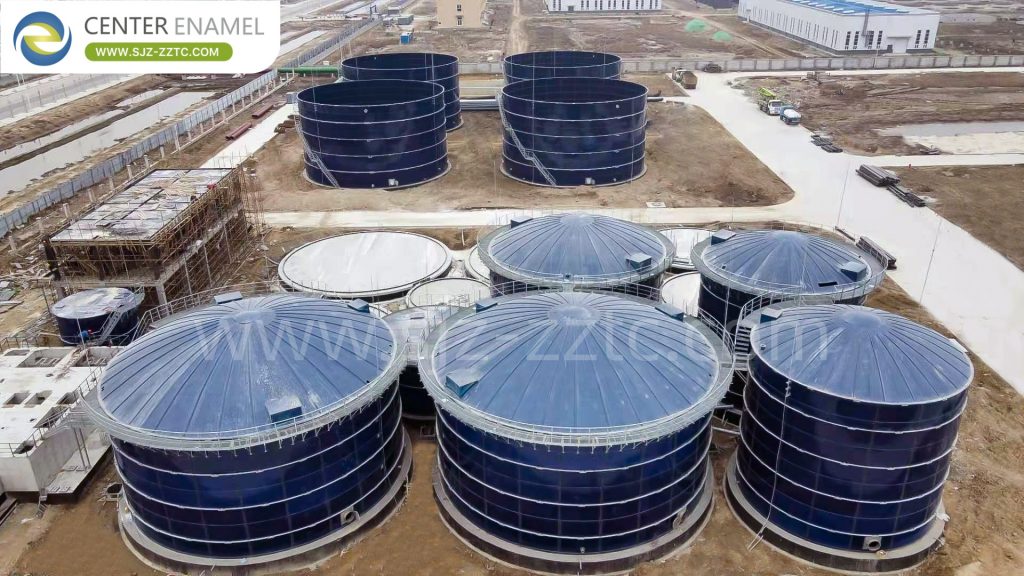
What Is an Anaerobic Tank?
An anaerobic tank is a sealed, oxygen-free reactor used in wastewater treatment to facilitate the biological breakdown of organic matter by microorganisms that thrive in the absence of oxygen . During anaerobic digestion, bacteria convert complex organic pollutants—such as fats, proteins, and carbohydrates—into simpler compounds, producing biogas (primarily methane and carbon dioxide) as a valuable byproduct . These tanks serve as the first biological treatment stage in many municipal and industrial wastewater treatment systems, playing a critical role in reducing organic load and enabling nutrient removal .
The Biology Behind Anaerobic Tanks
Anaerobic tanks rely on a sophisticated microbial ecosystem that functions in four distinct stages: hydrolysis, acidogenesis, acetogenesis, and methanogenesis . During hydrolysis, complex organic molecules are broken down into simpler sugars and amino acids. Acidogenic bacteria then convert these into volatile fatty acids and alcohols. Acetogenic bacteria transform these products into acetic acid, hydrogen, and carbon dioxide. Finally, methanogenic archaea produce methane gas . This sequential biological process efficiently stabilizes organic waste while generating renewable energy in the form of biogas, making anaerobic tanks essential for modern Wastewater Treatment Projects that embrace the circular economy.
The Role of Anaerobic Tanks in the A2O Process
The Anaerobic-Anoxic-Oxic (A2O) process is one of the most widely used biological nutrient removal systems in municipal sewage treatment, and the anaerobic tank serves as its critical first stage . In this phase, wastewater enters the anaerobic tank where phosphorus-accumulating organisms (PAOs) release phosphorus and store carbon substrates. This phosphorus release is essential for enhanced biological phosphorus removal in later stages . Research has demonstrated that influent total phosphorus removal can increase by approximately 20% when anaerobic tanks are added to treatment systems, with removal efficiencies reaching 71% at optimal hydraulic retention times . The anaerobic tank also receives return sludge containing nitrates from downstream processes, creating optimal conditions for the subsequent anoxic and aerobic stages .
Anaerobic vs. Anoxic vs. Aerobic Conditions
Understanding the distinction between anaerobic, anoxic, and aerobic conditions is essential for effective wastewater treatment design. Anaerobic conditions exist when both free molecular oxygen and bound oxygen (such as nitrates) are absent . In contrast, anoxic conditions lack free oxygen but may contain nitrates or nitrites, supporting denitrification processes. Aerobic conditions involve the presence of dissolved oxygen, which powers aerobic bacteria in organic matter oxidation. Typical operating parameters reflect these differences: anaerobic tanks maintain dissolved oxygen below 0.2 mg/L, anoxic tanks operate at 0.2–0.4 mg/L, and aerobic tanks maintain approximately 3 mg/L . This staged arrangement is essential for maximizing nutrient removal efficiency in modern biological wastewater treatment .
Anaerobic Tank Applications in Wastewater Treatment
Anaerobic tanks serve diverse applications across multiple industries. In municipal sewage treatment, they form the core of biological nutrient removal systems like the A2O Process, breaking down organic pollutants and enabling phosphorus release . In industrial settings, anaerobic tanks treat high-strength organic wastewater from food and beverage processing, pulp and paper manufacturing, and textile production . Agricultural operations use anaerobic tanks to manage livestock manure and crop residues, generating biogas for on-farm energy needs . Anaerobic treatment is particularly effective for wastewater with high concentrations of organic matter and is often used as the first treatment step before aerobic polishing .
Anaerobic Tank Designs and Technologies
Several anaerobic tank configurations are available for different treatment objectives. Continuous Stirred-Tank Reactors (CSTR) maintain complete mixing of biomass and wastewater for maximum contact efficiency . Upflow Anaerobic Sludge Blanket (UASB) reactors allow wastewater to pass upward through a blanket of granulated sludge, where microorganisms attach to the particles and treat the effluent as it flows through . Anaerobic Filter Reactors use fixed media that support biofilm growth, providing a stable surface for microbial colonization . Anaerobic Lagoons are large earthen basins commonly used for primary treatment in municipal and agricultural applications . Advanced designs incorporate mixing systems, thermal insulation, and gas-tight roofs to optimize digestion efficiency and maximize biogas production .
Center Enamel: Your One-Stop Wastewater Treatment Solutions Provider
Center Enamel is a global leader in the design and manufacturing of advanced anaerobic tanks and comprehensive wastewater treatment infrastructure. Our Glass-Fused-to-Steel (GFS) tanks are engineered specifically for anaerobic digestion applications, combining the structural strength of steel with exceptional corrosion resistance. By firing high-tech glass enamel to steel at temperatures exceeding 820°C, we create an inert, non-porous surface that withstands the aggressive organic acids and hydrogen sulfide generated during anaerobic wastewater treatment . Key advantages of Center Enamel solutions include:
Superior Corrosion Resistance: The glass coating provides unparalleled protection against the corrosive environment of anaerobic digestion, ensuring a service life exceeding 30 years .
Modular, Bolted Design: Our tanks are delivered as prefabricated panels for rapid on-site assembly, reducing installation time and project costs while allowing easy future expansion .
Gas-Tight Roof Systems: We offer integrated double membrane roofs that ensure leak-proof biogas collection and pressure regulation, maximizing renewable energy recovery from your Wastewater Treatment Project .
Comprehensive Solutions: From anaerobic reactors to downstream processing, Center Enamel delivers complete treatment systems tailored to municipal, industrial, and agricultural applications across over 100 countries .
International Certification: Our tanks meet rigorous global standards including AWWA D103-09, ISO 28765, NSF/ANSI 61, and EN 15282, ensuring world-class quality and reliability .
Partner with Center Enamel to transform your organic waste challenges into renewable energy opportunities with our industry-leading anaerobic tank solutions.
Frequently Asked Questions
1.What is the typical hydraulic retention time for an anaerobic tank in municipal sewage treatment?
In municipal wastewater treatment systems like the A2O Process, anaerobic tanks typically operate with a hydraulic retention time (HRT) of approximately 1.5 hours, while anoxic and aerobic tanks have longer retention times of 2 hours and 4 hours, respectively .
2.How does an anaerobic tank differ from a septic tank?
While both rely on anaerobic bacteria, modern anaerobic tanks used in wastewater treatment are true digesters with engineered flow patterns that maximize microbial contact and digestion efficiency. Traditional septic tanks are simpler box-like structures that do not function as true anaerobic digesters .
3. What types of wastewater are best suited for anaerobic tank treatment?
Anaerobic tanks are ideal for wastewater with high organic loads, including municipal sewage sludge, agricultural manure, food and beverage processing waste, pulp and paper effluent, and textile wastewater. They are particularly effective as the first treatment stage before aerobic polishing .