
What Is Anaerobic Technology? A Complete Guide to Anaerobic Technology
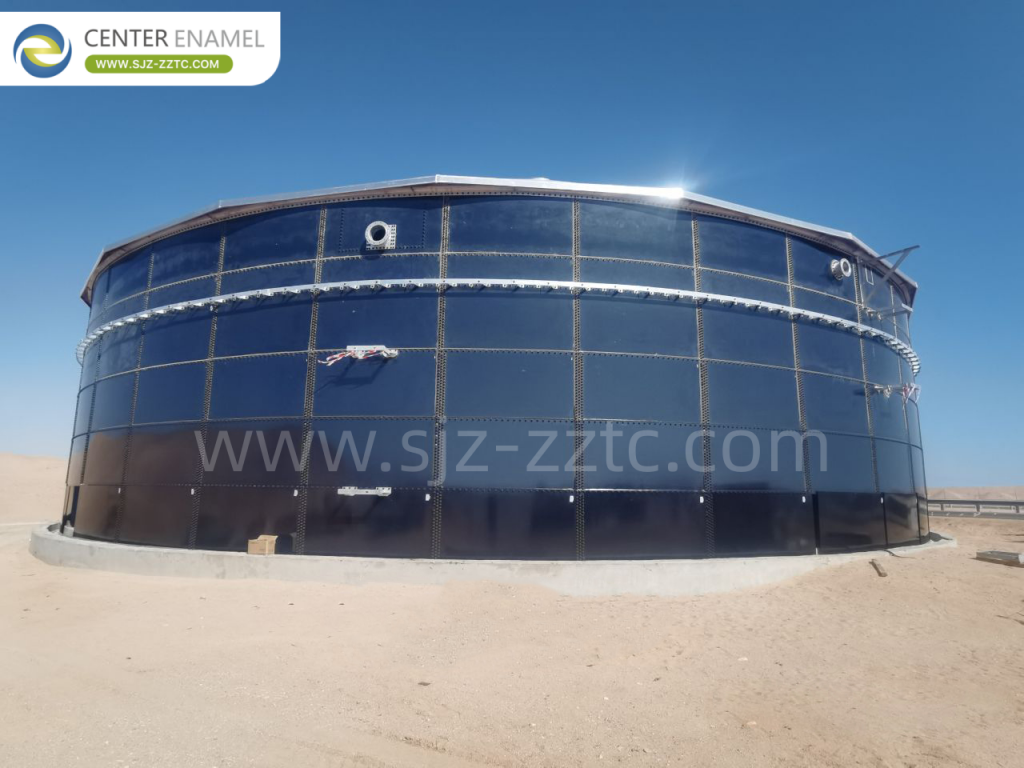
Anaerobic technology, also known as anaerobic digestion (AD), is a natural, sustainable, and widely used biological process that breaks down organic matter—such as livestock manure, food waste, agricultural residue, and industrial wastewater—in an oxygen-free environment to produce biogas and organic fertilizer. As a core technology for renewable energy, waste treatment, and circular economy, anaerobic technology has become indispensable in cattle farm Biogas Project development, environmental protection, and low-carbon development worldwide.
As a leading global EPC Contractor for biogas and environmental projects, Center Enamel provides mature, reliable anaerobic solutions including UASB, CSTR, USR, and IC reactors, paired with high-performance GFS tanks to deliver stable, efficient, and cost-effective systems for various organic waste treatment scenarios.
What Is Anaerobic Technology?
Anaerobic technology uses mixed communities of microorganisms to decompose complex organic materials without oxygen. The process converts pollutants into energy-rich biogas (mainly methane and carbon dioxide) while reducing odor, pathogens, and environmental pollution. It is widely applied in livestock farms, food processing plants, breweries, paper mills, and municipal wastewater facilities.
The Four Key Stages of Anaerobic Digestion
- HydrolysisComplex organic compounds like proteins, carbohydrates, and fats are broken down into small soluble molecules such as sugars, amino acids, and fatty acids.
- AcidificationAcidogenic bacteria convert small molecules into volatile fatty acids, hydrogen, and carbon dioxide.
- AcetogenesisIntermediate products are further transformed into acetic acid, hydrogen, and carbon dioxide—direct precursors for methane production.
- MethanogenesisMethanogenic archaea convert acetic acid and hydrogen into biogas, which typically contains 55%–70% methane and 30%–45% carbon dioxide.
The by-product, called digestate, is a nutrient-rich organic fertilizer that can be directly used in farmland, forming a fully closed circular economy system.
Why Anaerobic Technology Is Widely Used
- Renewable energy production: Biogas can be used for power generation, heating, cooking, or upgraded to biomethane for grid injection.
- Waste reduction: Significantly reduces organic waste volume and eliminates odor and pollution.
- Environmental compliance: Helps enterprises meet discharge standards for wastewater and solid waste.
- Cost savings: Low energy consumption, low operational cost, and high economic return.
- Climate-friendly: Reduces greenhouse gas emissions from organic waste decomposition.
Center Enamel’s Advanced Anaerobic Technologies
Center Enamel, as a professional EPC Contractor with rich experience in biogas projects, provides four mainstream anaerobic reactor technologies to match different waste characteristics, solid content, treatment capacity, and project scales. All systems are supported by durable GFS tanks for long-term stable operation.
1. CSTR (Completely Stirred Tank Reactor)
CSTR is the most commonly used technology for high-solid organic waste such as cattle manure, pig manure, and crop straw.
- Working principle: Continuous mechanical stirring ensures full mixing of feedstock and anaerobic sludge, preventing crusting and sedimentation.
- Features:
- Suitable for high total solids (TS) content
- Stable biogas output
- Continuous feeding and discharging
- Ideal for large-scale livestock farm Biogas Project
- Applications: Large-scale cattle and dairy farms, intensive livestock operations.
2. USR (Upflow Solids Reactor)
USR is a high-efficiency reactor designed for high-suspended-solid wastewater and manure.
- Working principle: Wastewater flows upward from the bottom, retaining sludge and organic particles inside the reactor without mechanical stirring.
- Features:
- No mixing equipment → low energy consumption
- Simple structure, easy maintenance
- High impact resistance
- Small footprint
- Applications: Medium-sized livestock farms, rural waste treatment, remote areas.
3. UASB (Upflow Anaerobic Sludge Blanket)
UASB is a classic, cost-effective technology for low-solid, high-concentration organic wastewater.
- Working principle: Wastewater flows upward through a dense sludge blanket, where microorganisms efficiently degrade organic pollutants.
- Features:
- High organic loading rate
- Low operational cost
- Mature and stable performance
- Wide industrial application
- Applications: Dairy wastewater, food processing wastewater, beverage industry, brewery wastewater.
4. IC (Internal Circulation)
IC is an advanced high-rate anaerobic reactor and the preferred choice for large-scale, high-efficiency projects.
- Working principle: Driven by biogas pressure, internal circulation enhances mixing and mass transfer, greatly improving treatment efficiency.
- Features:
- 3–5 times higher loading capacity than conventional reactors
- Compact footprint
- Excellent shock load resistance
- High COD removal rate
- Applications: Large-scale industrial wastewater, integrated Biogas Project, high-strength organic waste.
Why Center Enamel Is Your Best Partner for Anaerobic Projects
As a full-service EPC Contractor, Center Enamel integrates design, manufacturing, installation, commissioning, and after-sales service for anaerobic systems. Our core advantages include:
1. Customized Solutions
We select the most suitable anaerobic technology—CSTR, USR, UASB, or IC—based on waste type, solid content, treatment capacity, and site conditions.
2. High-Quality GFS Tanks
All our reactors use Glass-Fused-to-Steel (GFS) tanks, which offer:
- Extreme corrosion resistance (pH 1–14)
- Service life over 30 years
- Fast bolted installation
- Strong seismic and UV stability
- Perfect adaptability to high temperature, humidity, and coastal environments
3. Full-Cycle EPC Service
From engineering design to equipment supply, installation, and operation training, we provide one-stop service to reduce client risk and shorten project period.
4. Rich Global Project Experience
We have completed numerous biogas and wastewater projects worldwide, especially in livestock farm Biogas Project applications, with stable operation and high customer satisfaction.
Conclusion
Anaerobic technology is a highly efficient, eco-friendly, and economical way to treat organic waste and produce clean energy. Understanding what is anaerobic technology helps enterprises and farms choose the right waste treatment and energy recovery solutions.
Center Enamel’s advanced CSTR, USR, UASB, and IC anaerobic technologies, supported by high-performance GFS tanks and full-scope EPC Contractor service, provide safe, stable, and high-return systems for cattle farms, industrial plants, and renewable energy investors.
Whether you need a small-scale farm system or a large-scale industrial biogas plant, Center Enamel delivers tailored anaerobic solutions to turn waste into wealth and support your sustainable development goals.